Aantal spelers: 2-4
Speelduur: 25 minuten
Leeftijd: Vanaf 10 jaar
Auteur: Yohan Goh, Hope S. Hwang, Gary Kim
Uitgever: Repos Production
Jaar: 2026
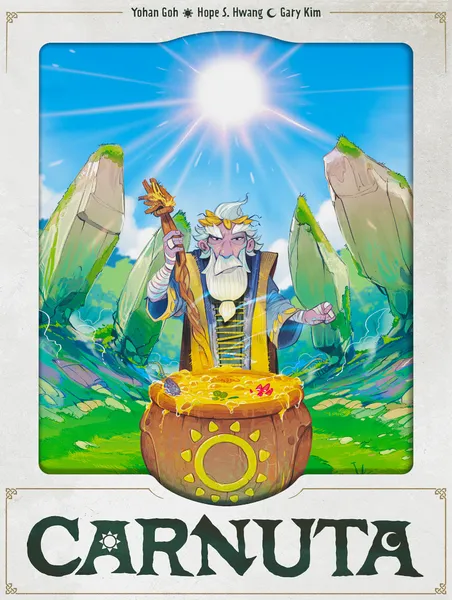

De druïden verzamelen zich in het bos op hun jaarlijkse ceremonie om een zo goed mogelijk drankje te brouwen.
Klinkt dit je bekend in de oren?
Ja, de lezers van Asterix en Obelix zullen het zich al zo voor zich zien. Houd je (gouden) sikkels al maar in de aanslag.
Spelverloop
Zoals vermeld probeer je tijdens het spel een drankje te brouwen waarmee je de wedstrijd kan winnen, dit doe je door kaarten te draften en runen te betalen om deze kaarten uit je hand in je tableau te spelen.
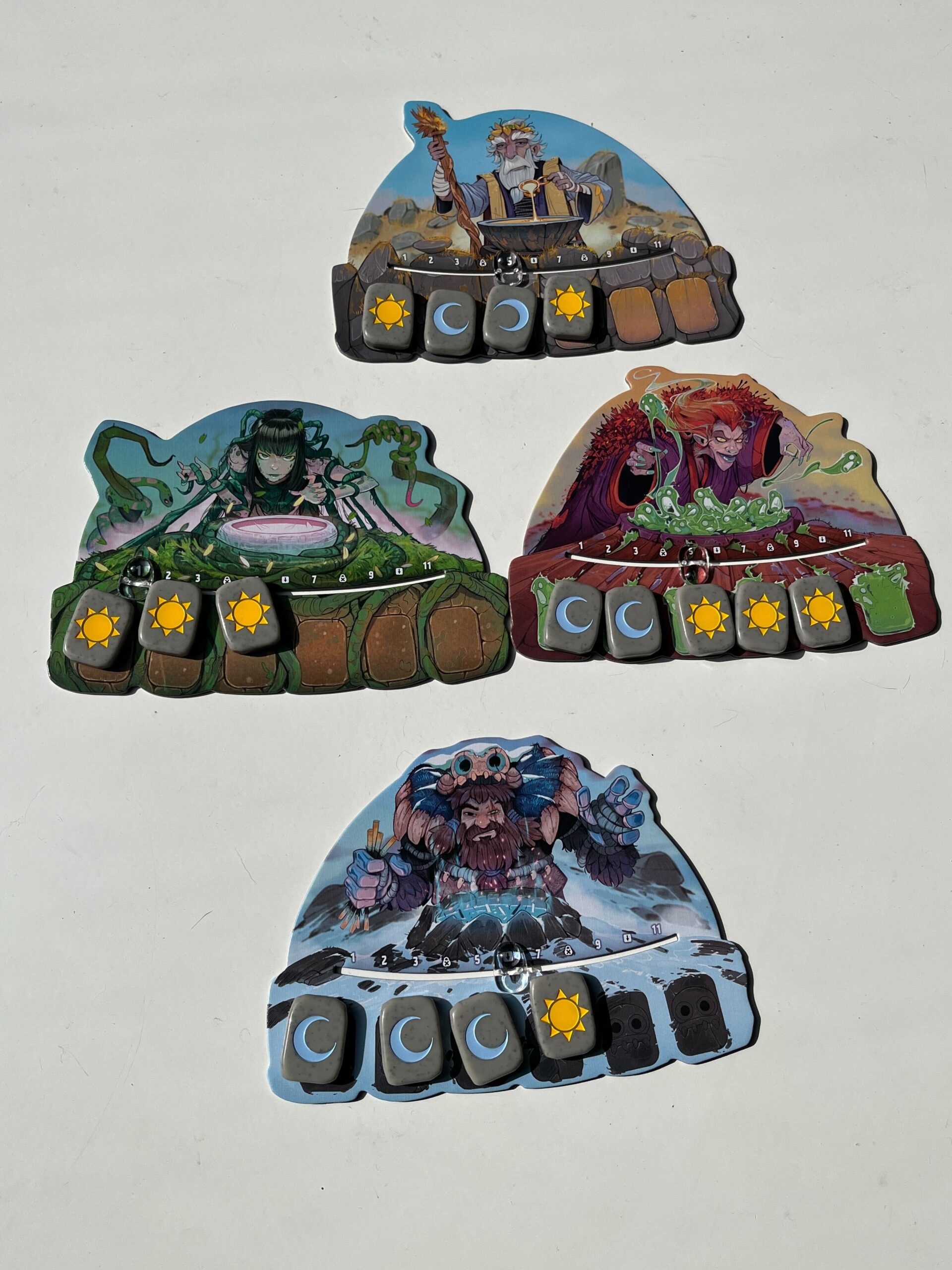
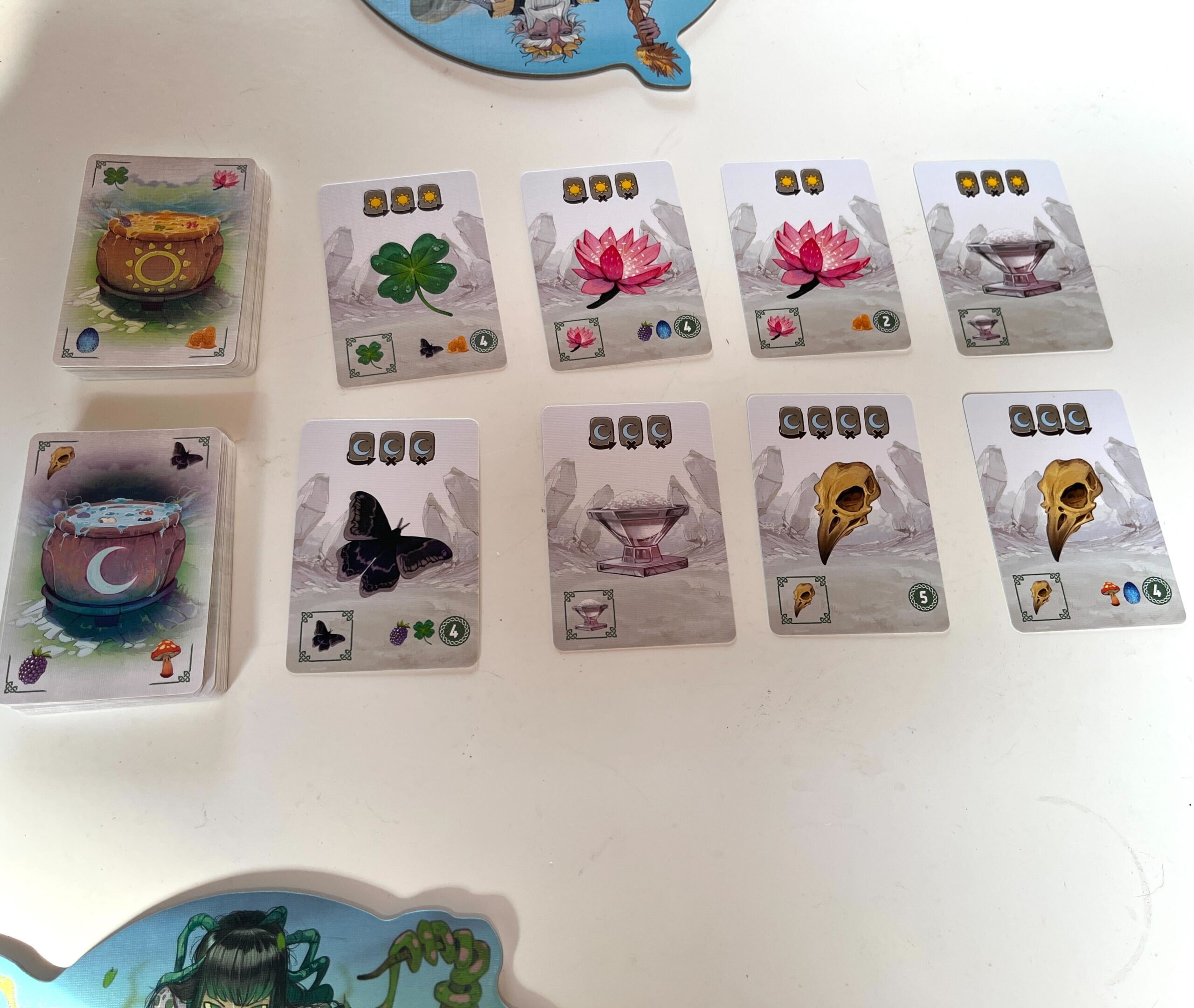
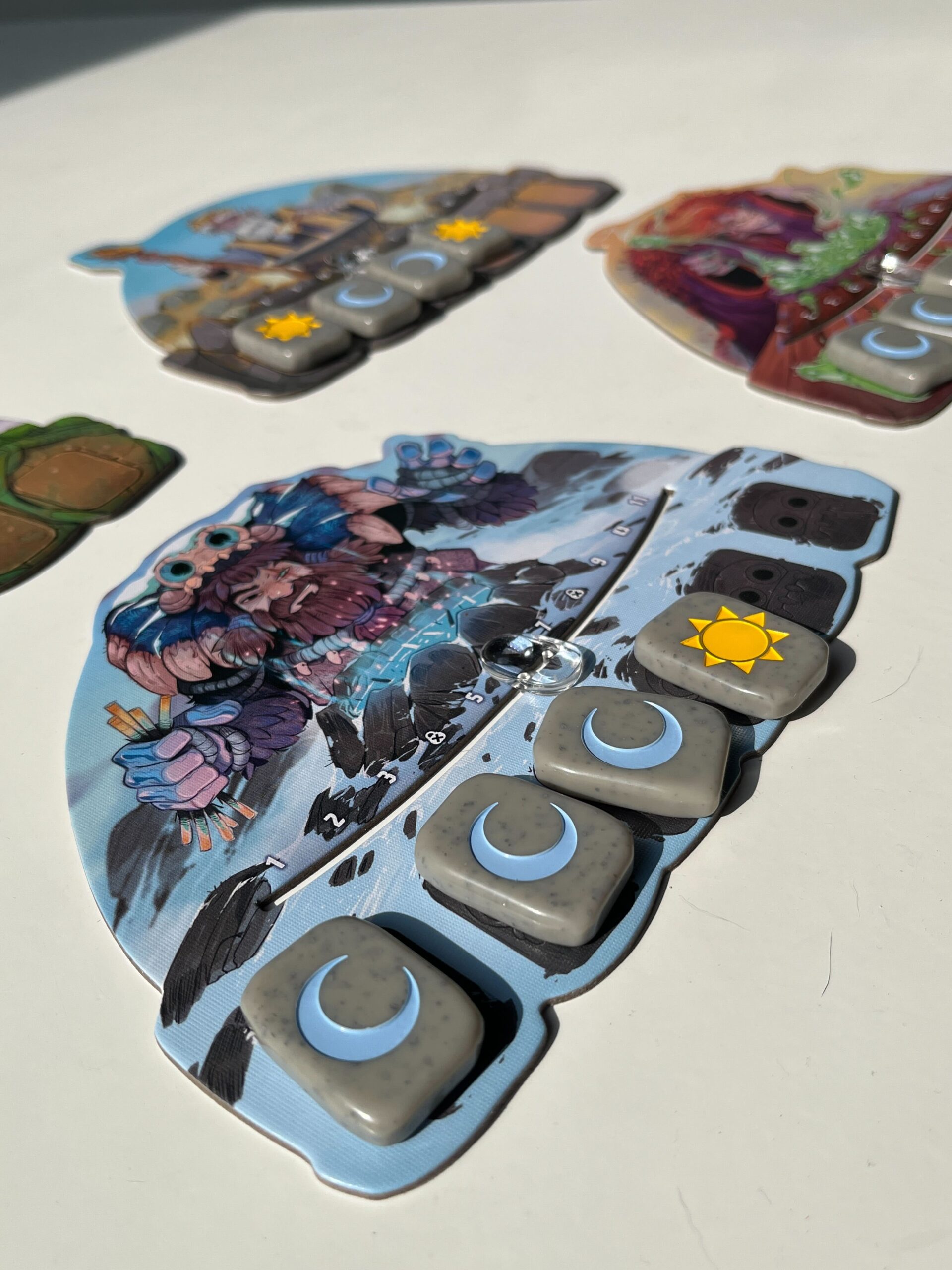
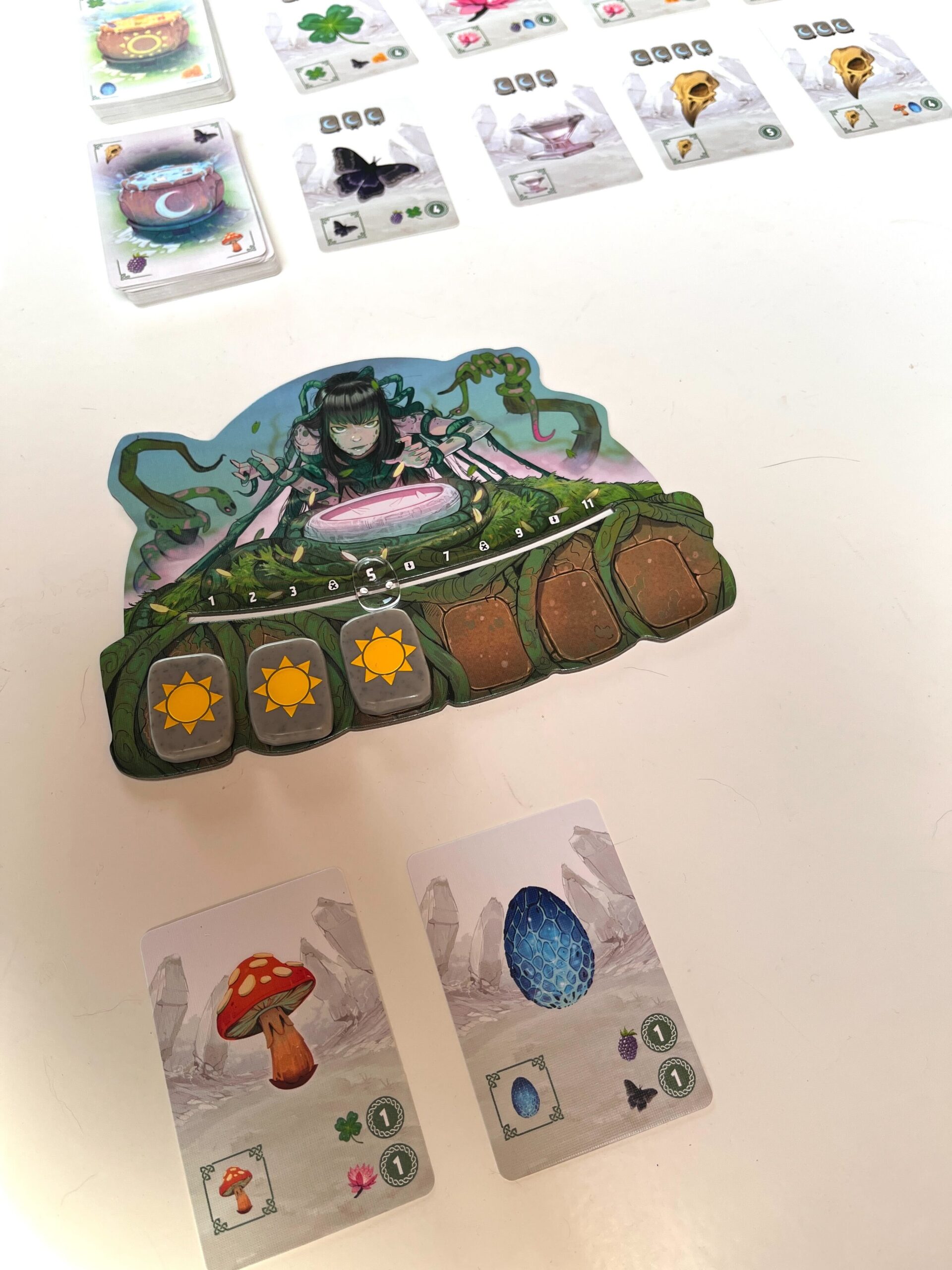
Bij de start krijg je 2 ingrediëntkaarten in je hand waarmee je het spel zal starten. Naast je handkaarten wordt er een markt gevormd met 2 rijen van 4 ingrediënten: 1 nachtrij en 1 dagrij. Elk ingrediënt behoort tot een van deze 2 categorieën. Iedereen ontvangt ook een spelersbordje, 2 sikkels en 4 runen waarbij de voorkant een zon toont en de achterkant een maan. De runen worden zo neergelegd dat elke speler start met 2 zonnen en 2 manen.
Elke ingrediëntkaart bevat een van de 8 ingrediënten of “zout” (dat gebruikt wordt als joker). Naast een ingrediënt bevatten de kaarten ook punten of scoringsvoorwaarden die je punten zullen opleveren van zodra aan de voorwaarde is voldaan. Zoals vaak in andere spellen wint het brouwsel met de meeste punten het spel.
Tijdens je beurt doe je 2 acties en hierbij heb je de keuze uit 4 mogelijkheden. Je mag 2 keer dezelfde actie uitvoeren, maar je moet beide acties afhandelen in je beurt.
- Neem een kaart: je kiest een kaart uit een van de 2 marktrijen en voegt die toe aan je hand.
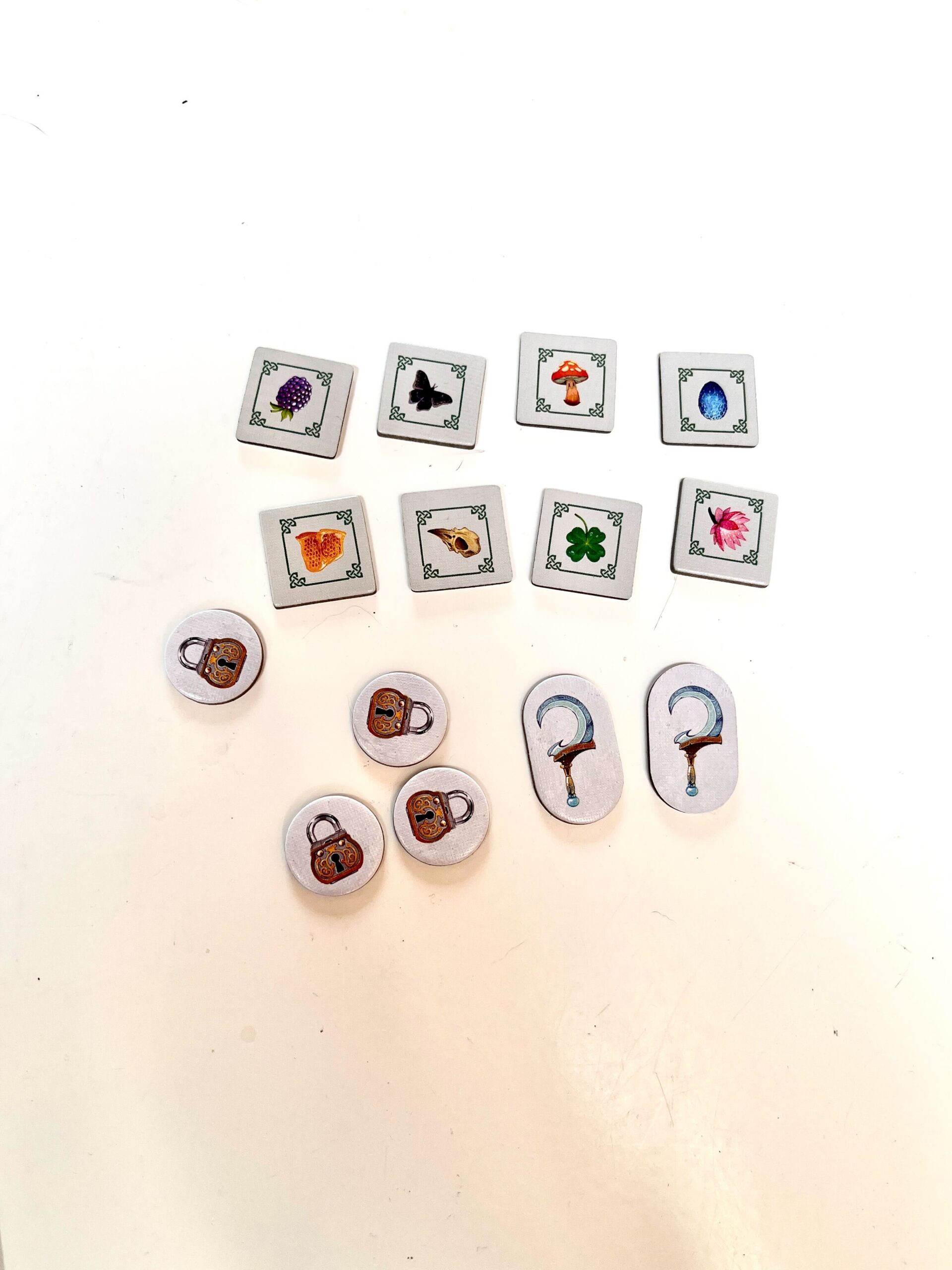
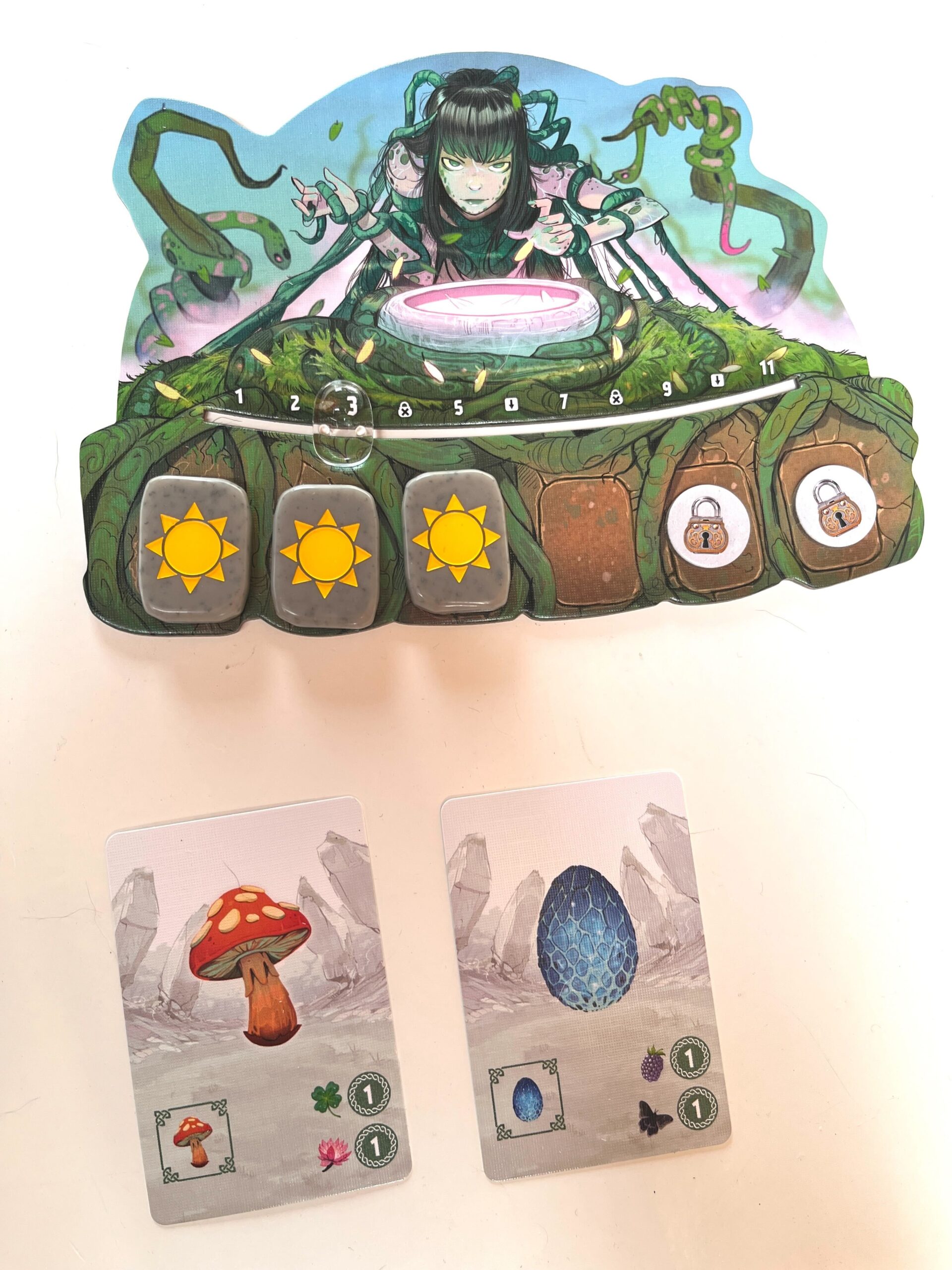
- Speel een kaart: Betaal de kost van de kaart (in aantal runen) door de juiste runen om te draaien óf weg te leggen. Daarna leg je de kaart voor je neer en wordt dit ingrediënt aan je brouwsel toegevoegd.
- Neem Runen: Soms gebeurt het dat je runen op zijn omdat je kaarten hebt gespeeld. Als dit gebeurt kan je uit de algemene voorraad runen pakken van 1 soort (dag of nacht) tot je bordje vol ligt óf tot alle runen van deze soort in de algemene voorraad op zijn.
- Draai Runen om: Soms heb je kaarten in je hand die je heel graag wilt spelen, maar waarbij de kosten niet overeenkomen met de runen die je op je bordje hebt liggen. In dit geval kan je als een actie alle dag- of nachtrunen omdraaien naar de andere kant.
Je hebt een tracker op je spelersbordje dat aangeeft hoeveel kaarten je gespeeld hebt. Bij een bepaald aantal kaarten krijg je een voordeel zoals een bonusfiche (een extra ingrediënt) of een extra slot voor jouw runen zodat je meer runen op je bordje kan leggen.
Het spel eindigt van zodra iemand een 11e kaart heeft gespeeld in zijn tableau, waarna nog een laatste ronde volgt. Wie aan het einde van deze ronde de meeste punten heeft, wint het spel.
Spelmechanisme
Het spel bevat enkele mechanismen die mooi bij het spel passen. Allereerst zou ik het classificeren als een set-collectie en tableau building spel. Je gaat namelijk aan de slag met kaarten om verschillende combinaties te verkrijgen om zoveel mogelijke punten te genereren. Resource management vind je in dit spel in de vorm van de runen die je moet omdraaien of afleggen als je kaarten wilt spelen. Naast resource management zit in dit spel ook hand management omdat je maximaal op het einde van je beurt 3 kaarten mag hebben en je moet dus opletten dat je geen kaarten onnodig moet afleggen.
Mijn bescheiden mening
Het spel is erg snel uitgelegd en vlot gespeeld en dit maakt het tot een leuk familiespel. Je zou kunnen denken: “Betekent een snel familiespel dat er weinig tactische keuzes moeten gemaakt worden?” Hierop is mijn antwoord resoluut: “Neen.” Door goede strategische keuzes te maken kan je het verschil maken en je tegenstander genadeloos verslagen. Het heeft een leuke tekenstijl die past bij het thema, wat mij betreft.
Ik vind het een erg leuk spelletje met mooie componenten en leuke tekeningen. Het ligt snel op tafel en valt hier erg in de smaak.
Wat maakt het spel zo sterk?
- Snelle rondjes met tactische keuzes.
- Leuke artwork en mooie componenten.
- Snel uitgelegd.
- Toegankelijk spelletje dat ook voor minder gevorderde spelers leuk is.
Is het alleen maar positief?
Het speelt erg vlot en is snel uitgelegd, maar je hebt natuurlijk ook een portie geluk nodig. De kaarten in de markt geven je enkele opties, maar als de kaarten die jij nodig hebt niet komen, moet je snel van strategie kunnen veranderen. De geluksfactor kan je een beetje counteren met je sikkels waarmee je een van de 2 rijen kan veranderen, maar ook hier zit wel een geluk element aan.
Verder kan je ook je tegenstanders dwarszitten door bepaalde kaarten te pakken die zij ook nodig hebben. Als je hier niet van houdt, kan dit spel wel onnodig negatief aanvoelen. Je kan dit natuurlijk ook gewoon laten gebeuren maar dan kan je best met alle spelers op dezelfde golflengte zitten, want anders ga je er niet al te best uitkomen. 😊
Tenslotte kan je de opmerking maken dat het spel niet erg thematisch is. Het heeft een leuk thema, maar het voegt niet meteen iets toe aan het spel. Mij spreekt het persoonlijk wel aan, maar het zou net zo goed een ander thema kunnen hebben.
Conclusie
Wat mij betreft heeft het spel alles om in vele huiskamers een topper te worden. Het speelt vlot, ziet er goed uit en is zeer toegankelijk. Zelf heb ik al een behoorlijk aantal potjes Carnuta gespeeld en het blijft altijd een leuke puzzel om je tableau op te bouwen. Het belangrijkste vind ik dat ik me steeds amuseer met dit spel. Om deze redenen geef ik Carnuta een 7.5/10.

Carnuta
Players: 2-4
Time: 25 minutes
Age: 10+
Author: Yohan Goh, Hope S. Hwang, Gary Kim
Publisher: Repos Production
Year: 2026
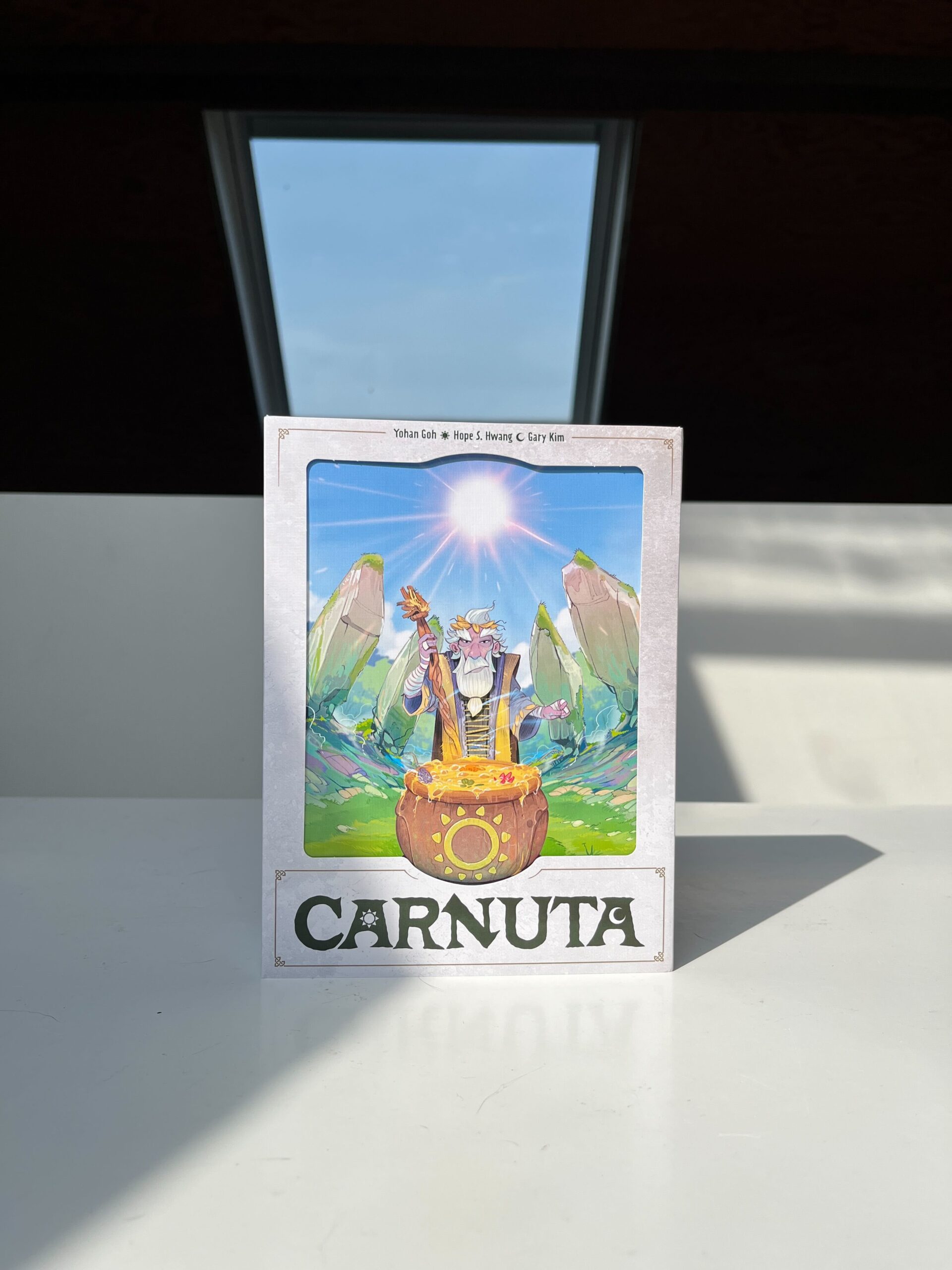
The druids gather in the forest for their annual ceremony to brew the best possible potion.
Does this sound familiar to you? Yes, the readers of Asterix and Obelix will already imagine it that way.
Just keep your (golden) sickles at the ready.
Gameplay
As mentioned, during the game you try to brew a potion that allows you to win the match. You do this by drafting cards and paying runes to play these cards from your hand into your tableau.
At the start, you receive 2 ingredient cards in your hand to start the game. In addition to your hand cards, a market is formed with 2 rows of 4 ingredients: 1 night row and 1 day row. Each ingredient belongs to one of these 2 categories. Everyone also receives a player board, 2 sickles, and 4 runes where the front shows a sun and the back a moon. The runes are laid out so that each player starts with 2 suns and 2 moons.
Each ingredient card contains one of the 8 ingredients or “salt” (which is used as a joker). In addition to an ingredient, the cards also contain points or scoring conditions that will yield you points as soon as the condition is met. As is often the case in other games, the brew with the most points wins the game.
During your turn, you perform 2 actions, for which you have a choice of 4 possibilities. You may perform the same action twice, but you must complete both actions within your turn.
- Take a card: You choose a card from one of the 2 market rows and add it to your hand.
- Play a card: Pay the cost of the card (in number of runes) by flipping over the correct runes or discarding them. Then, place the card in front of you, and this ingredient is added to your brew.
- Take Runes: Sometimes you run out of runes because you have played cards. If this happens, you can take runes of one type (day or night) from the general supply until your board is full or until all runes of this type in the general supply are used up.
- Flip Runes: Sometimes you have cards in your hand that you really want to play, but where the cost does not match the runes you have on your board. In this case, as an action, you can flip all day or night runes to the other side.
You have a tracker on your player board that indicates how many cards you have played. With a certain number of cards, you receive an advantage such as a bonus token (an extra ingredient) or an extra slot for your runes, allowing you to place more runes on your board.
The game ends as soon as someone plays an 11th card in their tableau, followed by a final round. Whoever has the most points at the end of this round wins the game.
Game Mechanics
The game features several mechanisms that fit well. First of all, I would classify it as a set-collection and tableau-building game. You work with cards to obtain various combinations in order to generate as many points as possible. Resource management in this game takes the form of runes that you must flip over or discard when you want to play cards. In addition to resource management, this game also involves hand management, as you may have a maximum of 3 cards at the end of your turn, so you must be careful not to discard cards unnecessarily.
My Humble Opinion
The game is very quick to explain and plays smoothly, making it a fun family game. You might think: “Does a fast family game mean that few tactical choices need to be made?” My answer to this is a resounding “No.” By making good strategic choices, you can make the difference and mercilessly defeat your opponent. It has a nice art style that suits the theme, as far as I’m concerned.
I think it is a very fun game with beautiful components and nice drawings. It is quick to get on the table and is very popular here.
What makes the game so strong?
- Fast rounds with tactical choices.
- Nice artwork and beautiful components.
- Quick to explain.
- Accessible game that is also fun for less advanced players.
Is it all just positive?
It plays very smoothly and is quick to explain, but of course, you also need a bit of luck. The cards in the market give you a few options, but if the cards you need don’t appear, you have to be able to change strategy quickly. You can counter the luck factor a bit with your sickles, which allow you to change one of the 2 ranks, but there is an element of luck involved here as well.
Furthermore, you can also thwart your opponents by taking certain cards that they also need. If you don’t like this, the game can feel unnecessarily negative. You can, of course, just let this happen, but then it’s best to be on the same wavelength with all players, because otherwise, things won’t turn out too well. 😊
Finally, one could point out that the game isn’t very thematic. It has a nice theme, but it doesn’t immediately add anything to the game. It appeals to me personally, but it could just as easily have a different theme.
Conclusion
As far as I’m concerned, the game has everything it takes to become a hit in many living rooms. It plays smoothly, looks good, and is very accessible. I have played quite a few games of Carnuta myself, and building your tableau remains a fun puzzle every time. Most importantly, I find that I always enjoy myself with this game. For these reasons, I give Carnuta a 7.5/10.