Aantal spelers: 2
Speelduur: 45 minuten
Leeftijd: Vanaf 10 jaar
Auteur: Giampaolo Razzino
Uitgever: Little Rocket Games
Jaar: 2024

Dit is een herpublicatie van een review die ik eerder schreef voor Bordspelwereld.nl.
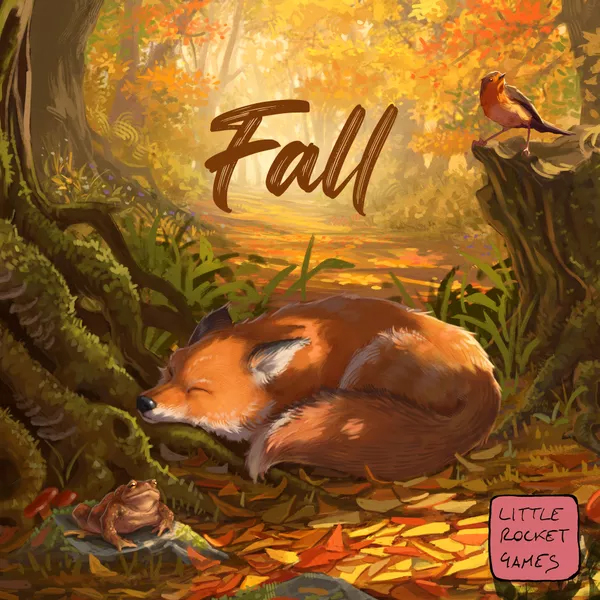
De herfst is in het land, waarbij de bladeren en de herfstbloemen het bos kleur geven. In Fall laat je een herfst-ecosysteem met planten en dieren groeien. Kan jij de meeste punten scoren in dit schilderachtige ecosysteem? Dan win je Fall!
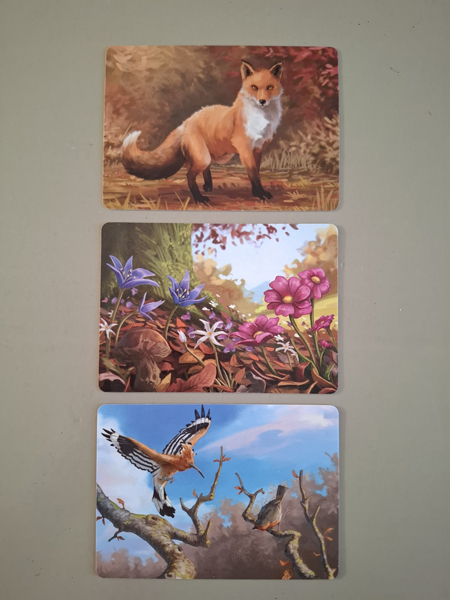
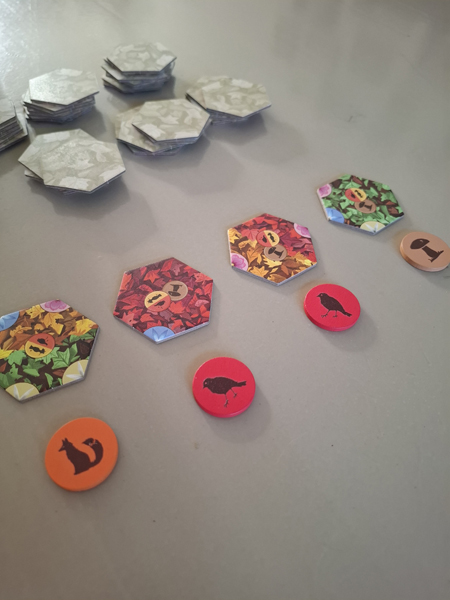
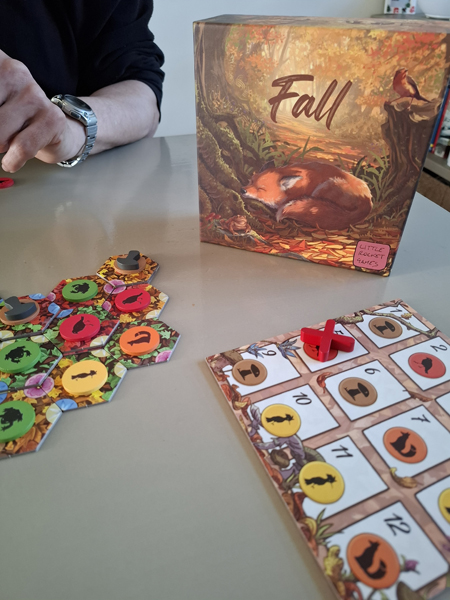
Fall is een spel voor 2 spelers dat ongeveer 45 minuten duurt. Nadat het spel is opgesteld volgens de duidelijke uitleg in het spelregelboek, zijn de spelers aan zet. Op tafel liggen nu 4 tegel-token combinaties: deze vormen het aanbod. Elke speler heeft 3 unieke scorekaarten: eentje voor vossen, eentje voor vogels en eentje voor bloemen. Elke speler heeft ook 8 paddenstoelen ter beschikking om paddenstoel-tokens op te eisen. Fall wordt gespeeld in 12 rondes waarbij de startspeler telkens wisselt. De beurtvolgorde in elke ronde is als volgt: startspeler – tegenspeler – tegenspeler – startspeler.
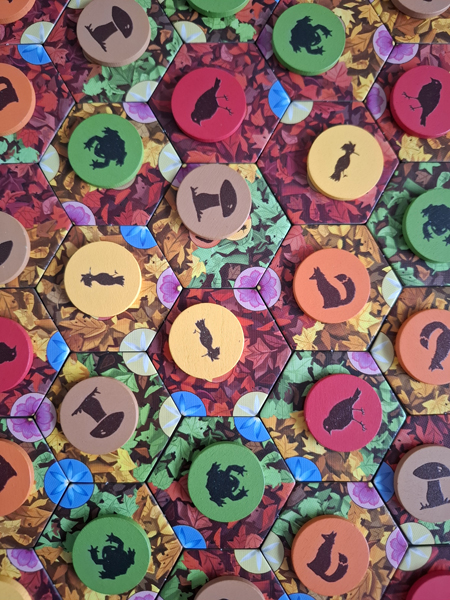
In zijn beurt, neemt de actieve speler een tegel-token combinatie uit het aanbod. Hij moet nu eerst de tegel op het speelveld plaatsen volgens de geldende plaatsingsregels. Daarna mag hij kiezen of en waar hij het token plaatst, eveneens volgens de plaatsingsregels. Hij mag het token ook bijhouden tot een volgende beurt (uitgezonderd paddentokens). Hij mag ook andere tokens, die hij in vorige rondes opzij hield, op beschikbare tegels plaatsen. Let wel: in elke ronde is er 1 tokensoort die in die ronde niet op tegels geplaatst mag worden. Het tegel-token aanbod wordt pas aangevuld in de volgende ronde, dus op het einde van elke ronde is het aanbod leeg.
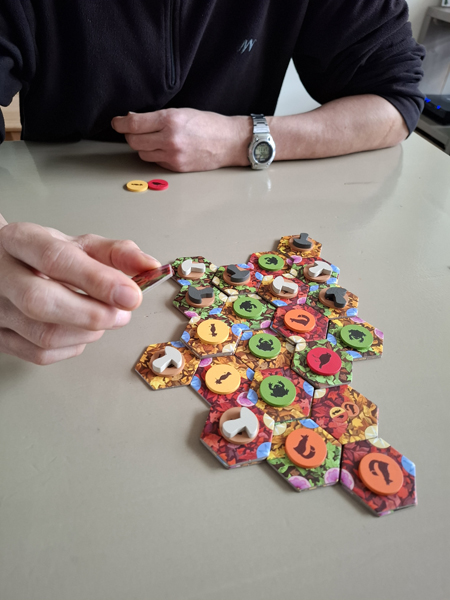
Fall gaat zo gedurende 12 rondes verder, waarbij het speelveld steeds groter wordt. Na de laatste ronde heeft elke speler uiteindelijk 24 tegels en een aantal tokens geplaatst. Beide spelers onthullen nu hun scorekaarten en de punten worden geteld. Je scoort punten voor je paddenstoelen en je scoort punten volgens de puntentelling op je vossen-, vogels- en bloemen-scorekaart. De speler met de meeste punten wint Fall!
Mijn mening over Fall?
Ben je fan van het spelmechanisme en het thema van Cascadia? Dan zal je Fall ongetwijfeld ook een fijn spel vinden! Naar mijn mening verschilt Fall voldoende van Cascadia om ze allebei in huis te hebben. Let wel: Fall is een spel voor 2 spelers, Cascadia kan je met 4 spelen (of met 6 met de uitbreiding Landmarks). Het spelmechanisme is vergelijkbaar. Je neemt telkens een combinatie van een tegel met een token, je legt de tegel volgens de plaatsingsregels aan en je legt het token (wel of niet) op de net geplaatste tegel of elders. Met deze combinaties probeer je zo veel mogelijk punten te scoren volgens de scorekaarten van de verschillende dieren (en bloemen). Tot zover de vergelijking…
Het grote verschil tussen beide spellen zit hem in het feit dat je in Cascadia elk aan een eigen ecosysteem bouwt, terwijl je bij Fall in hetzelfde ecosysteem werkt. Dit zorgt er voor dat je niet alleen tegel-token combinaties voor de neus van je tegenstander kan wegkapen. Je kan elkaar ook dubbel en dik dwarszitten omdat je in hetzelfde ecosysteem andere dingen probeert te bereiken.
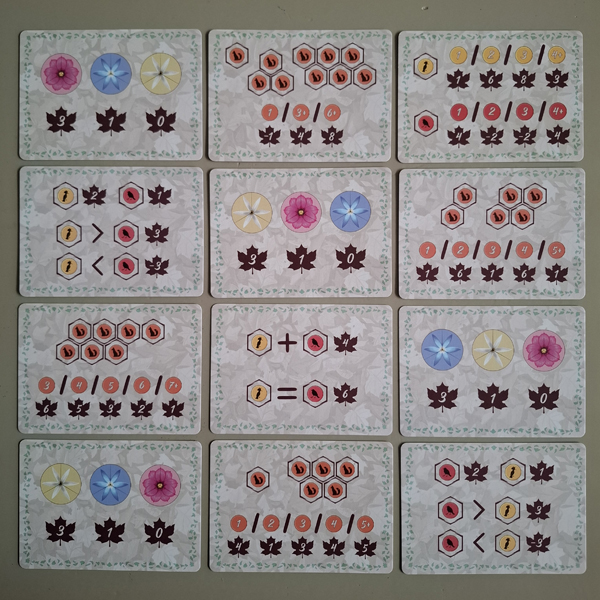
In Fall heeft elke speler zijn eigen manier van scoren voor de vogels, vossen en bloemen, maar je ziet elkaars scorekaarten niet. Dat maakt dat je soms exact het tegenovergestelde wil bereiken van je tegenstander. Het zou zomaar kunnen dat jij bij de vossen vooral scoort met solitaire dieren terwijl je tegenstander juist groepjes van vossen probeert te maken. Of dat jij vooral scoort met roze bloemen terwijl je tegenstander vooral blauwe bloemen wil maken. Toegegeven: naar het einde van het spel toe heb je wel een idee wat je tegenstander dient te bereiken, zeker wanneer je de mogelijke scorekaarten kent. Je moet er in dit spel dus echt wel tegen kunnen dat je wordt dwarsgezeten. Uiteraard hoef je niet passief toe te kijken en kan je zelf ook lekker dwarszitten!
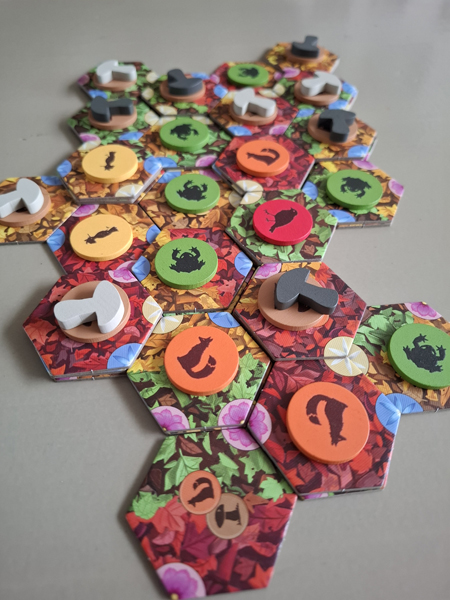
Fall is vooral een fijn en uitdagend puzzelspel. Je moet tegels aanleggen, maar je mag tegelijk ook in de hoogte bouwen. Er mogen maximaal 3 tegels op elkaar liggen, dus je moet ook een beetje in 3D kunnen denken. Er zijn wel manieren (padden en paddenstoelen) om er voor te zorgen dat er op bepaalde tegels niet meer mag voortgebouwd worden. Die tegels dien je dus heel strategisch te gebruiken om er voor te zorgen dat jouw tokencombinaties gevrijwaard blijven en jij zoveel mogelijk punten kan scoren met jouw scorekaarten. Nog een moeilijkheid: elke ronde is er één bepaald dier (of paddenstoel) waarvan je de tokens in die ronde niet op tegels mag leggen. Dus vooruit denken is een must! Samengevat: Fall is een heel uitdagende puzzel die vrij eenvoudig te leren, maar moeilijk te masteren is!

Fall
Players: 2
Time: 45 minutes
Age: 10+
Author: Giampaolo Razzino
Publisher: Little Rocket Games
Year: 2024
This is a republication of a review I wrote for Bordspelwereld.nl.
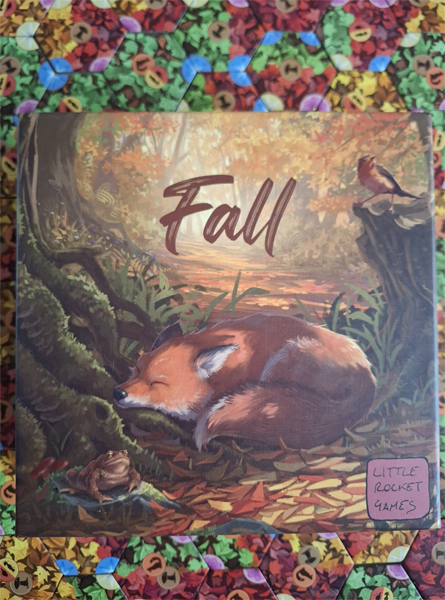
Autumn is in the country, with leaves and autumn flowers adding colour to the forest. In Fall, you grow an autumn ecosystem with plants and animals. Can you score the most points in this picturesque ecosystem? Then you will win Fall!
Fall is a 2-player game that lasts about 45 minutes. After the game is set up according to the clear explanation in the rulebook, it’s up to the players. On the table are now 4 tile-token combinations: these form the supply. Each player has 3 unique scoring cards: one for foxes, one for birds and one for flowers. Each player also has 8 mushrooms available to claim mushroom tokens. Fall is played in 12 rounds with the starting player alternating each time. The turn order in each round is as follows: starting player – opponent player – opponent player – starting player.
In his turn, the active player takes a tile-token combination from the supply. He must now first place the tile on the table according to the applicable placement rules. Then he may choose whether and where to place the token, also according to the placement rules. He may also keep the token until a subsequent turn (except toad tokens). He may also place other tokens, which he kept aside in previous rounds, on available tiles. Note: in each round, there is 1 token type that may not be placed on tiles in that round. The tile-token supply is only replenished at the beginning of the next round, so at the end of each round the supply is empty.
Fall continues for 12 rounds, with the playing area getting larger and larger. After the last round, each player has finally placed 24 tiles and a number of tokens. Both players now reveal their scoring cards and the points are counted. You score points for your mushrooms and you score points according to the scoring on your fox, bird and flower scoring cards. The player with the most points wins Fall!
My opinion on Fall?
Are you a fan of the mechanics and theme of Cascadia? Then no doubt you will like Fall too! In my opinion, Fall differs enough from Cascadia to have them both on your shelf. Note: Fall is a 2-player game, Cascadia can be played with 4 (or with 6 with the Landmarks expansion). The game mechanics are similar. Each turn you take a combination of a tile and a token, you place the tile according to the placement rules and you place the token (or not) on the tile you just placed or elsewhere. With these combinations, you try to score as many points as possible according to the scoring cards of the different animals (and flowers). So much for the comparison…
The big difference between the two games lies in the fact that in Cascadia you each build your own ecosystem, while in Fall you work in the same ecosystem. This ensures that you can not only steal a so much wanted tile-token combination before your opponent’s eyes. You can also double-cross each other as you try to achieve different things in the same ecosystem.
In Fall, each player has their own way of scoring for the birds, foxes and flowers, but you don’t see each other’s scoring cards. That sometimes makes you want to achieve the exact opposite of your opponent. It could just be that you score mainly with solitary foxes while your opponent tries to make groups of foxes. Or that you mainly score with pink flowers while your opponent mainly wants to make blue flowers. Admittedly: towards the end of the game, you do have an idea of what your opponent needs to achieve, especially when you know the possible scoring cards. So you really have to be able to stand being thwarted in this game. Of course, you don’t have to watch passively and you can also enjoy thwarting yourself!
Fall is above all a fine and challenging puzzle game. You have to place tiles, but you can also build in height at the same time. A maximum of three tiles may be put on top of each other, so you also need to be able to think in 3D a bit. There are ways (toads and mushrooms) to prevent certain tiles from being built on. So you have to use these tiles very strategically to ensure that your token combinations are protected and that you can score as many points as possible with your scoring cards. Another difficulty: each round there is one particular animal (or mushroom) whose tokens you may not place on tiles during that round. So thinking ahead is a must! In short: Fall is a very challenging puzzle that is quite easy to learn, but difficult to master!