

Aantal spelers: 2-4
Speelduur: 30 minuten
Leeftijd: Vanaf 10 jaar
Auteur: Alexi Piovesan, Julien Prothière
Uitgever: Libellud
Jaar: 2025


Take Time is een uniek coöperatief (kaart)spel waarin spelers letterlijk de tijd nemen om tijd te maken. Twaalf kaarten moeten zó rondom een klok worden geplaatst dat aan alle voorwaarden wordt voldaan. Maar let op: tijdens het plaatsen van de kaarten mag niet gesproken worden.
Take Time – een eerste indruk
Maar liefst twee mensen uit mijn lokale spellenclub gaven eerlijk toe dat ze Take Time blind hadden gekocht. Ze lieten zich puur leiden door de vormgeving en hadden eigenlijk geen idee wat voor spel het zou zijn. En dat snap ik helemaal. Alleen de doos al ziet er werkelijk fantastisch uit: een feest voor het oog. Ik zou daar zelf ook voor gevallen zijn.
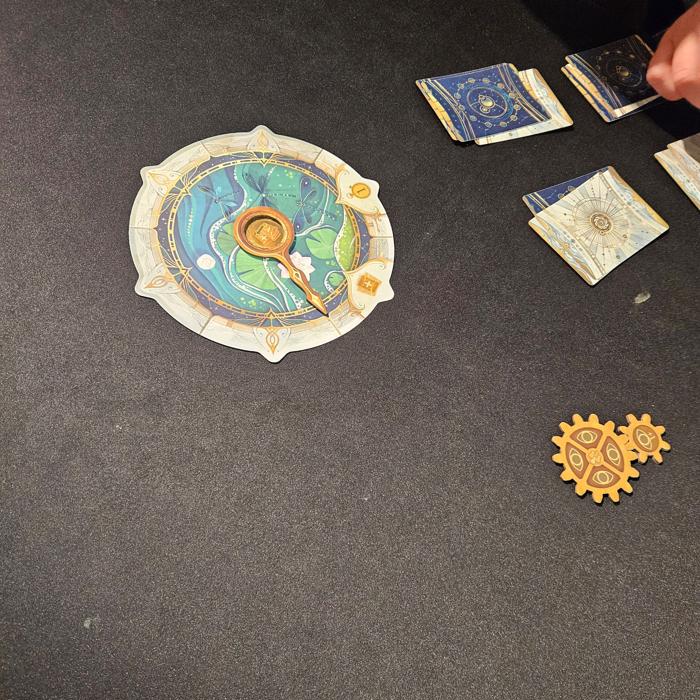
Uitgever Libellud is natuurlijk bekend van titels als Harmonies en Dixit — wat mij betreft stuk voor stuk visuele pareltjes. De doos is prachtig, maar hoe zit het met de inhoud? Nou, die stelt absoluut niet teleur. Sterker nog: de inhoud is minstens zo mooi als de buitenkant. In de doos vind je verschillende enveloppen en kaarten. In die enveloppen zitten klokken die er stuk voor stuk sprookjesachtig uitzien.
Hoe wordt het gespeeld?
Kaarten delen
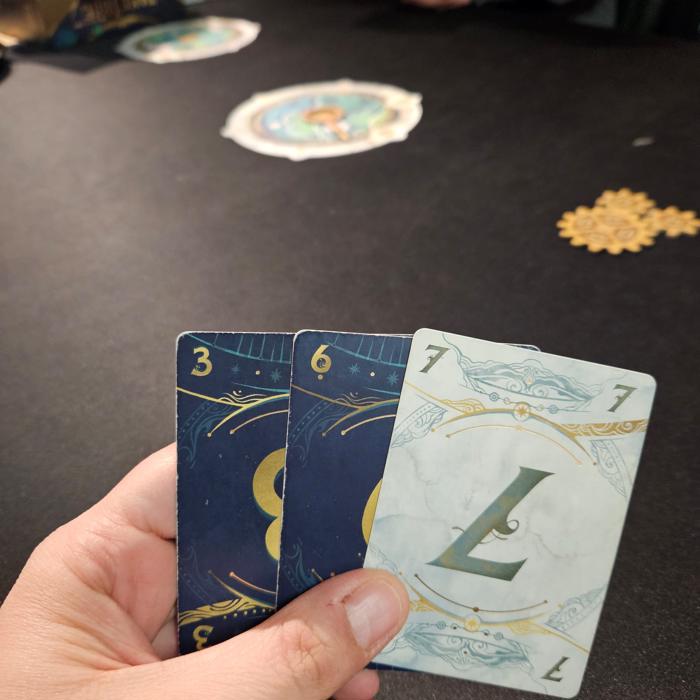
De 24 kaarten worden geschud en er worden 12 kaarten verdeeld over de spelers.
Let op: je mag je kaarten nog niet bekijken.
Overleggen
Spelers bespreken samen de tactiek die zij willen toepassen.
Plaatsen
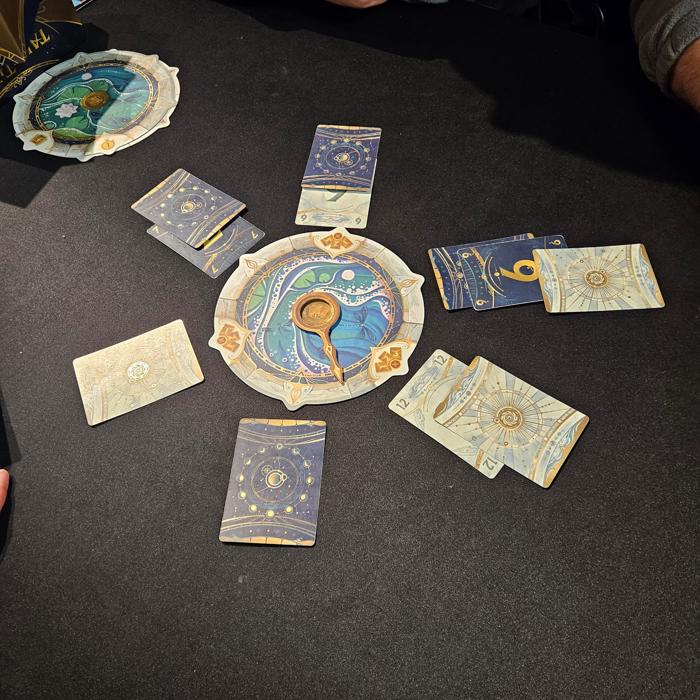
Eén speler plaatst de eerste kaart. Vervolgens plaatsen de spelers, met de klok mee, ieder één kaart totdat alle 12 kaarten zijn gelegd.
Tijdens het plaatsen mag niet meer gecommuniceerd worden.
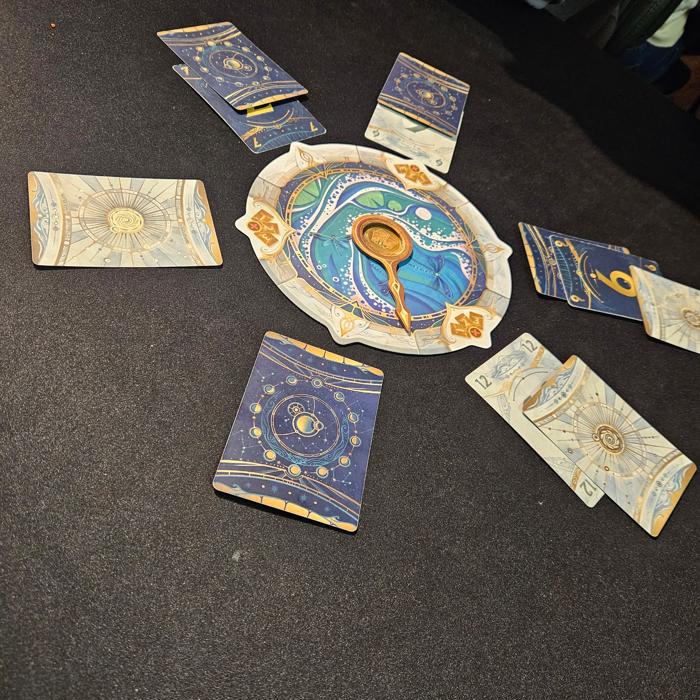
De kaarten worden in principe gedekt rondom de klok gelegd, maar afhankelijk van het aantal spelers mogen sommige kaarten open worden gespeeld.
Controleren
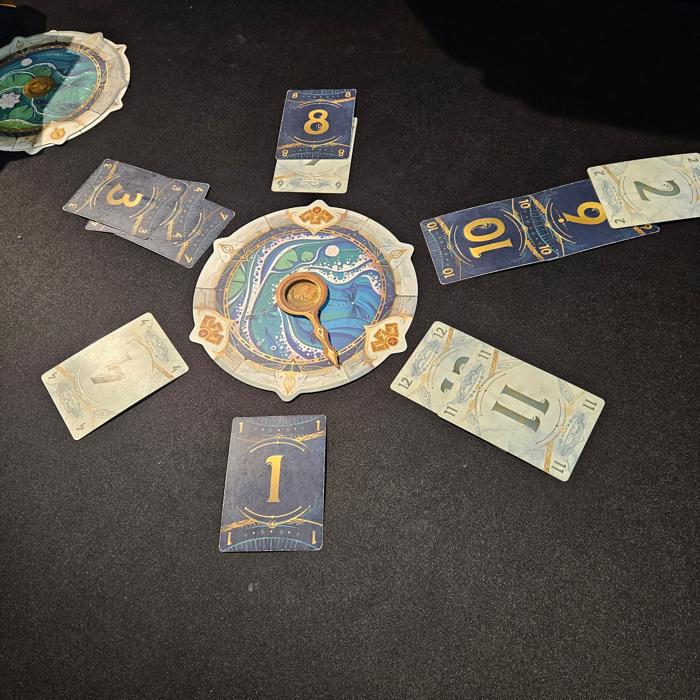
Wanneer alle 12 kaarten zijn geplaatst, worden ze allemaal omgedraaid. Vervolgens wordt gecontroleerd of aan alle voorwaarden is voldaan en de klok correct is voltooid.
Er zijn in totaal 40 verschillende klokken. Elke klok heeft eigen aanvullende voorwaarden, maar voor alle klokken gelden de volgende basisregels:
-
In elk segment ligt minimaal één kaart
-
De totalen van de segmenten lopen op in oplopende volgorde
-
Segmenten hebben een maximale waarde van 24
Voorbeelden van aanvullende voorwaarden zijn onder andere:
-
In dit segment moet één witte en één blauwe kaart liggen
-
Dit segment moet een waarde hebben tussen X en Y
Is de klok gehaald? Dan mag je doorgaan naar de volgende.
Is dat niet gelukt? Dan mag je het gerust nogmaals proberen (en nogmaals, en nógmaals).
Je kunt er ook voor kiezen om een niet behaalde klok op te bergen in een speciaal daarvoor bestemde envelop, om deze later weer op te pakken.
Wat vinden wij van Take Time?
Wat mij betreft klopt Take Time helemaal. De prachtige uitstraling van de doos wordt volledig doorgetrokken in het spel zelf. Ook thematisch voelt alles logisch: er zijn 12 witte en 12 blauwe kaarten, beide met de getallen 1 t/m 12 — dag en nacht. In combinatie met de klokken en wijzers vormt dit een heel samenhangend geheel. Het klopt gewoon.
Een klein minpuntje aan het sprookjesachtige design is dat de getallen op sommige klokken en enveloppen niet altijd even duidelijk zijn. Dat is echter echt een futiliteit. Wel viel het mij op dat de kaarten relatief snel ‘tekenen’. Je gebruikt slechts 24 kaarten, maar die worden wel continu ingezet. Sleeves zijn daarom geen overbodige luxe. Overigens is de kwaliteit prima, zeker gezien de relatief lage prijs. Het ligt echt aan het intensieve gebruik van een klein aantal kaarten.
De iconografie is over het algemeen erg duidelijk en de voorwaarden zijn logisch en goed uit te leggen.
Of het spel bij je past, hangt natuurlijk af van je persoonlijke voorkeur. Zelf dacht ik tot voor kort dat coöperatieve spellen niet helemaal mijn ding waren. Inmiddels weet ik beter: ik vind coöperatief spelen wél leuk, maar het is sterk afhankelijk van het spel. Take Time is wat mij betreft een uitstekend coöperatief spel voor zowel sociale spelers als voor de iets minder sociale spelers (waar ik mezelf ook toe reken 😉). Buiten de overlegfase hoeft er namelijk niet meer gecommuniceerd te worden.
Tijdens het spelen weet je niet wat je medespelers doen. Hebben ze zich aan de afspraken gehouden? Of dachten ze ineens slim te zijn door daarvan af te wijken? Misschien hadden ze zelfs helemaal geen kaarten die ‘goed’ geplaatst konden worden. Dat laatste maakt het spel allesbehalve saai of makkelijk, maar kan soms wel voor flinke frustratie zorgen. Stel: je spreekt af dat in bepaalde segmenten alleen kaarten onder de 6 mogen liggen… en achteraf blijken er van de 12 kaarten maar twee onder de 6 te zijn.
Tijdens het spelen met anderen kreeg ik te horen dat als ik Take Time zo leuk vind, ik zeker ook eens The Mind en/of The Crew zou moeten proberen. Die heb ik zelf nog niet gespeeld, dus ik kan geen vergelijking maken. Maar mocht jij deze spellen kennen en waarderen, dan is Take Time absoluut een aanrader.
Eindconclusie
Ik ben verkocht. Take Time is een heerlijk coöperatief spel, ook voor de (iets) minder sociale speler. De uitwerking klopt, het spel speelt logisch en het artwork is fantastisch. Wat mij betreft een must-have voor elke spellenclub.
Eindscore: 8,5 / 10

Naam van het Spel
Players: 2-4
Time: 30 minutes
Age: 10+
Author: Alexi Piovesan, Julien Prothière
Publisher: Libellud
Year: 2025
Take Time is a unique cooperative (card) game in which players literally take their time to make time. Twelve cards must be placed around a clock in such a way that all conditions are met. But beware: once the cards are being placed, no talking is allowed.
Take Time – First Impressions
No fewer than two members of my local board game club honestly admitted that they bought Take Time completely blind. They were drawn in purely by the artwork and had no real idea what kind of game it was. And honestly? I completely understand. The box alone looks absolutely stunning — a true feast for the eyes. I would have fallen for it too.
Publisher Libellud is, of course, well known for titles such as Harmonies and Dixit, which are visual gems in their own right. The box looks great, but what about the contents? Thankfully, they absolutely do not disappoint. In fact, the inside of the box is at least as beautiful as the outside. Inside, you’ll find several envelopes and cards. Those envelopes contain clocks, each one more fairytale-like than the last.
How Does It Play?
Dealing the cards
The 24 cards are shuffled and 12 cards are dealt to the players.
Note: you may not look at your cards yet.
Planning
Players discuss and agree on the strategy they want to use.
Placing cards
One player places the first card. After that, players take turns clockwise, placing one card at a time until all 12 cards have been placed.
Once placement begins, communication is no longer allowed.
Cards are generally placed face down around the clock, but depending on the number of players, some cards may be played face up.
Checking the clock
When all 12 cards have been placed, they are turned face up. The players then check whether all conditions have been met and whether the clock has been completed successfully.
There are 40 different clocks in total. Each clock has its own additional conditions, but the following rules apply to every clock:
-
Each segment must contain at least one card
-
The total values of the segments must be in ascending order
-
Segments have a maximum value of 24
Examples of additional conditions include:
-
This segment must contain one white and one blue card
-
This segment must have a value between X and Y
If the clock is successfully completed, you may move on to the next one.
If not, you are free to try again (and again, and again).
You can also choose to store an unfinished clock in a special envelope and return to it at a later time.
What Do We Think of Take Time?
As far as I’m concerned, Take Time works beautifully. The stunning presentation of the box is fully reflected in the gameplay itself. The theme feels logical and cohesive: there are 12 white and 12 blue cards, both numbered 1 through 12 — day and night. Combined with the clocks and hands, everything just fits. It makes sense.
One minor drawback of the fairytale-like design is that the numbers on some clocks and envelopes are not always very easy to read. That said, this is really just a small nitpick. I did notice that the cards tend to show wear fairly quickly. Since only 24 cards are used and they are handled constantly, sleeving them is definitely recommended. Overall, however, the component quality is solid, especially considering the relatively low price. The wear is simply a result of using a small deck very frequently.
The iconography is generally very clear, and the conditions are logical and easy to explain.
Whether the game suits you will, of course, depend on your personal preferences. Until recently, I didn’t consider myself much of a cooperative game fan — or so I thought. By now, I can safely say that I do enjoy cooperative games, but it really depends on the game. Take Time is, in my opinion, an excellent cooperative experience for both social players and slightly less social players (myself included 😉). Outside of the planning phase, there is no further communication required.
During play, you have no idea what your teammates are doing. Did they stick to the plan? Did they decide to deviate from it, thinking they were being clever? Or maybe they didn’t even have any cards that could be placed “correctly.” That last scenario is what keeps the game from becoming too easy or dull, but it can also lead to moments of real frustration. Imagine agreeing that only numbers below 6 may be placed in certain segments — only to discover afterward that only two of the twelve cards were actually below 6.
While playing with others, several people told me that if I enjoy Take Time this much, I should definitely try The Mind and/or The Crew. I haven’t played either of those yet, so I can’t make a direct comparison. But if you’ve played and enjoyed those games, Take Time is well worth giving a chance.
Final Verdict
I’m sold. Take Time is a wonderful cooperative game, even for the slightly less social player. The design is cohesive, the gameplay is elegant, and the artwork is fantastic. As far as I’m concerned, it’s a must-have for any board game group.
Final score: 8.5 / 10