
Aantal spelers: 1-5
Speelduur: 30-45 minuten
Leeftijd: Vanaf 13 jaar
Auteur: Isaac Shalev, Jason Slingerland
Uitgever: Grand Gamers Guild
Jaar: 2024

Heb jij ook zo’n fascinatie voor mythologie en legendes?
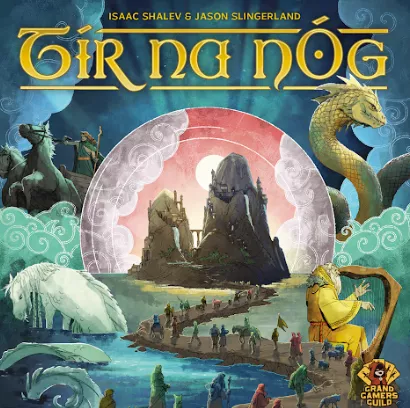
Dan kan ik je dit spel zeker aanbevelen, want in Tír na nÓg (oftewel: Land van de Jeugd) ga je als Keltische verhalenverteller naar mythische oorden om legendarische wezens te ontmoeten. Jouw doel is om het meeste epische saga te schrijven over het deze “Andere Wereld” om zo eeuwige roem te vergaren.
Spelverloop
Elke beurt ga jij een van je verhalenvertellers op pad sturen naar Tír na nÓg om zoveel mogelijk inspiratie op te doen om jouw fantastische saga te kunnen schrijven.
De speler die over 5 rondes de meest roemrijke verhalen kan vertellen wint het spel.
Een ronde bestaat uit 3 fases die moeten worden afgehandeld.
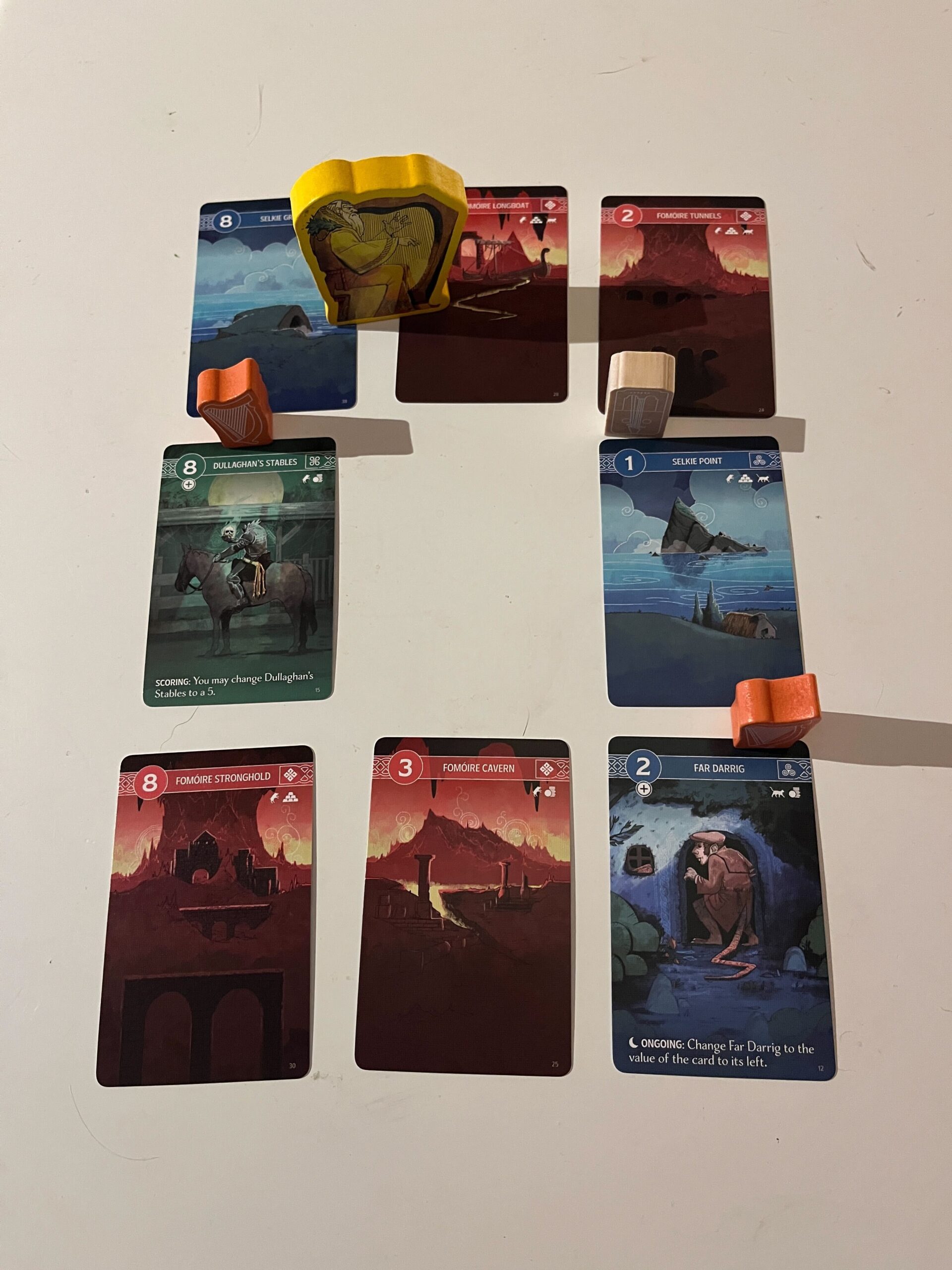
De eerste fase is de “Journey Phase”. Hier gaan de verhaalvertellers door Tír na nÓg reizen. De startspeler begint met het plaatsen van een van zijn drie pionnen. Hij mag kiezen waar hij hem zet, maar natuurlijk zijn hier enkele regels aan verbonden. De speler moet zijn pion tussen exact 2 kaarten in de “Andere Wereld” zetten, niet meer en niet minder. Zo gaat het in de richting van de klok verder tot iedereen al zijn verhalenvertellers heeft gespeeld. Zodra de laatste pion gezet is, mag de speler rechts van de startspeler aan de volgende fase beginnen.
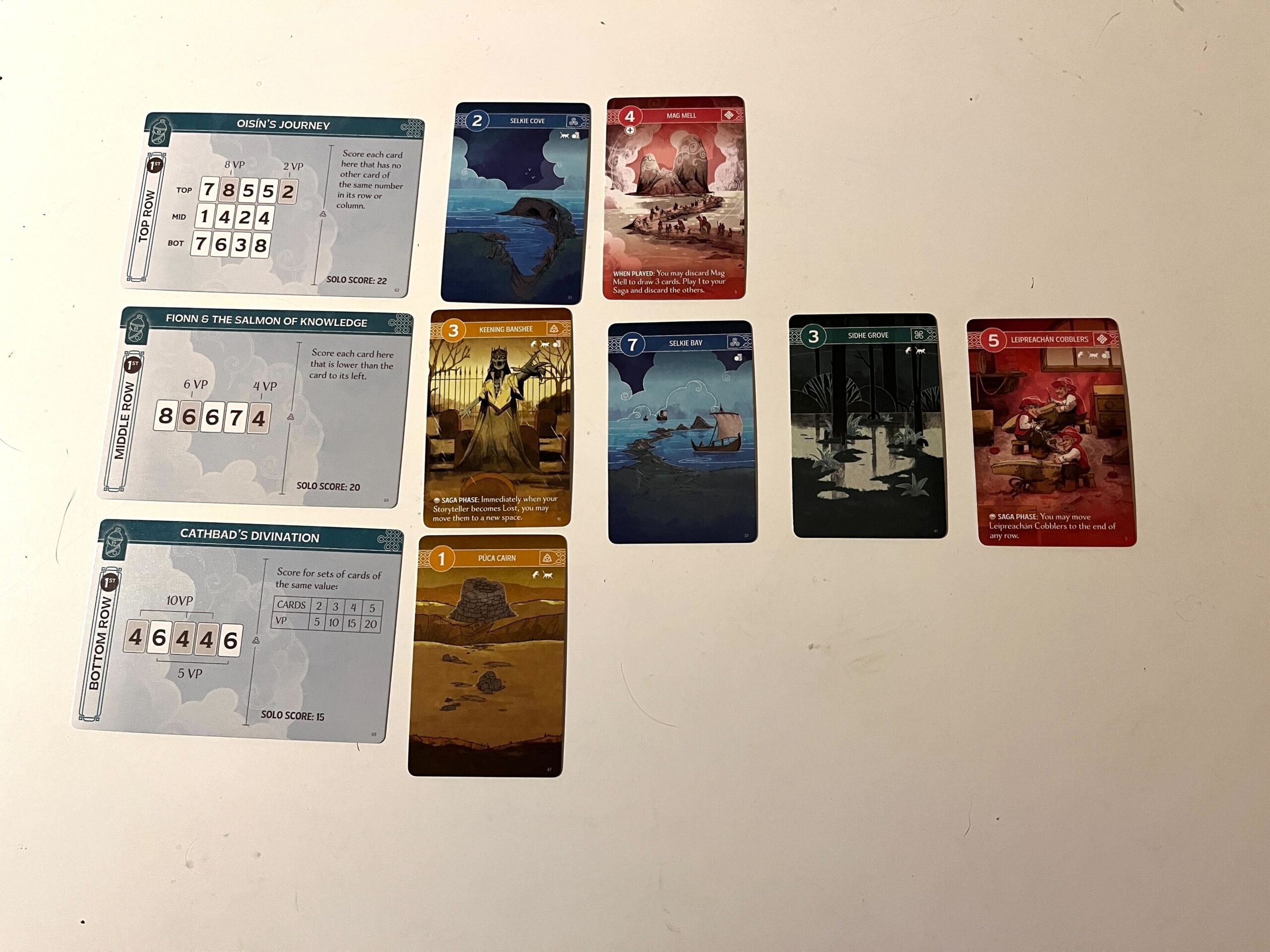
De tweede fase is de “Saga Phase” waarbij de spelers hun verhaalvertellers om de beurt terugroepen en een “ontmoeting” kaart laten meebrengen. Deze kaart wordt aan je hand toegevoegd waarna je een kaart uit je hand in jouw saga moet leggen (van links naar rechts). Bij de plaatsing van deze ontmoetingskaarten probeer je zoveel mogelijk rekening te houden met de “Geas”. Wat zijn deze “Geas”, vraag je je af? Dit is een Oud Gaelic woord voor gelofte of voor vloek. Deze “Geas” staan voor de verschillende scoringsmethoden per rij in je saga. Op het einde van het spel is het de bedoeling dat je 15 kaarten in je saga hebt, onderverdeeld in 3 rijen: top, midden, bodem. Deze fase gaat tegen de richting van de klok en is afgelopen zodra alle pionnen weg zijn.
Ten slotte is er de derde fase waarbij je je gaat voorbereiden voor de volgende ronde.
Hierbij moet elke speler een kaart uit zijn/haar hand weggooien en Tír na nÓg opnieuw aanvullen.
Na 5 rondes is het spel afgelopen en worden de punten van de “Geas” kaarten en de “Regio van Tír na nÓg” kaart bij elkaar opgeteld. Nadien kijken we per kleur wie de grootste aaneenschakeling van die kleur heeft om zo nog extra punten te krijgen.
Spelmechanisme
Dit spel bevat voornamelijk het open drafting mechanisme waarbij spelers met hun op voorhand geplaatste werker kaarten uit het tableau gaan kiezen. Nadien worden ze in hun eigen tableau gelegd en dus zou ik het spel ook beschouwen als een soort tableau builder. Uiteraard komt er ook een beetje hand management bij kijken, maar dit zou ik niet te zwaar laten doorwegen, aangezien dit zeker niet de overhand krijgt.
Mijn bescheiden mening
Het moet gezegd worden dat het spel al een hele poos op mijn radar stond, maar dat ik nog in een zekere twijfelfase zat. Nu ik het heb gespeeld ben ik zeer blij dat ik hem een kans heb gegeven. De mooie artwork (die er ook voor gezorgd had dat Tír na nÓg op mijn radar stond) en de mythologische setting kunnen me helemaal meeslepen. Ik kon het ook niet laten om tijdens het schrijven van deze review geregeld Wikipedia open te doen om zelf meer te weten te komen over deze Keltische mythologie. Dit gezegd zijnde, na het spelen van het spel kan ik je zeggen dat het niet meer enkel de artwork en setting zijn die me het spel aan iemand zouden doen aanbevelen. De leuke manier van open drafting door je pion tussen 2 kaarten te zetten, maakt dat je het tactisch kan gebruiken om ook je tegenstanders niet de kaart te gunnen die ze eventueel nodig hebben.
Wat maakt het spel zo sterk?
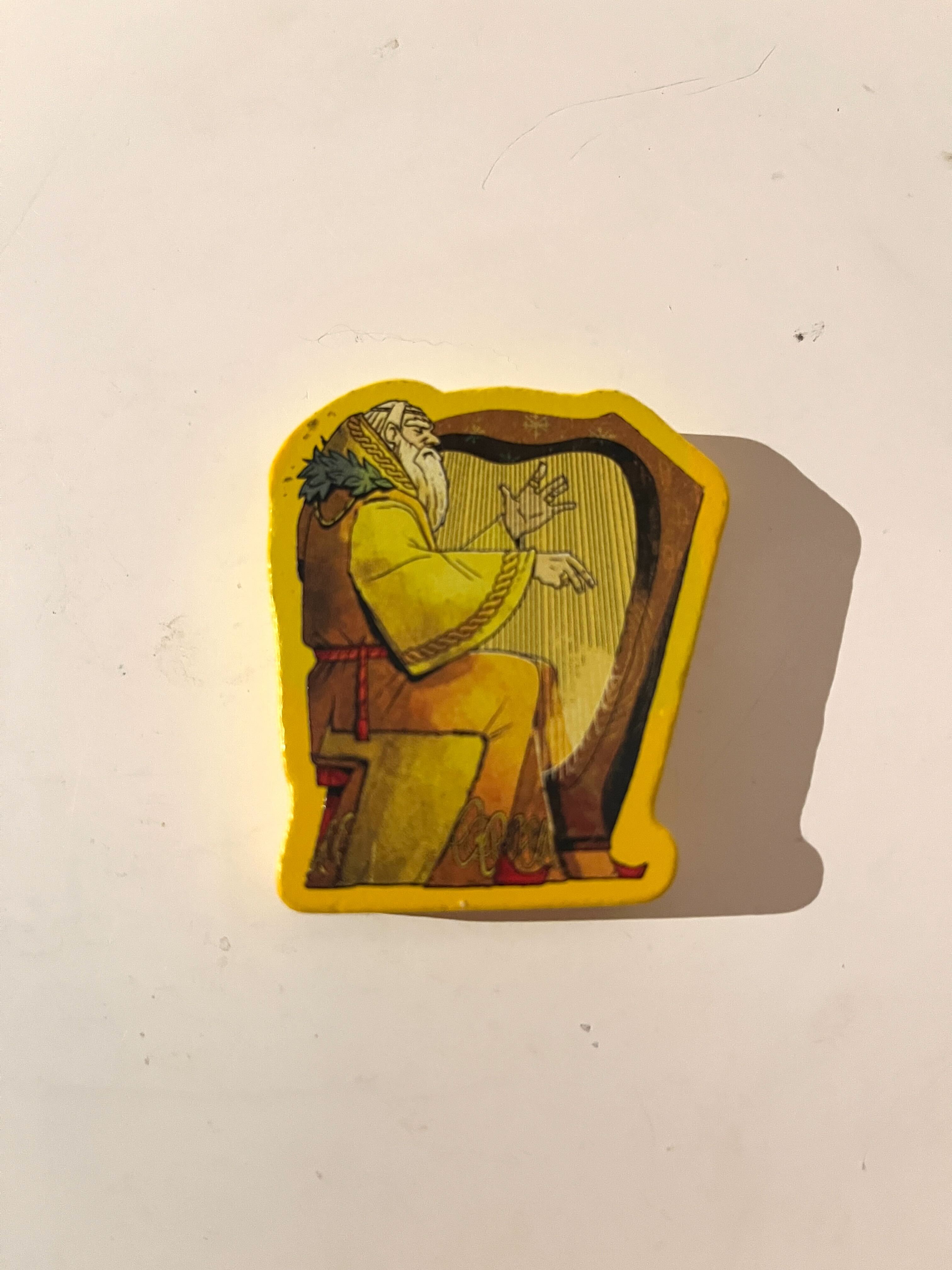
- Uiteraard spraken we hierboven al over het prachtige artwork dat helemaal bij de setting past.
- De tactische beslissingen van waar je pion te zetten en welke kaart te nemen, geven het spel voor mij een net dat extra.
- Het spel is heel eenvoudig te leren met een handige regelboek. (Dit moet toch door iedereen te waarderen zijn, of niet soms? 😊)
- Mogelijkheid tot uitbreiding, waarbij ik doel op extra kaarten voor de ontmoetingen of “Geas”.
Is het alleen maar positief?
Ik vond het een fijn spel, maar ben nog niet helemaal zeker van de solo modus. Deze voelde wat “random” aan. Verder is het een erg luchtig spel, met toch wel wat moeilijkere beslissingen die je moet nemen, waardoor ik denk dat je hier een juiste spelersgroep voor moet zien te vinden die zowel het spelmechanisme als het thema kan appreciëren.
Conclusie
Wat voor mij op de radar stond als een oprecht twijfelgeval heeft nu alle twijfels van zich af kunnen spelen. Het spel speelt zo vlot weg en is heel snel aangeleerd dat het me meteen tot de woorden “nog een potje?” bracht. De mooie tekeningen en de eenvoudige setup mogen natuurlijk ook niet vergeten worden. Het spel heeft me op een manier toch aangenaam verrast, maar ik ben wel nog wat benieuwd naar hoe vaak het herspeelbaar is.
Voor mij krijgt Tír na nÓg wat weinig aandacht en met deze review wil ik het dan toch even in de kijker zetten. Geef het spel zeker eens een kans, want hij krijgt van mij een mooie 7.5/10.

Tír na nÓg
Players: 1-5
Time: 30-45 minutes
Age: 13+
Author: Isaac Shalev, Jason Slingerland
Publisher: Grand Gamers Guild
Year: 2024
Are you, like me, fascinated by mythology and legends?
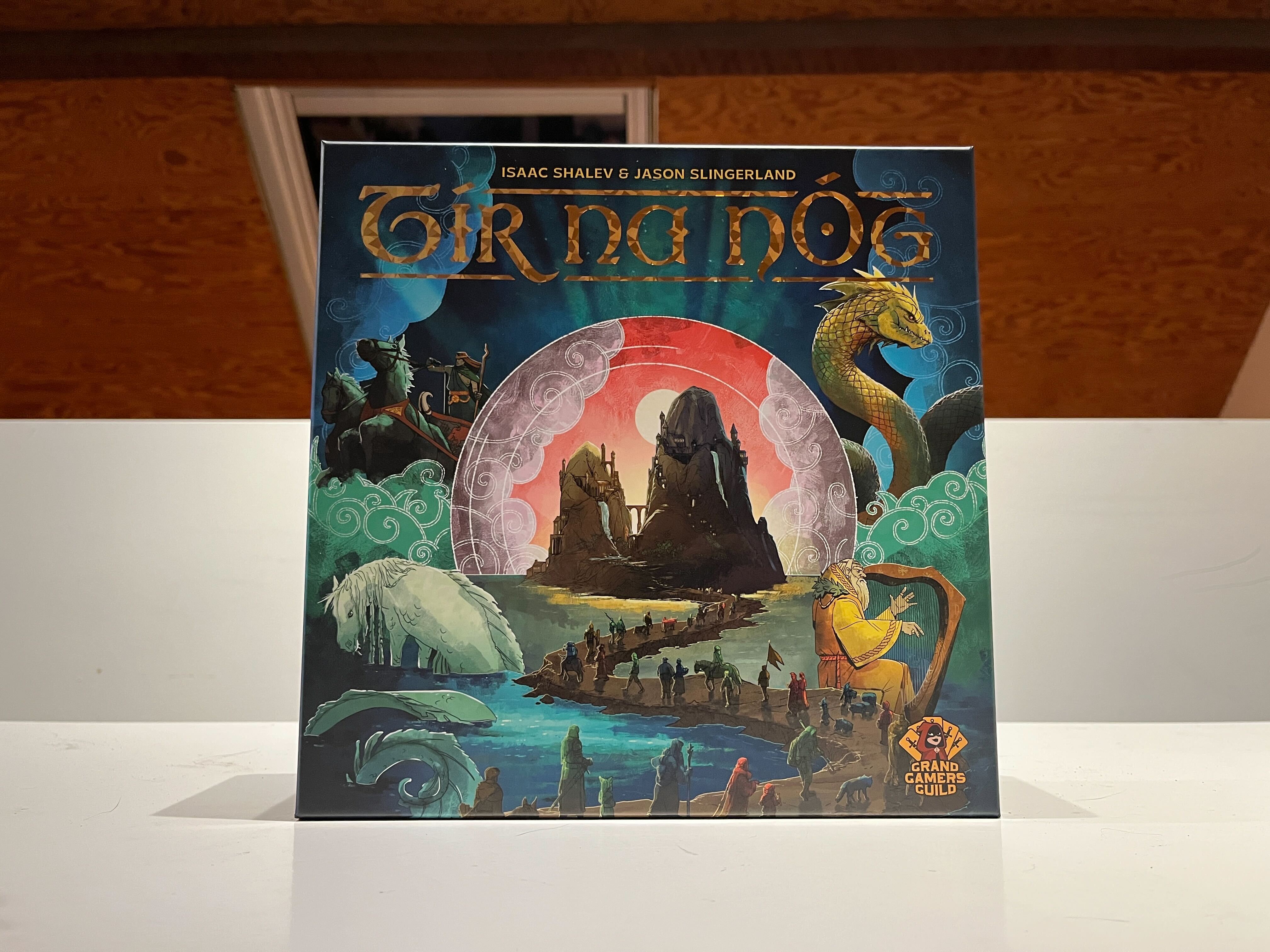
Then I can definitely recommend this game. In Tír na nÓg (or: Land of Youth), you travel as a Celtic storyteller to mythical places to encounter legendary creatures. Your goal is to write the most epic saga about this “Otherworld” and thus gain eternal fame.
Gameplay
Each turn, you will send one of your storytellers on a journey to Tír na nÓg to gather as much inspiration as possible to write your fantastic saga.
The player who tells the most glorious stories over five rounds wins the game.
A round consists of three phases that must be completed.
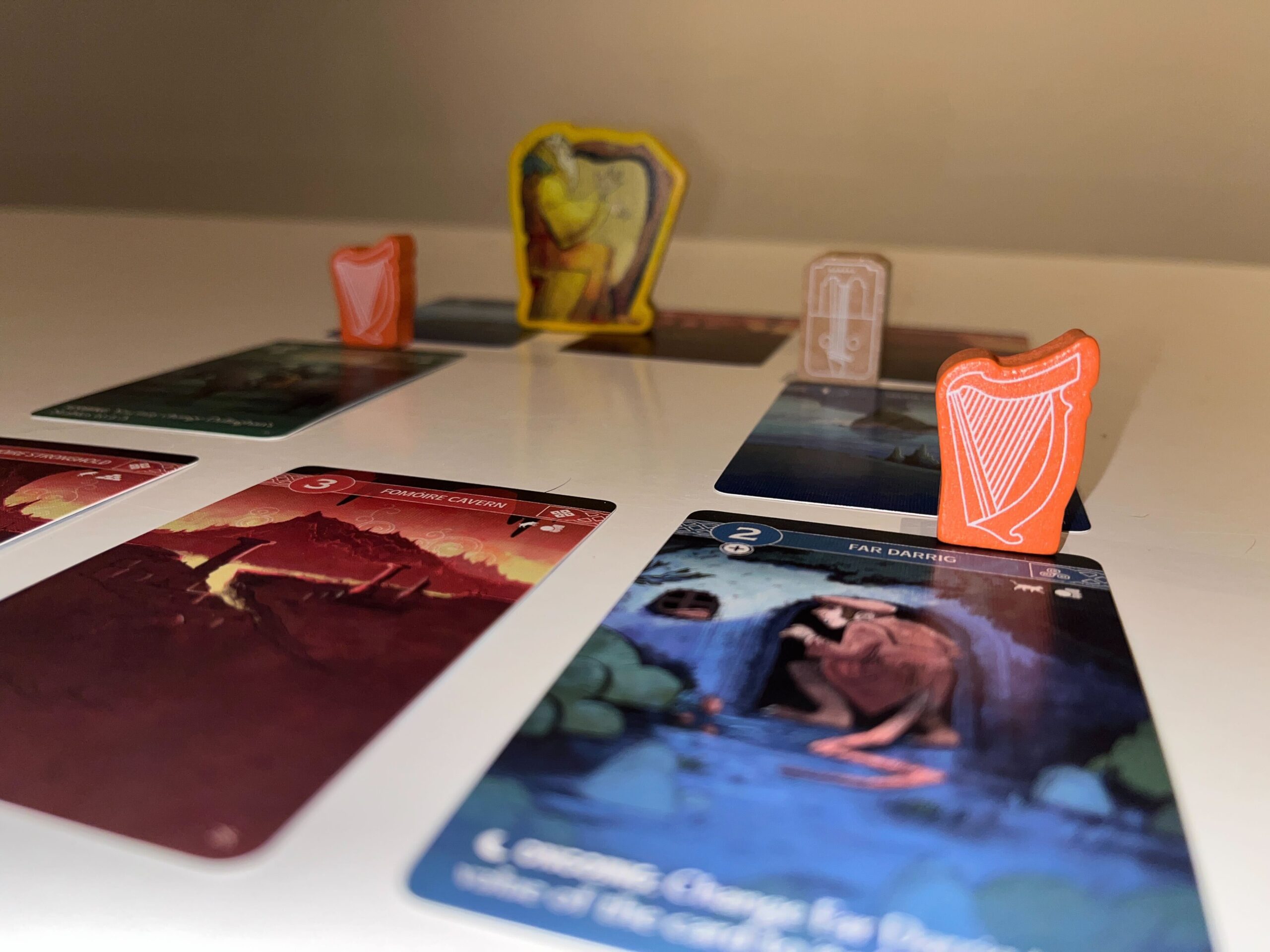
The first phase is the “Journey Phase.” Here, the storytellers travel through Tír na nÓg. The starting player begins by placing one of their three pawns. They can choose where to place it, but of course, there are some rules. The player must place their pawn between exactly two cards in the “Other World,” no more, no less. This continues clockwise until everyone has played all their storyteller pawns. Once the last pawn has been placed, the player to the right of the starting player begins the next phase.
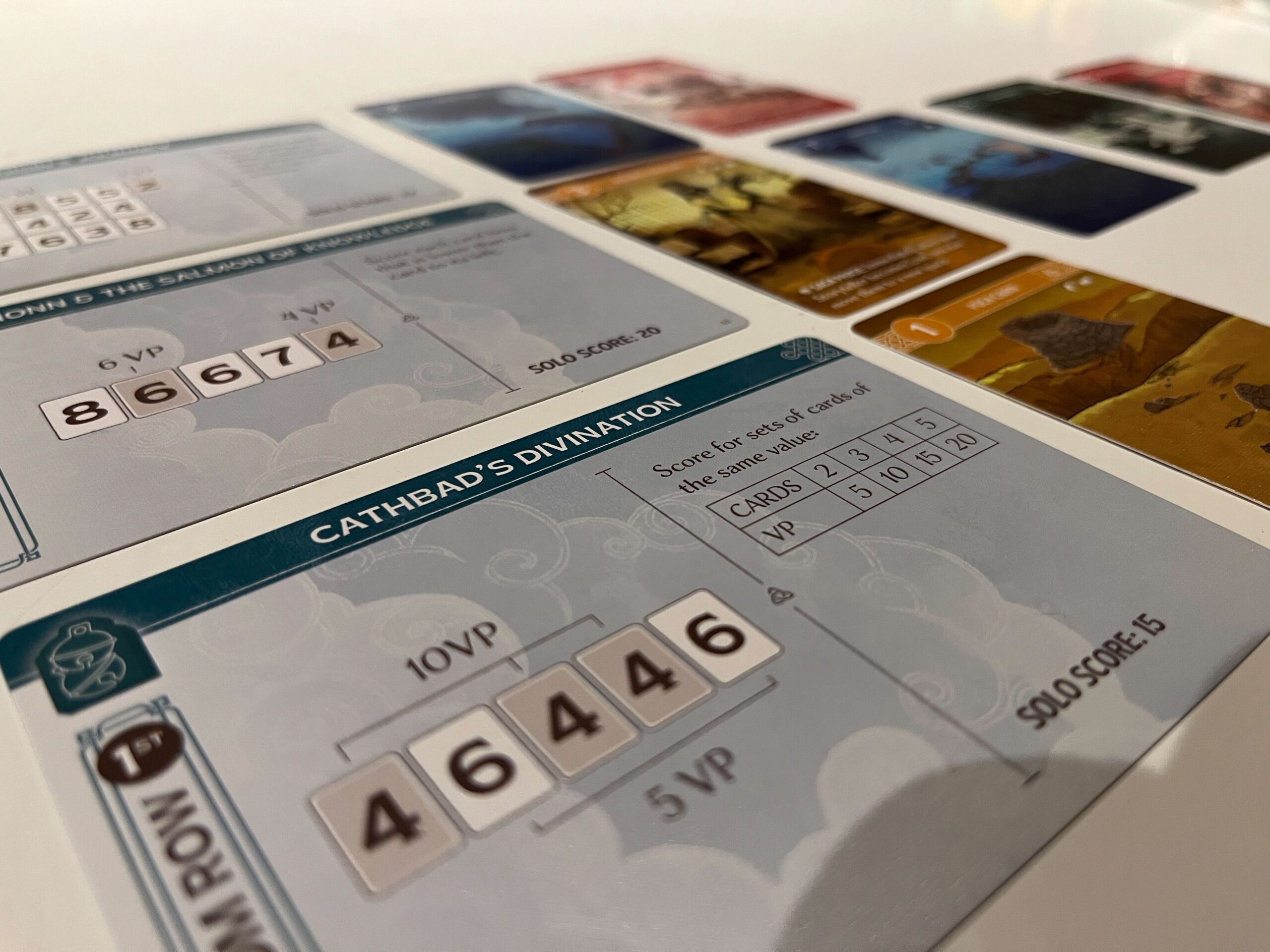
The second phase is the “Saga Phase,” where players take turns recalling their storytellers and having them bring an “encounter” card. This card is added to your hand, after which you must play a card from your hand into your saga (from left to right). When placing these encounter cards, try to take the “Geas” into account as much as possible. What are these “Geas,” you might ask? It’s an Old Gaelic word for vow or curse. These “Geas” represent the different scoring methods for each row in your saga. At the end of the game, you should have 15 cards in your saga, divided into three rows: top, middle, and bottom. This phase proceeds counterclockwise and ends when all the pawns are gone.
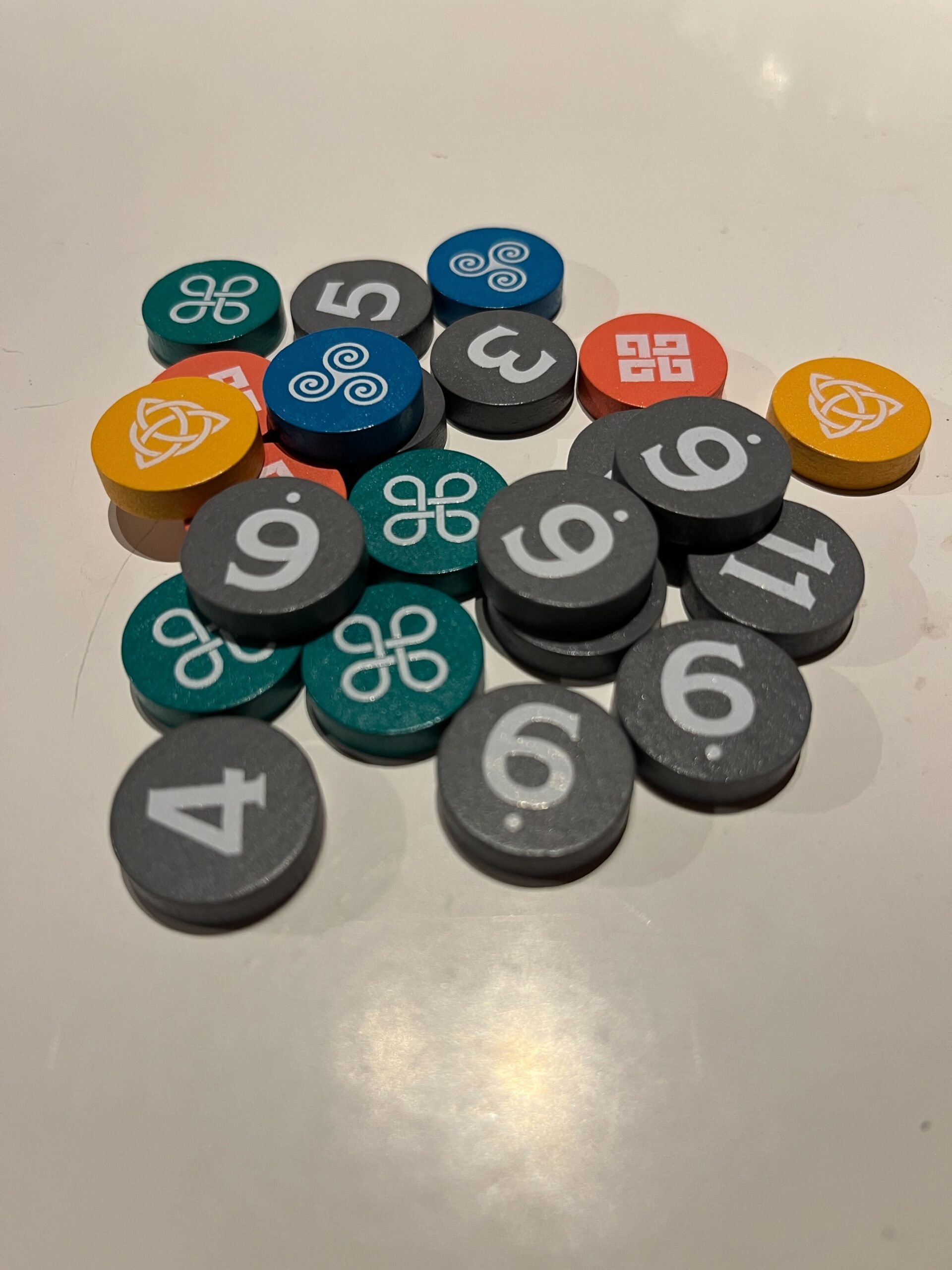
Finally, the third phase is where you prepare for the next round. Each player must discard a card from their hand and refill “Tír na nÓg” (Tír after nÓg). After 5 rounds, the game ends, and the points from the “Geas” cards and the “Region of Tír na nÓg” card are added together. Afterwards, we check who has the longest chain of cards of each color to gain extra points.
Game Mechanics
This game primarily features an open drafting mechanism where players use their pre-placed worker to select cards from the tableau. Afterward, they are placed in their own tableau, so I’d consider the game a kind of tableau builder. Of course, there’s also some hand management involved, but I wouldn’t overemphasize this, as it certainly doesn’t dominate.
My Humble Opinion
I have to admit, the game had been on my radar for quite a while, but I was still somewhat hesitant. Now that I’ve played it, I’m very glad I gave it a try. The beautiful artwork (which also put Tír na nÓg on my radar) and the mythological setting completely captivated me. While writing this review, I couldn’t resist regularly opening Wikipedia to learn more about this Celtic mythology. That being said, after playing the game, I can tell you that it’s not just the artwork and setting that would make me recommend it to someone. The fun open drafting method, by placing your pawn between two cards, allows you to use it tactically to deny your opponents the card they might need.
What makes the game so strong?
- Of course, we already mentioned the beautiful artwork, which perfectly suits the setting.
- The tactical decisions of where to place your pawn and which card to take give the game that little something extra for me.
- The game is very easy to learn with a handy rulebook. (Surely everyone should appreciate that, right? 😊)
- Expansion possibilities, by which I mean extra cards for encounters or “Geas”.
Is it all just positive?
I enjoyed the game, but I’m not entirely sure about the solo mode. It felt a bit “random.” It’s also a very lighthearted game, with some rather difficult decisions to make, so I think you’ll need to find the right player base for it, one that appreciates both the mechanics and the theme.
Conclusion
What was on my radar as a genuine doubt has now been completely dispelled. The game plays so smoothly and is so quick to learn that it immediately made me say, “Another game?” The beautiful artwork and simple setup shouldn’t be overlooked either. The game pleasantly surprised me in a way, but I’m still curious about how often it’s replayable.
I don’t think Tír na nÓg gets much attention, so with this review, I want to highlight it. Definitely give it a try, because I give it a solid 7.5/10.