Aantal spelers: 1-4
Speelduur: 30-45 minuten
Leeftijd: Vanaf 10 jaar
Auteur: Reed Ambrose
Uitgever: White Goblin Games
Jaar: 2025
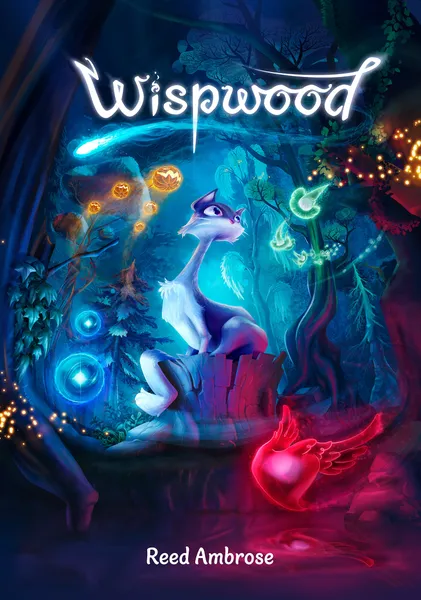

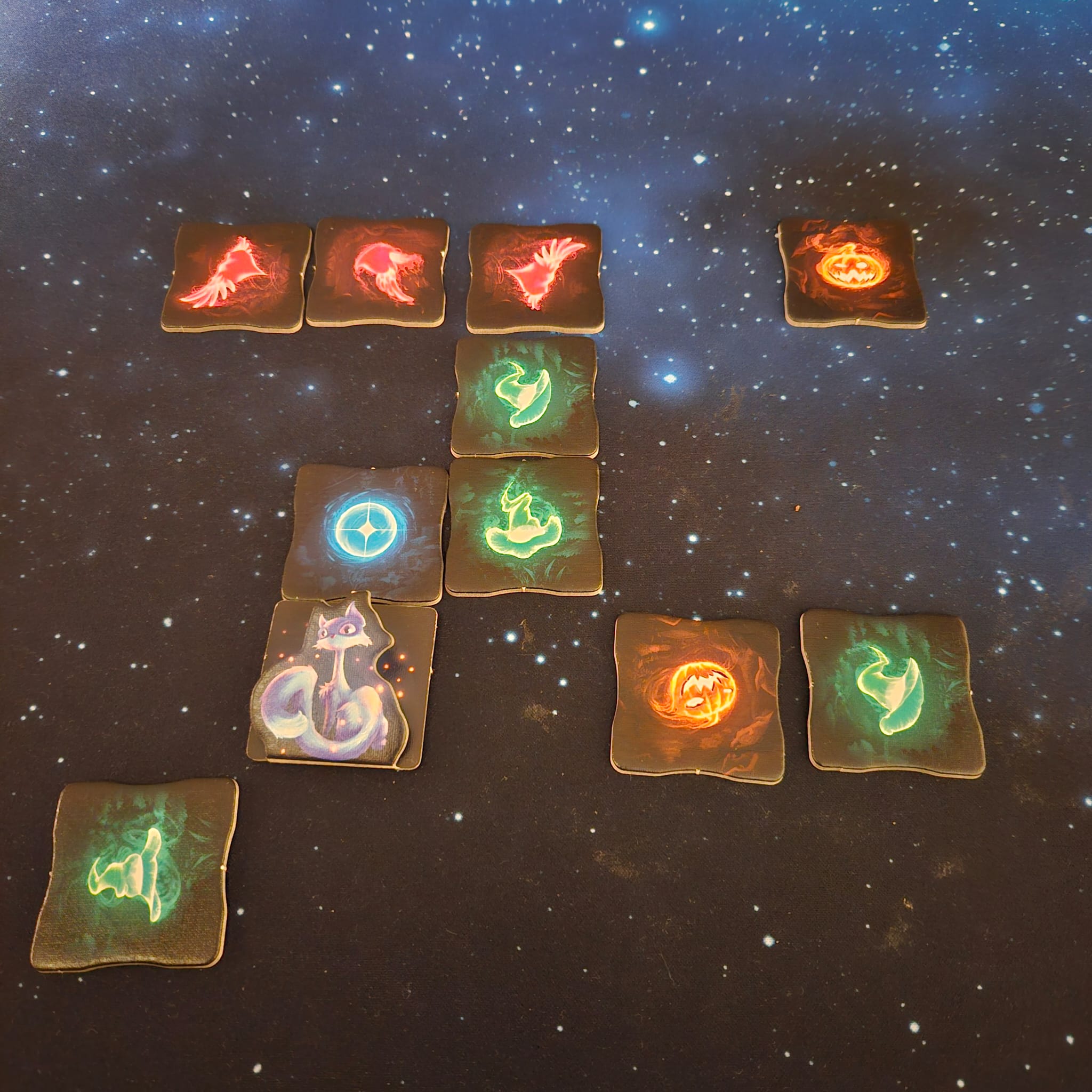
Magische krachten hebben jou en jouw kat zomaar het bos in weten te lokken. The Wisps from the old tales. Jij bent samen met je kat in het bos en probeert te voldoen aan de wishes van de wisps, door ze zo zorgvuldig mogelijk te plaatsen. Elke wisp (tegel) heeft zo zijn eigen wensen, plaatsingsvoorwaarden en scoringsmogelijkheden, voor zij in een grid belanden, waardoor wij hier met recht kunnen zeggen dat we te maken hebben met een nieuwe strategische tegellegger, die zo makkelijk nog niet is.
Wat gaan we doen?
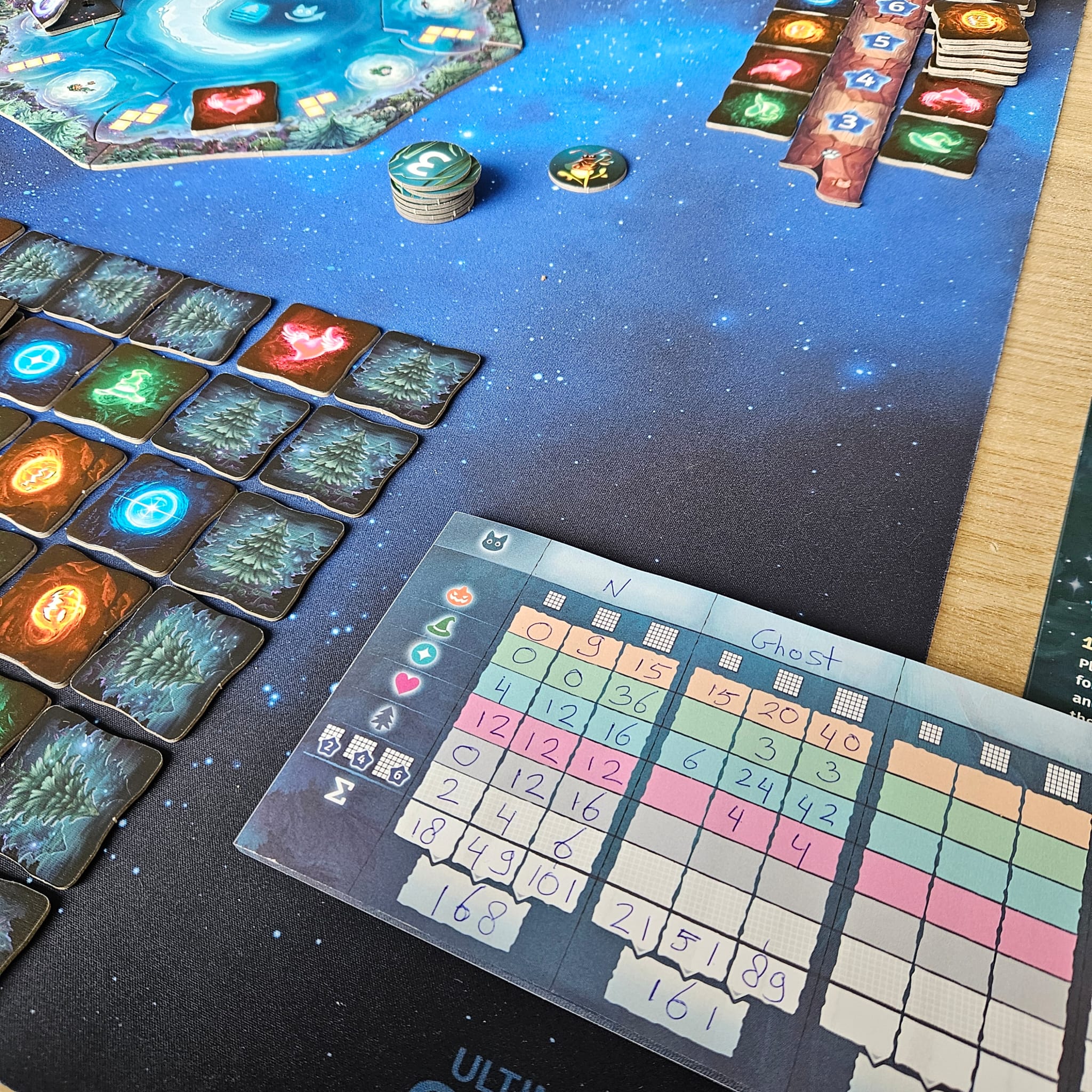
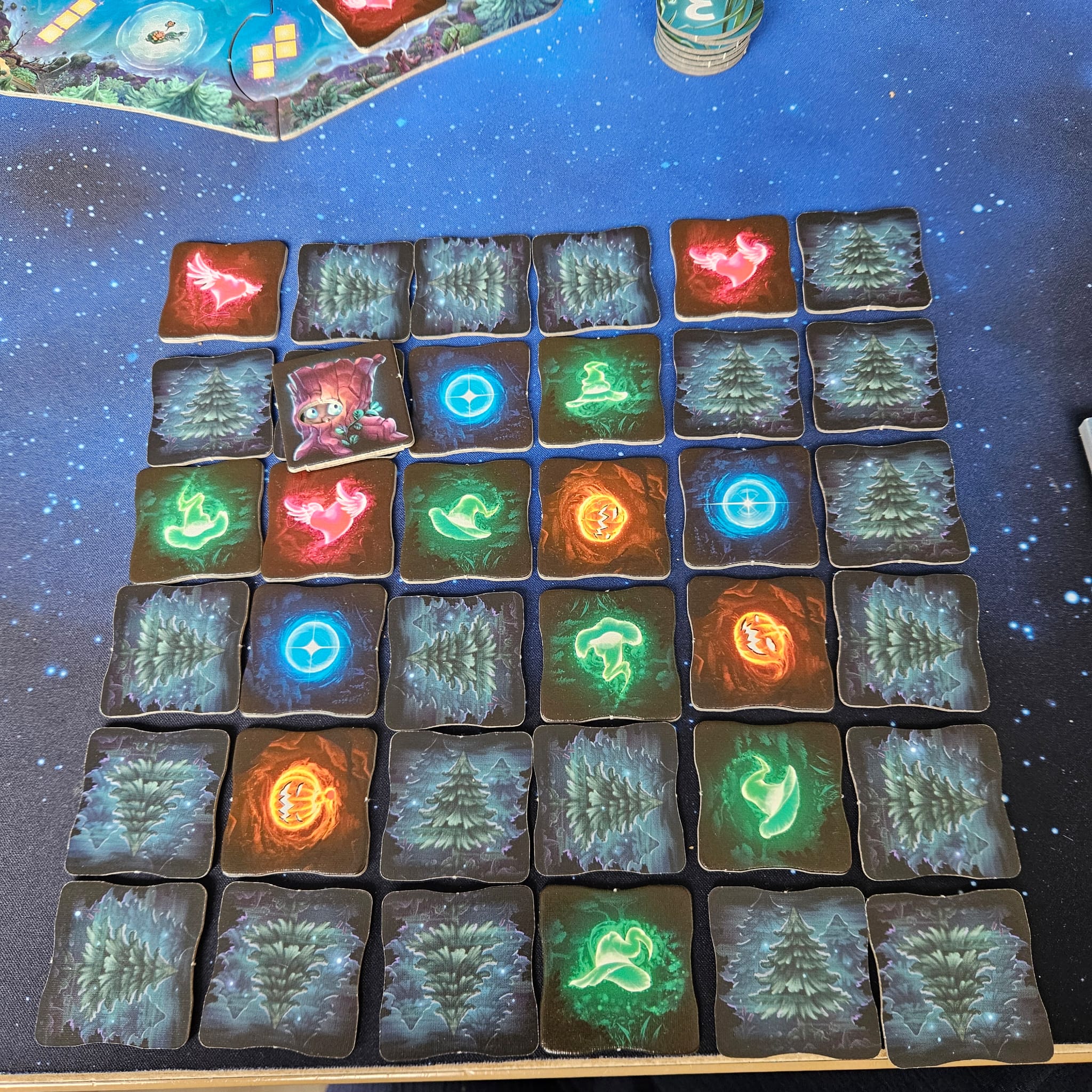
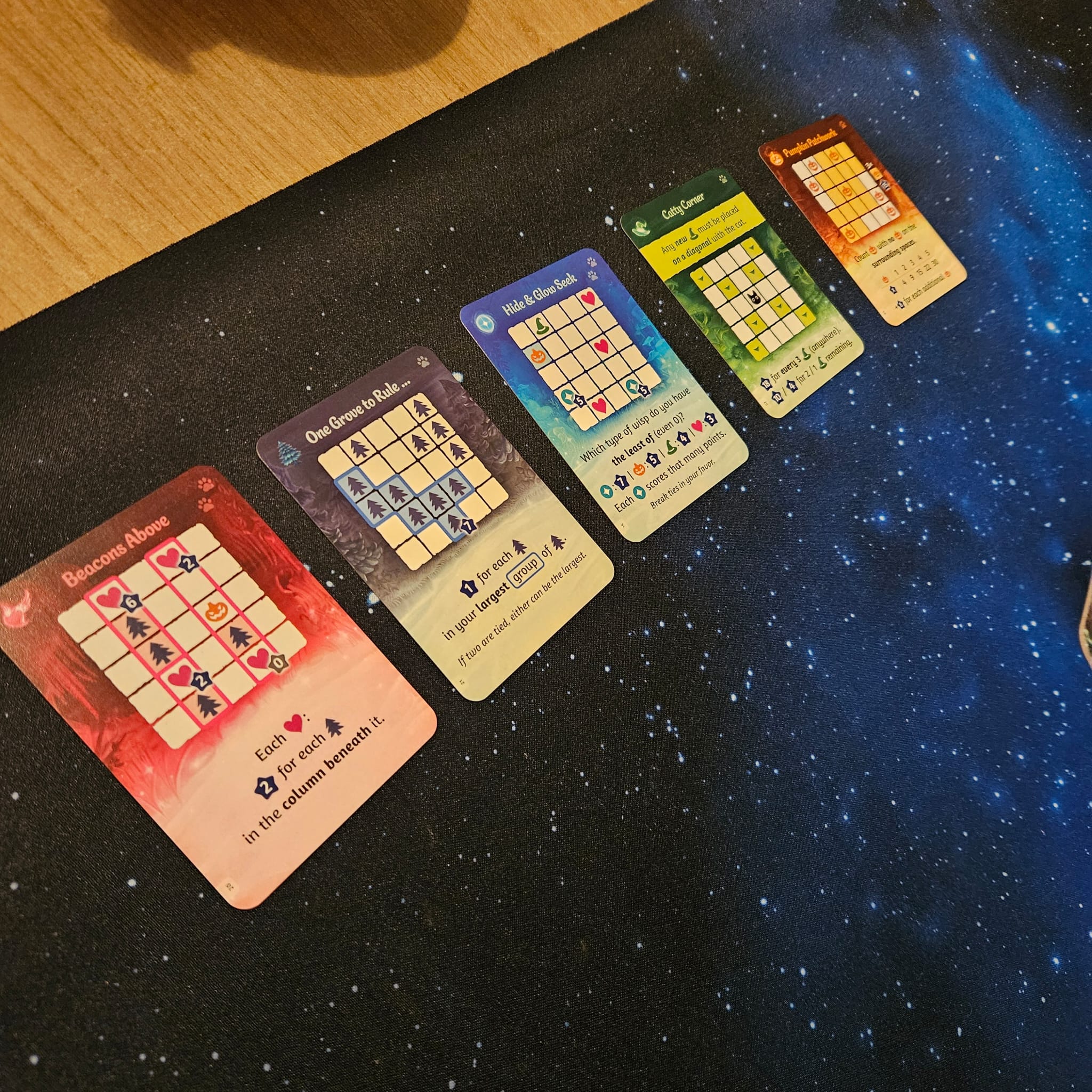
In drie rondes probeer je een grid bij elkaar te puzzelen van 4 x 4, 5 x 5, oplopend naar 6 x 6. Wanneer iemand een grid voltooid wordt de ronde afgemaakt en vindt de ronde telling plaats, waarna de bomen uit het bos verdwijnen, maar de wisps blijven liggen. De telling hangt volledig af van de scoringskaarten die je bij het klaar leggen van het spel hebt gekozen. Elk soort wisp heeft zijn eigen manier van scoren, en daarin zijn ook nog weer variaties, waardoor je 5 x 5 x 5 x 5 x 5 verschillende scoringscombinaties kan maken voor eindeloze variatie.
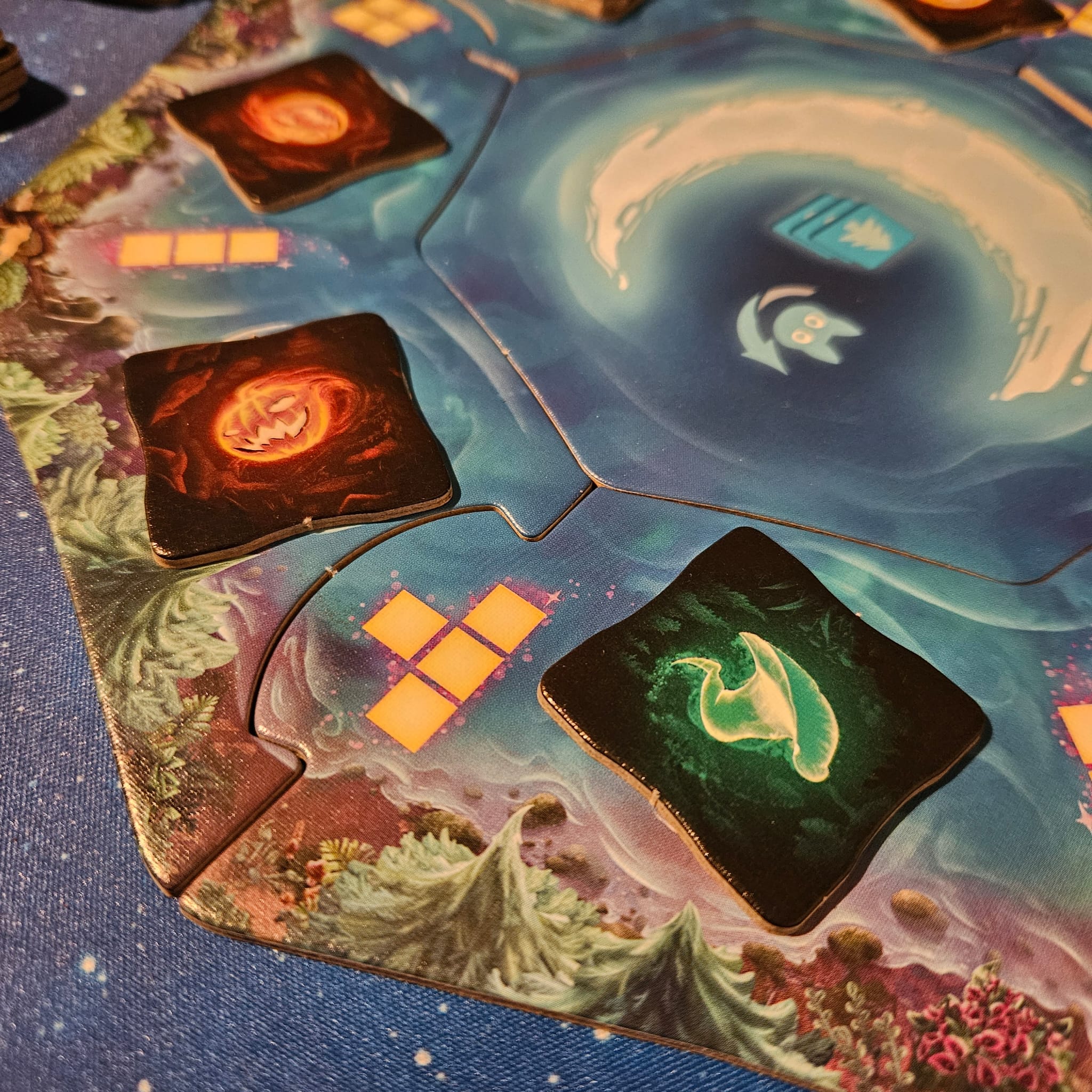
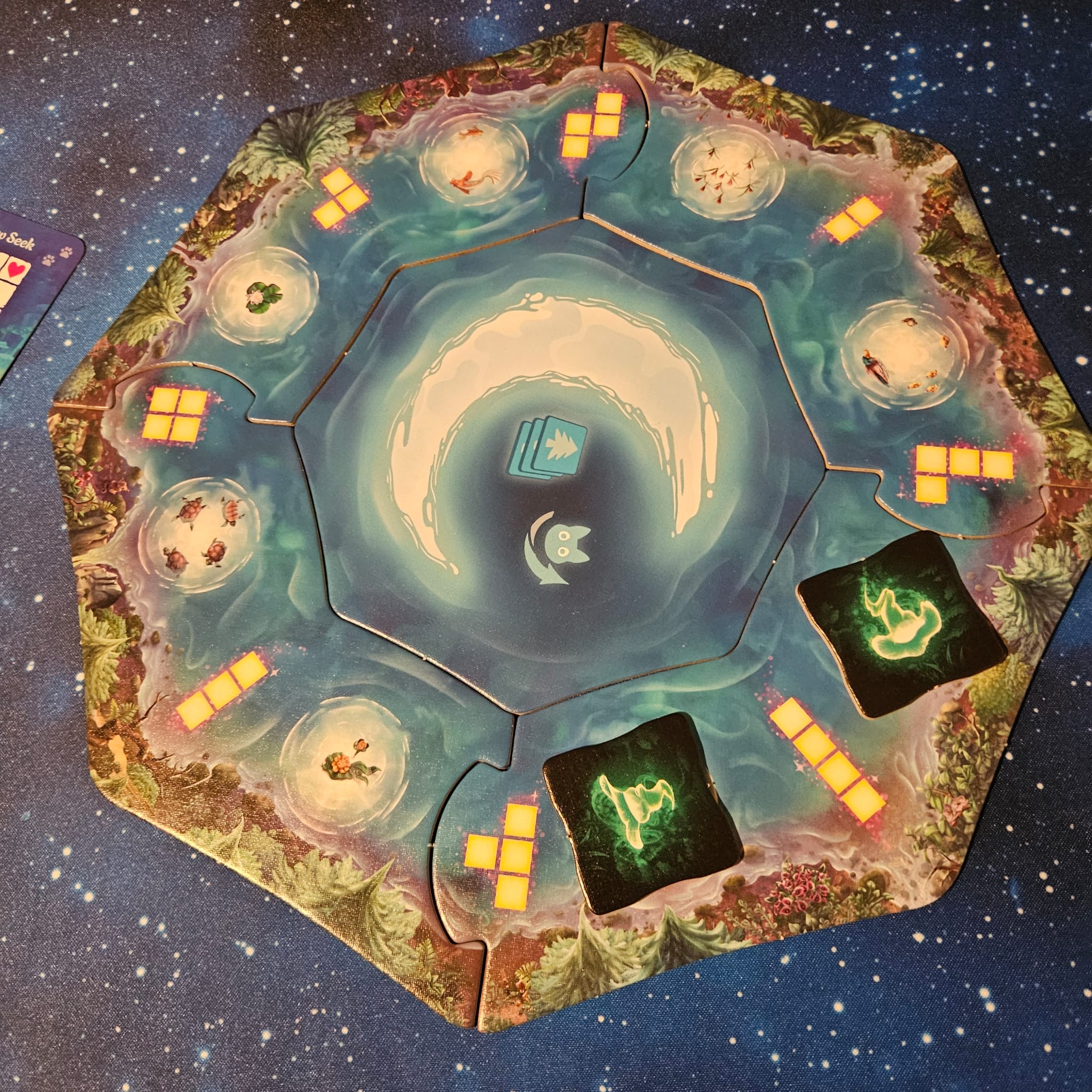
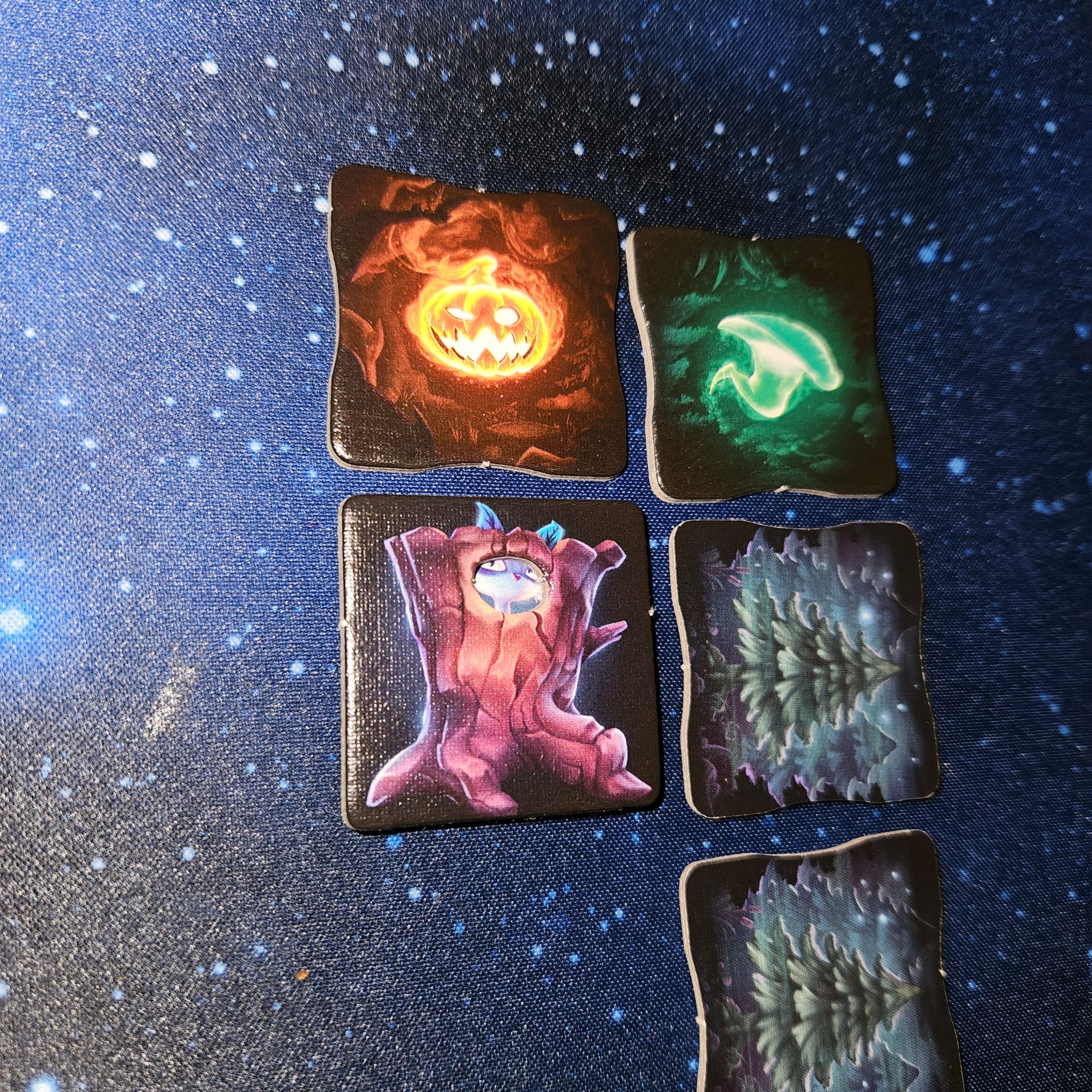
Je beurt is simpel. In het bos is een mysterieuze vijver die de markt voorstelt. Doordat deze uit vier losse delen bestaat is deze ook aanpasbaar en elke keer anders. Rondom de vijver liggen open plekken waar je wisps klaar legt. Deze liggen tussen mogelijke figuuropties in, die voor je zijn voorgedrukt. Dit betekent dat je wanneer je een wisp pakt, je deze moet plaatsen in een van de twee vormen waar hij in de markt aan grenst. Omdat deze vormen uit meer tegels bestaan, pak je als aanvullende tegels bomen, die jouw bos vormen. Het plaatsen doe je niet alleen aansluitend, maar ook volgens de eventuele plaatsingsvoorwaarde van de betreffende wisp, en in de vorm die je gekozen hebt in de markt.
De markt vernieuwen mag als er nog maar één soort wisp in de vijver ligt. De over gebeleven wisps gaan weg. Wil je eerder de markt vernieuwen of je wisp plaatsen met een niet aangrenzend figuur in de vijver, dan mag dat ook. Maar het maakt je kat een het schrikken, waardoor die achter een boom verdwijnt. Deze actie kun je niet meer uitvoeren, tot je kat weer bij zijn positieven is en achter de boom vandaan durft te komen. Dit kan door een bomenactie te doen, waarmee je 1,2 of 3 losse bomen mag pakken en deze op willekeurige plekken (hoeft niet aangrenzend) in je bos kan leggen. Goed bedachte truc om bij ontstane gaten je grid toch vol te krijgen!
Voor het volmaken van je grid krijg je ook bonuspunten. De speler die na de drie rondes de meeste punten heeft, wint het spel.
Wat vinden we er van?
Eerlijk is eerlijk. Wispwood is een spekkie naar het bekkie voor de abstracte puzzel liefhebbers. Hoewel het thema natuurlijk erg mooi en likeable is, is dat redelijk vervangbaar door ieder denkbaar thema. De katten en de wisp maken het spel vooral schattiger en mooier, maar niet persee beter. Ook niet slechter overigens, maar de relatie tussen thema en mechanisme is discutabel.
In feite zijn we aan het puzzelen in een vierkant grid zoals we dat kennen uit een hoop andere spellen. Ook de verschillende scoringskaarten die het spel herspeelbaar maken zijn op zich niet nieuw. Maakt dat Wispwood heel vernieuwend? Nee, want ook het puzzelen met tetrisfiguren kennen we natuurlijk inmiddels ook wel.
Overall kunnen we zeggen dat de makers sterke punten uit verschillende spellen in een blender hebben gegooid en er een mooi thema aan hebben gehangen.
Vernieuwend wel is het weghalen van alle bomen, en het verplaatsen van je kat, wat nieuwe mogelijkheden biedt in nieuwe rondes. Het geeft je de kans om verder vooruit te plannen/denken. Iets wat in de ene ronde niet scoort, kan een knaller worden in een volgende ronde. Daarnaast geeft het je kans om “fouten” recht te zetten, omdat onhandige figuren uit het spel verdwijnen. Je kan je fouten in je voordeel laten werken. Hierdoor krijgt het spel net iets meer gelaagdheid dan alleen een oppervlakkige puzzel en dat is fijn voor de iets doorgewinterde puzzelaar. De gelaagdheid was nog spannender geweest als de markt minder makkelijk aan te vullen was geweest, waardoor je het aanbod kan manipuleren naar precies wat je nodig hebt. Omdat je bijna elke ronde sowieso wel een keer een boomactie doet, voelt het ook niet alsof je je kat offert om zo het aanbod te kunnen verversen. Er is vrij makkelijk te komen aan wat je nodig hebt, waardoor met name de focus op de hoedjes en pompoenen hard kan gaan.
Al met al is Wispwood een toegankelijk spel waar zeker markt voor is. Is het een musthave in de kast? Een klassieker die elk gerespecteerd spelliefhebber op zijn plank moet hebben? Absoluut niet. Maar tegelijkertijd misstaat ie ook zeker niet. Hou je van abstracte puzzles? Speel je veel met je gezin? Heb je een liefde voor het thema of mechanisme, dan doe je er ook zeker geen miskoop mee. Het is gewoon degelijk. Gemiddeld. Niet groots, spannends en meeslepend. Maar goed genoeg om zo af en toe te willen spelen.

Wispwood
Players: 1-4
Time: 30-45minutes
Age: 10+
Author: Reed Ambrose
Publisher: Czech Games Edition (CGE)
Year: 2025
Magical powers have managed to lure you and your cat into the woods. The Wisps from the old tales. You’re in the woods with your cat, trying to fulfill the wishes of the wisps by placing them as carefully as possible. Each wisp (tile) has its own wishes, placement conditions, and scoring possibilities before ending up in a grid. It allows us to rightfully say that we are dealing with a new strategic tile placement games wich is not as easy as it seems.
What are we going to do?
In three rounds, you try to puzzle together a grid of 4 x 4, 5 x 5, increasing to 6 x 6 tiles. When someone completes a grid, the round is finished and the round scoring takes place, after which the trees disappear from the forest, but the wisps remain. The scoring depends entirely on the scoring cards you chose when setting up the game. Each type of wisp has its own scoring method, and there are variations within that as well, allowing you to create 5 x 5 x 5 x 5 x 5 different scoring combinations for endless variety.
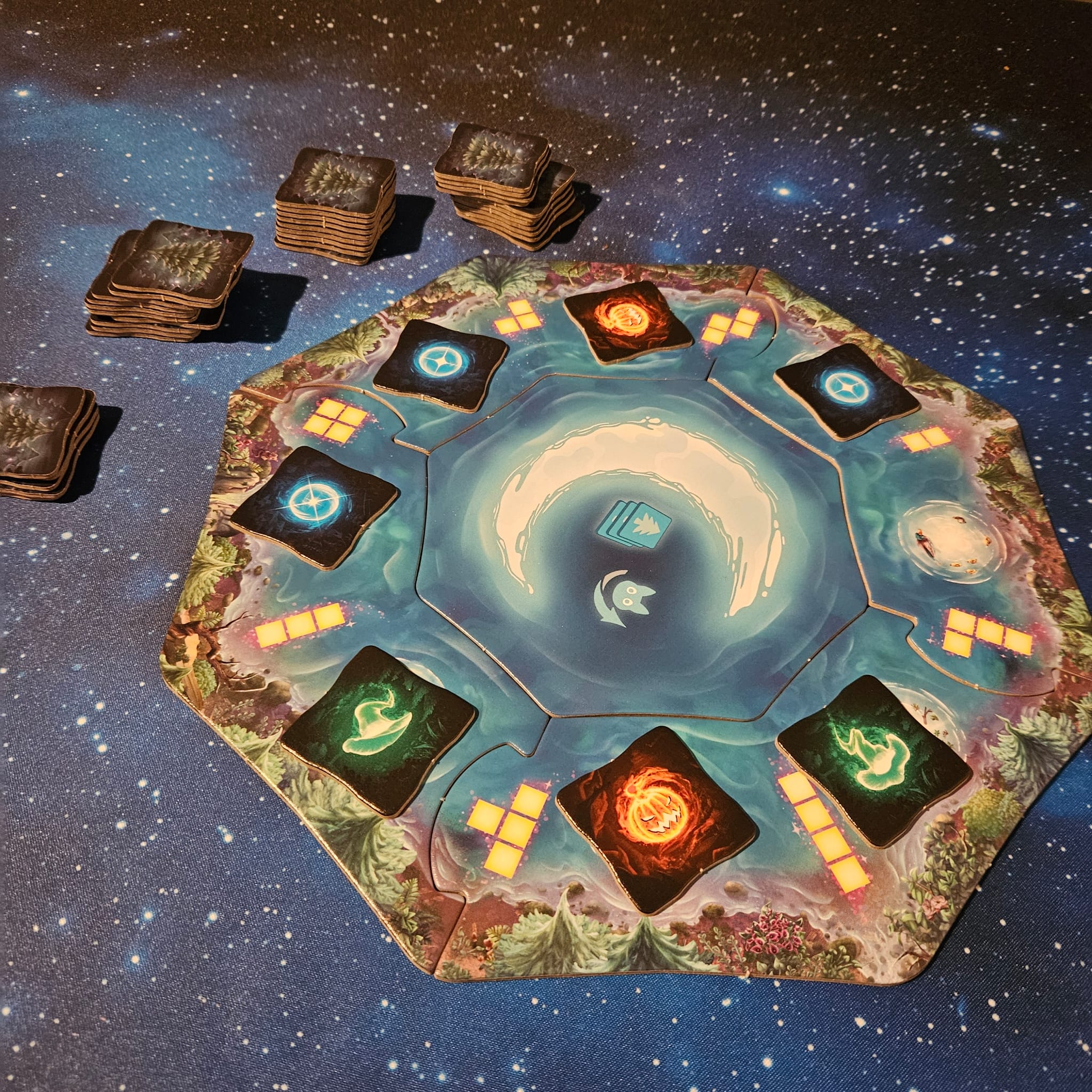
Your turn is simple. In the forest is a mysterious pond representing the market. Since it contains four separate parts, it is also adaptable and different every time. Around the pond there are open spaces where you place your wisps. These are located between possible shape options that have been pre-printed for you. When you pick up a wisp, you must place it in one of the two shapes it borders in the market. Since these shapes consist of more tiles, you take trees as additional tiles to form your forest. You place them not only adjacently, but also according to any placement conditions of the specific wisp, and in the shape you chose in the market.
You may refresh the market when only one type of wisp remains in the pond. The remaining wisps are removed. If you want to refresh the market earlier or place your wisp with a non-adjacent figure in the pond, you may do so. However, it startles your cat, causing it to disappear behind a tree. You cannot perform this action again until your cat has come to its senses and dares to come out from behind the tree. This can be done by performing a tree action, allowing you to take 1, 2, or 3 individual trees and place them at random spots (they do not have to be adjacent) in your forest. A clever trick to fill your grid even when gaps have appeared!
You also receive bonus points for completing your grid. The player with the most points after the three rounds wins the game.
What do we think of it?
Let’s be honest. Wispwood is a real treat for abstract puzzle enthusiasts. Although the theme is naturally very beautiful and likeable, it is fairly easily replaceable by any conceivable theme. The cats and the wisp mainly make the game cuter and more beautiful, but not necessarily better. Nor worse, for that matter, but the relationship between theme and mechanism is debatable.
In fact, we are puzzling in a square grid, just like we know from a lot of other games. The various scoring cards that make the game replayable are also not new in themselves. Does that make Wispwood very innovative? No, because we are, of course, also already familiar with puzzling with Tetris figures.
Overall, we can say that the makers have thrown strong points from various games into a blender and attached a nice theme to it.
What is innovative, however, is the removal of all trees and the relocation of your cat, which offers new possibilities in new rounds. It gives you the chance to plan/think further ahead. Something not scoring in one round can become a smash hit in the next. Additionally, it gives you the chance to correct “mistakes,” as clumsy figures are removed from the game. You can turn your mistakes to your advantage. This gives the game just a little more depth than a superficial puzzle, which is nice for the somewhat seasoned puzzler. The depth would have been even more exciting if the market had been less easy to replenish, allowing you to manipulate the supply to get exactly what you need. Because you perform a tree action at least once in almost every round anyway, it doesn’t feel like you are sacrificing your cat just to refresh the supply. What you need is fairly easy to come by, which means the focus on the hats and pumpkins in particular can really take off.
All in all, Wispwood is an accessible game. Is it a classic that every respected game enthusiast should have on their shelf? Absolutely not. But at the same time, it certainly doesn’t look out of place either. Do you like abstract puzzles? Do you play a lot with your family? If you have a love for the theme or mechanism, you certainly won’t regret buying this. It is simply solid. Average. Not grand, exciting, or captivating. But good enough to want to play every now and then.