Aantal spelers: 1-5
Speelduur: 90-120 minuten
Leeftijd: Vanaf 14 jaar
Auteur: James Tomblin, Frank West
Uitgever: DSV Games
Jaar: 2026
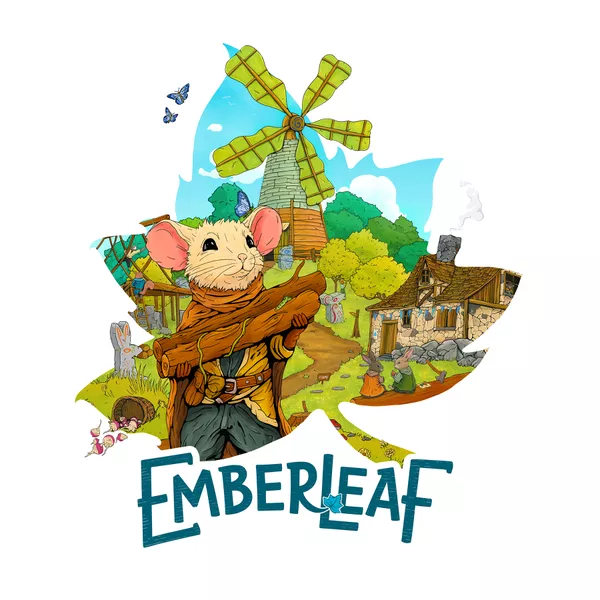

Heel lang geleden werd het oeroude Emberleaf verwoest door Lord Vesh waardoor de Emberlings werden teruggedreven tot donkere schuilplaatsen. Als Emberling zal jij trachten het bos tot zijn vroegere glorie te herstellen, maar je bent natuurlijk niet de enige die dit probeert…
Spelverloop
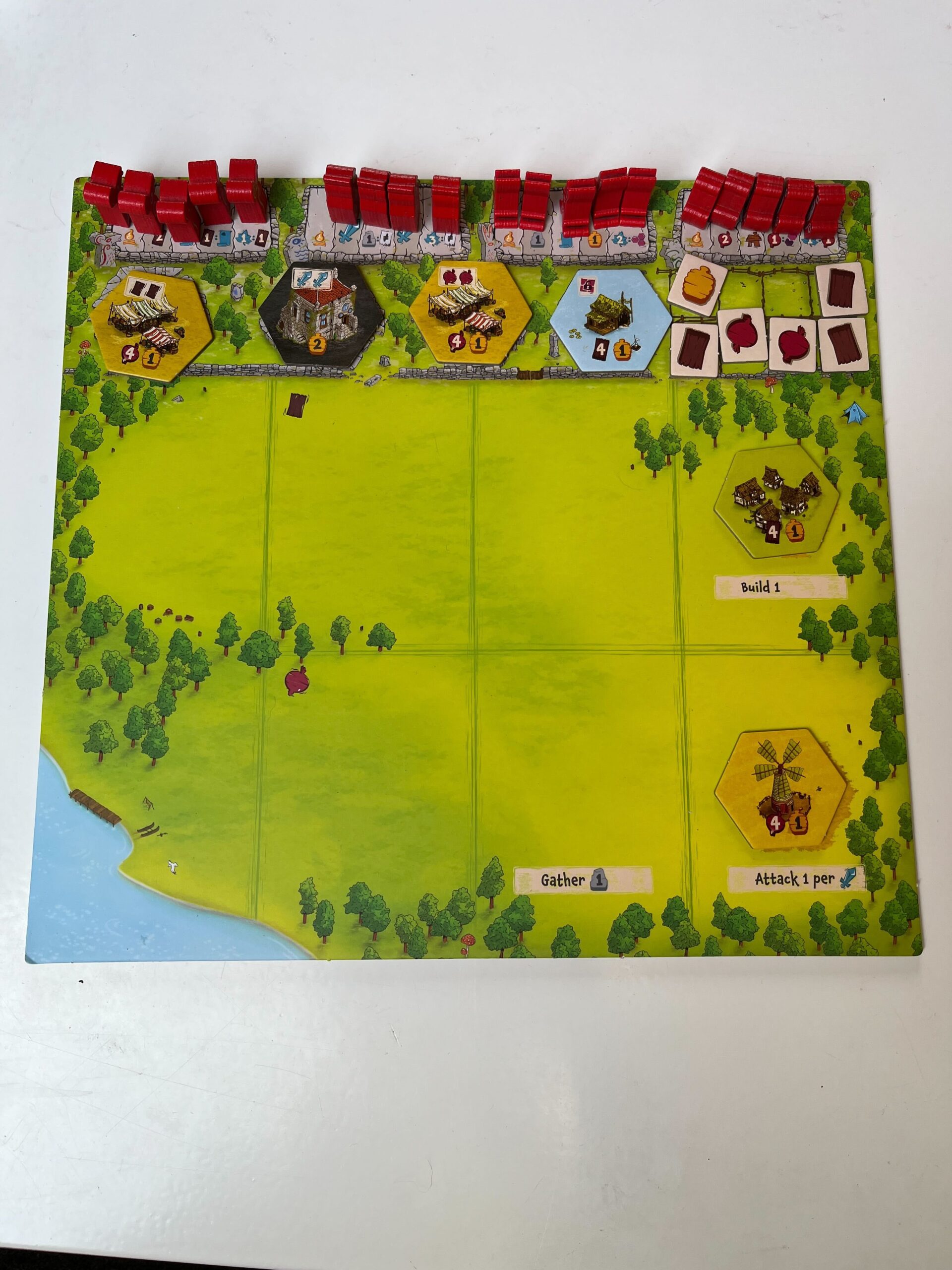
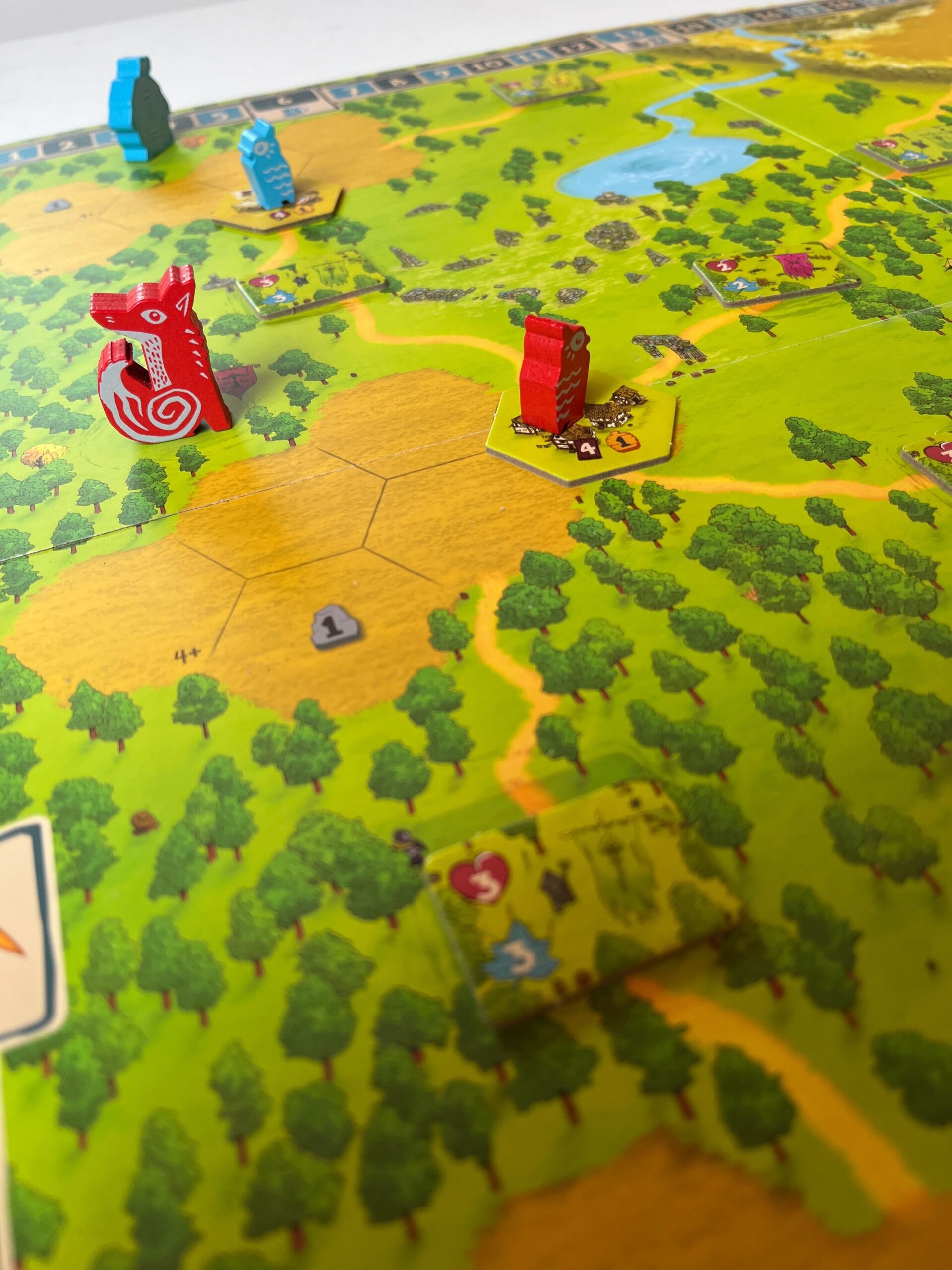
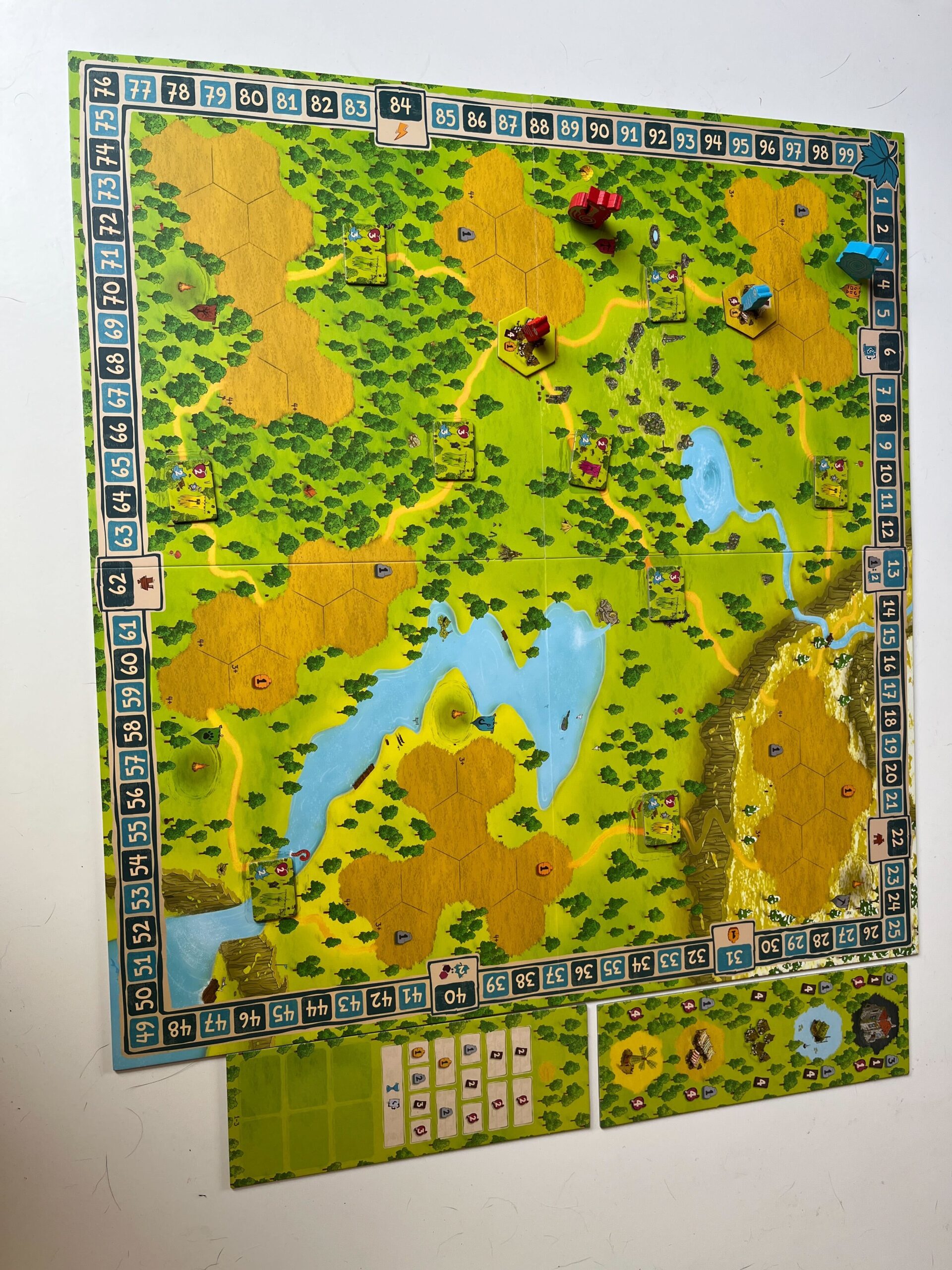
Het spel wordt gespeeld op het speelbord dat het bos Emberleaf voorstelt. Je gaat bouwen, verkennen, grondstoffen verzamelen, gevaarlijke gebieden veilig maken én helden aanwerven.
Tijdens je beurt kan je steeds kiezen uit 2 basisacties en 2 optionele acties. De basisacties zijn “Een kaart spelen” en “Kaarten verschuiven”. De optionele acties zijn “Een kaart laden”, waarbij je de vaardigheid van een van je gespeelde kaarten kan activeren of “Een belofte doen” waarbij je een nieuwe doelkaart kan nemen.
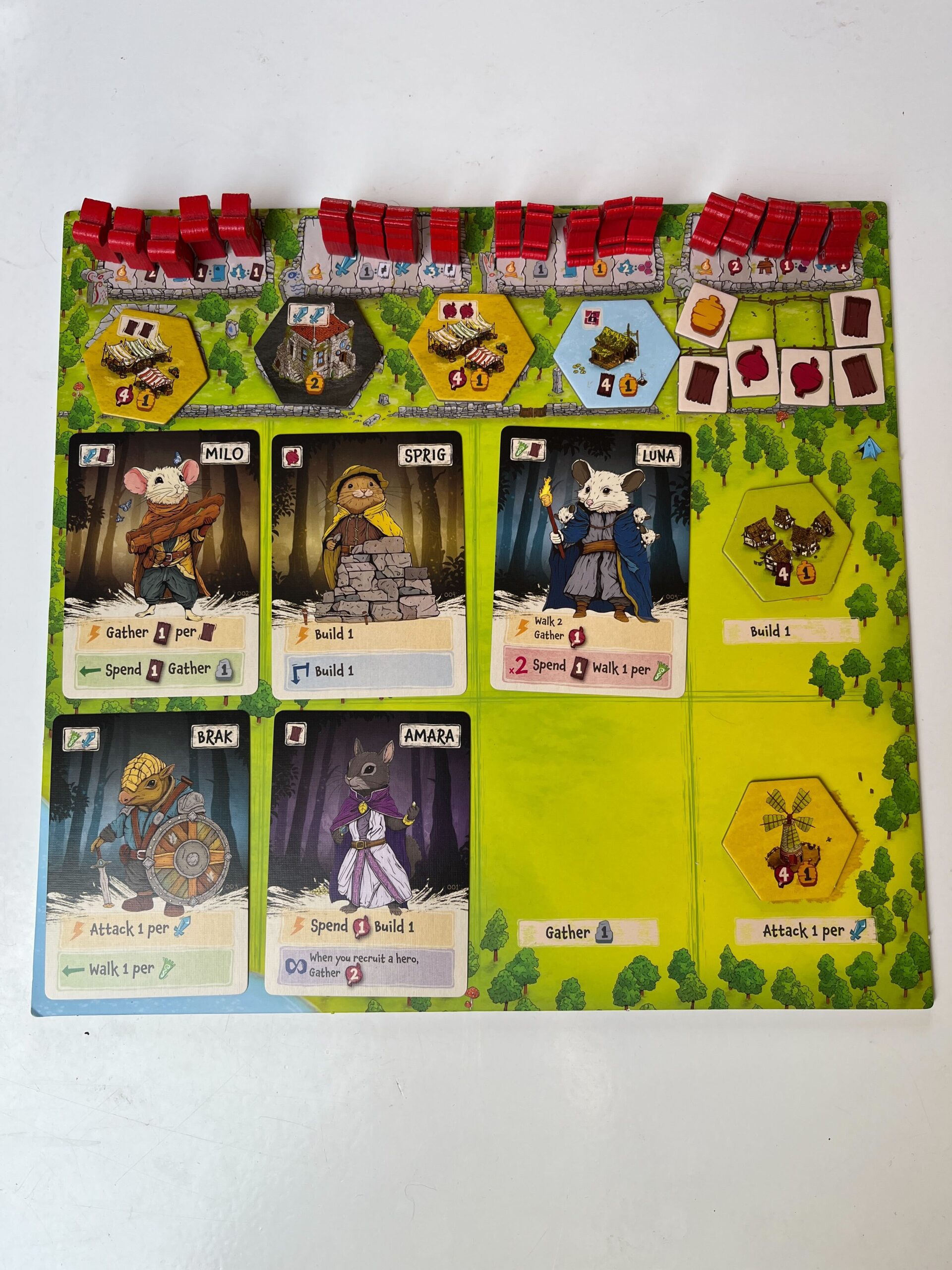
Als je een kaart speelt, leg je die kaart op een leeg veld op je spelersbordje. Waarom zou je dit doen? Omdat die kaarten je allerlei voordelen kunnen geven.
Als je de kaarten verschuift, verschuif je een voor een alle kaarten naar links.
Elke kaart representeert een held die verschillende vaardigheden kan hebben.
Er zijn 5 mogelijke vaardigheden:
- Wanneer gespeeld: Je mag de vaardigheid activeren als je de kaart op je persoonlijk bordje speelt.
- Schuiven: Je mag de kaart activeren als je de kaart een plekje naar links opschuift op je persoonlijk bordje.
- Afvallen: Je mag de kaart activeren als je kaart van je bordje afvalt door het naar links te verschuiven.
- Laden: Je kan een verworven grondstof of vaandel op je kaart leggen om deze vaardigheid te activeren.
- Continu: je kan deze vaardigheid activeren als je aan de beschreven voorwaarde voldoet (bijvoorbeeld: Als je een bewoner aan een huis toewijst, kan je X doen.)
Elke kaart heeft ook een aantal ‘stats’ die ervoor zorgen dat je de bovenstaande acties kan uitvoeren. Zo heb je “wandelen”, “verzamelen”, “aanvallen” en “bouwen”. Bij het uitvoeren van deze acties kijk je naar de stats op je gespeelde kaarten om te zien hoe goed je die bepaalde actie kan uitvoeren. (Als je bijvoorbeeld 3 zwaarden op je kaarten hebt staan, kan je een gevaarlijk gebied met een sterkte van 3 veiligstellen.)
Bij het bouwen mag je ook meteen een bewoner aan het nieuwe gebouw toewijzen van je spelersbordje. Je hebt 4 soorten bewoners (ratten, uilen, konijnen en kikkers) en bij het plaatsen van zo’n bewoner krijg je meteen ook de bonus die die specifieke bewoner met zich meebrengt.
Je probeert dus met je meeple (Emberling) over het hoofdbord te wandelen en huizen te bouwen en gevaarlijke gebieden te beveiligen om zo je doelkaarten te volbrengen. Deze doelkaarten kan je tijdens het spel bemachtigen door bijvoorbeeld voor de eerste keer op een nieuwe regio te komen. Deze doelkaarten zijn de voornaamste bronnen van punten in het spel. Ze zullen je op het einde van het spel dus punten opleveren als je aan de voorwaarden van de kaart voldoet.
Nadat je al je acties voor die beurt gedaan hebt, wordt er gekeken naar de trofeeën. Trofeeën worden aan spelers gegeven als die speler het einde van het oorlogsspoor heeft gehaald of als die speler een regio heeft volgebouwd. Je mag vooruit op het oorlogsspoor als je een gevaarlijke gebied hebt beveiligd. Elk vakje op het oorlogsspoor geeft je bepaalde bonussen zoals extra hout of voedsel, maar het einde van het spoor levert je een trofee op. Deze trofeeën leveren punten op, maar zijn ook gelimiteerd. Wanneer de laatste trofee weggehaald is, eindigt het spel.
Als de trofeeën zijn uitgereikt kijken we naar het scorespoor. Op het scorespoor staan een aantal beloningen voor het passeren van dat veld. Van zodra de eerste speler een veld met een bonus passeert, krijgt elke speler die specifieke bonus.
Nadien worden de kaarten in de marktrij aangevuld en begint de beurt van de volgende speler.
Als de laatste trofee gewonnen is, wordt de huidige ronde nog uitgespeeld zodat iedereen evenveel beurten heeft gehad en dan start de puntentelling.
Spelmechanisme
Ik zou het spel categoriseren onder het set collectie mechanisme omdat je namelijk kaarten gaat spelen op je spelersbord om zoveel mogelijk interactie tussen de kaarten te verkrijgen. Verder heeft het spel ook een tegelplaatsing mechanisme omdat je gebouwen gaat bouwen in de open regio’s op het bord. Het is geen klassiek tegellegspel want dit is niet je hoofdbezigheid, maar het zit wel in het spel verweven.
Je gaat ook tijdens het spel proberen je doelkaarten te voltooien en dat valt dan weer onder het mechanisme van “contracten volbrengen”. Volgens Boardgamegeek bevat het spel ook een “kill steal” mechanisme omdat enkel de speler die als laatste een gebouw neerpoot in een open gebied de trofee krijgt, maar ik vind het een klein beetje vergezocht om dit “kill steal” te noemen. What’s in a name, natuurlijk.
Tenslotte heeft het spel een nieuw mechanisme geïntroduceerd, namelijk “kaart dansen”. Dit betekent dat de kaarten verschuiven over je spelersbord dat dit bepaalde vaardigheden kan activeren. Dit mechanisme was (voor mij althans) iets nieuws.
Mijn bescheiden mening
Het spel heeft via Kickstarter zijn weg tot bij mij gevonden. Ik was meteen verkocht door de prachtige tekeningen en het thema. Boswezens en schattige diertjes hebben altijd een extra aantrekkingskracht voor mij en het zal je dus niet verbazen dat ik dit spel zonder veel twijfel had gebacked.
Wat maakt het spel zo sterk?
- Het nieuwe mechanisme van kaartdansen: Dit mechanisme was, zoals gezegd, nieuw voor mij, maar het zorgt voor een enorm fijn spelgevoel.
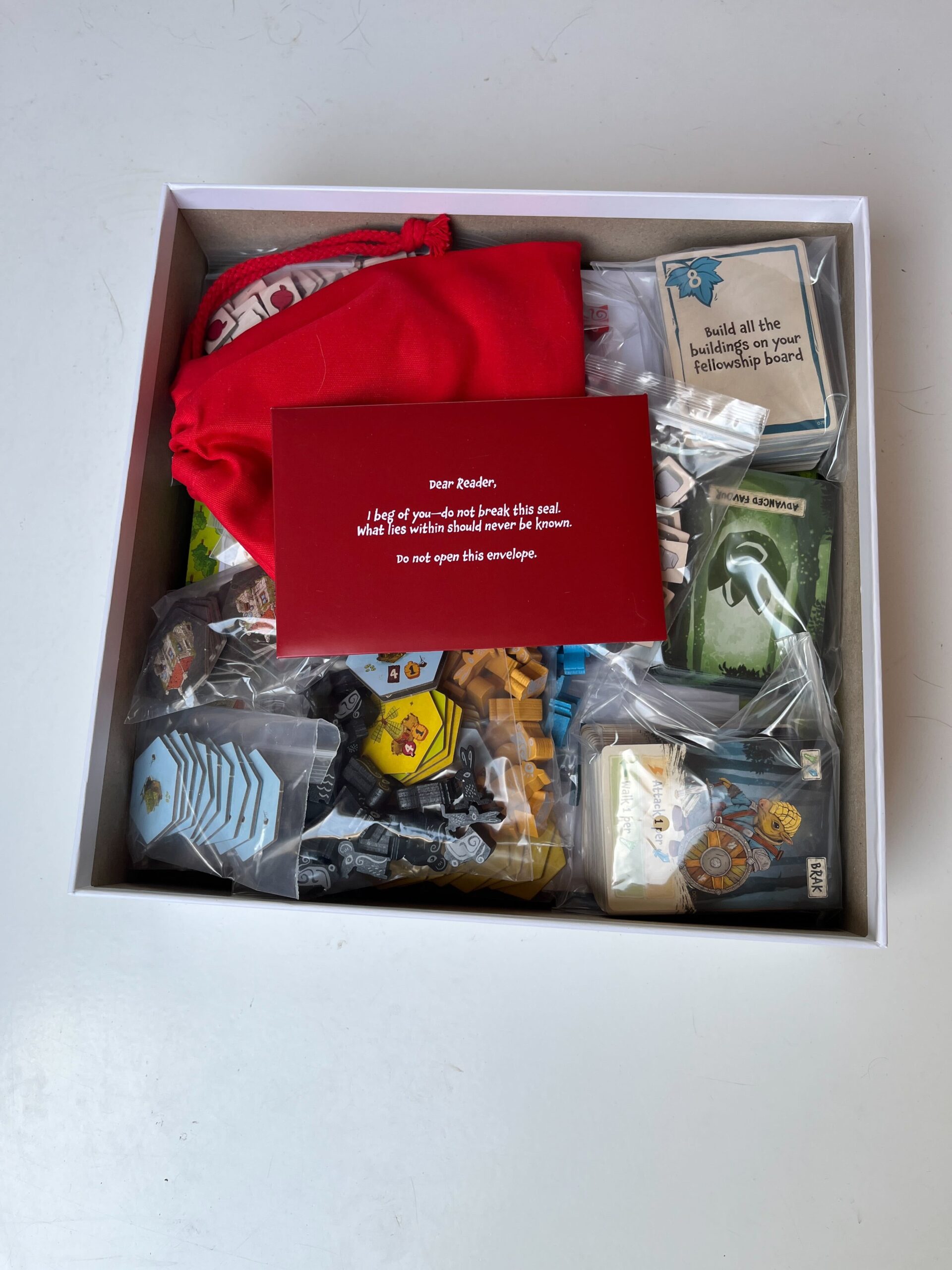
- Een prachtige artwork: De prachtige houten meeples en de heel leuke, kleurrijke en schattige artwork voegen voor mij heel veel toe aan het spelplezier.
- De combinatie van mechanismes werken wat mij betreft perfect. Het bewegen over het bord, met het spelen en schuiven van kaarten voelt heel soepel aan.
Is het alleen maar positief?
Boven al het goede kan ik wel zeggen dat het spel wel lang kan duren. Het voelt wat langdradig als we tegen het einde van het spel aanlopen. Verder heb ik het gevoel dat je soms wel wat vervalt in een zelfde strategie, maar begrijp me niet verkeerd: dit spel speelt prachtig weg en deze kleine puntjes maken het niet onspeelbaar.
Conclusie
Ik vind Emberleaf een fantastisch spel met heel mooie artwork en een heel fijn (nieuw) mechanisme. Ik kan het spel vaak op tafel leggen en me er steeds enorm mee amuseren. Het spel speelt erg vlot en is helemaal niet moeilijk eens je doorhebt hoe alles aan elkaar zit. De kleine minpuntjes die ik hierboven aangaf, zorgen er misschien wel voor dat het spel voor mij geen 8 krijgt, maar een 7.5/10.

Emberleaf
Players: 1-5
Time: 90-120 minutes
Age: 14+
Author: James Tomblin, Frank West
Publisher: The City of Games
Year: 2025
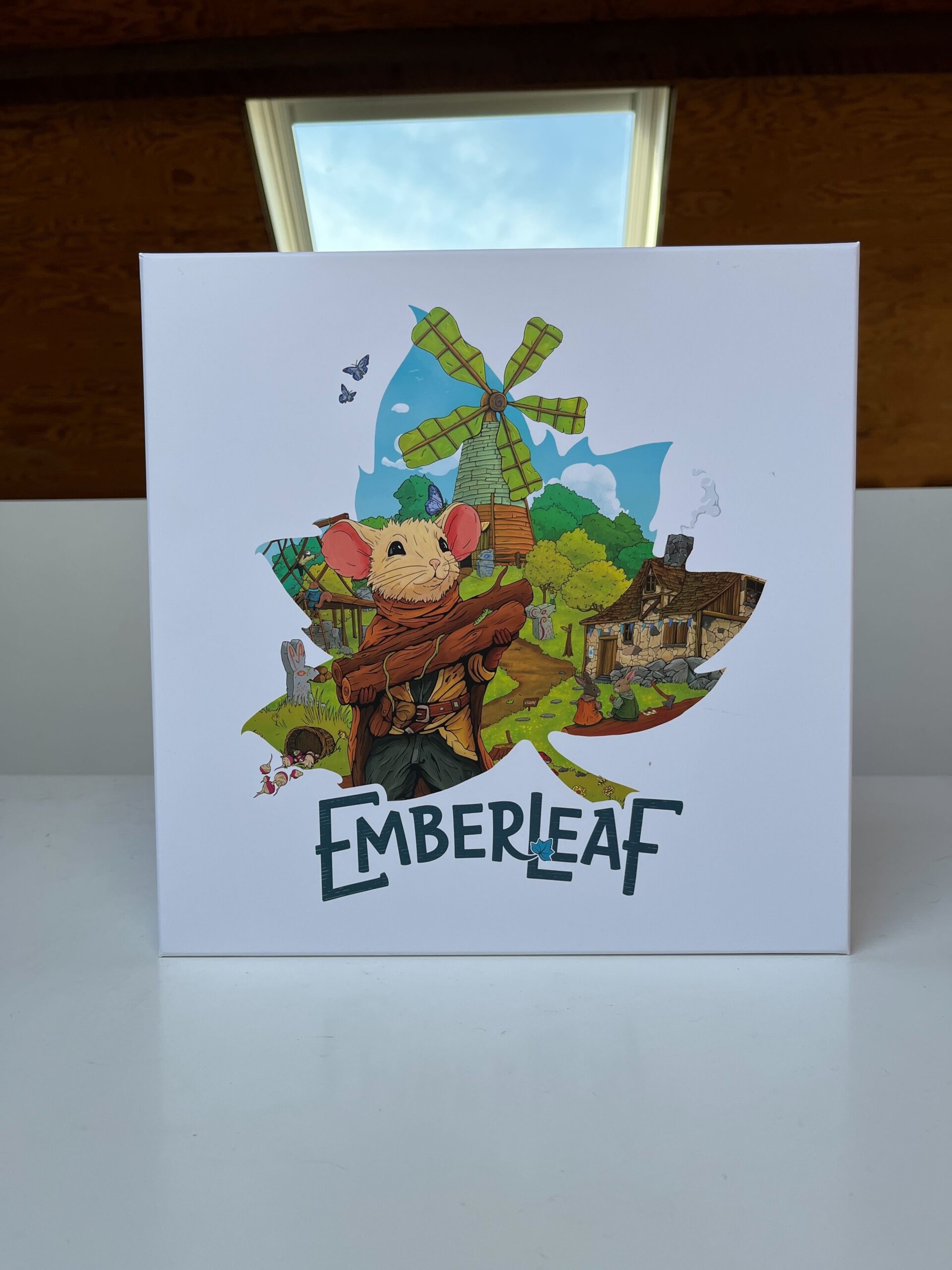
A very long time ago, the ancient Emberleaf was destroyed by Lord Vesh, driving the Emberlings back to dark hiding places. As an Emberling, you will attempt to restore the forest to its former glory, but of course, you are not the only one trying…
Gameplay
The game is played on the game board representing the Emberleaf forest. You will build, explore, gather resources, secure dangerous areas, and recruit heroes.
During your turn, you can always choose from 2 basic actions and 2 optional actions. The basic actions are “Play a card” and “Move cards”. The optional actions are “Load a card”, which allows you to activate the ability of one of your played cards, or “Make a promise”, which allows you to draw a new objective card.
When you play a card, you place that card on an empty space on your player board. Why would you do this? Because those cards can give you all kinds of benefits.
When you move cards, you shift all cards to the left one by one.
Each card represents a hero who can have different abilities.
There are 5 possible abilities:
- When played: You may activate the ability when you play the card on your personal board.
- Move: You may activate the card when you move it one space to the left on your personal board.
- Drop off: You may activate the card when it drops off your board by moving it to the left.
- Load: You can place an acquired resource or banner on your card to activate this ability.
- Continuous: You can activate this ability if you meet the described condition (for example: If you assign a resident to a house, you can do X.)
Each card also has a number of ‘stats’ that allow you to perform the actions mentioned above. These include “walking”, “gathering”, “attacking”, and “building”. When performing these actions, you look at the stats on your played cards to see how well you can perform that particular action. (For example, if you have 3 swords on your cards, you can secure a dangerous area with a strength of 3.)
When building, you may also immediately assign a resident from your player board to the new building. You have 4 types of residents (rats, owls, rabbits, and frogs), and when placing such a resident, you immediately receive the bonus that that specific resident brings with them.
You therefore try to walk across the main board with your meeple (Emberling), build houses, and secure dangerous areas in order to complete your objective cards. You can acquire these objective cards during the game by, for example, arriving in a new region for the first time. These objective cards are the main sources of points in the game. They will therefore earn you points at the end of the game if you meet the conditions of the card.
After you have performed all your actions for that turn, the trophies are examined. Trophies are awarded to players if they have reached the end of the war track or if they have fully built a region. You may advance on the war track if you have secured a dangerous area. Each space on the war track gives you certain bonuses such as extra wood or food, but reaching the end of the track earns you a trophy. These trophies yield points, but are also limited. When the last trophy has been removed, the game ends.
Once the trophies have been awarded, we look at the score track. The score track contains a number of rewards for passing that space. As soon as the first player passes a space with a bonus, every player receives that specific bonus.
Afterwards, the cards in the market row are replenished and the next player’s turn begins. Once the last trophy has been won, the current round is played out so that everyone has had an equal number of turns, and then the scoring begins.
Game Mechanics
I would categorize the game under the set collection mechanism because you play cards on your player board to achieve as much interaction between the cards as possible. Furthermore, the game also features a tile placement mechanism because you build buildings in the open regions on the board. It is not a classic tile-laying game because that is not your main activity, but it is woven into the game.
During the game, you will also try to complete your objective cards, which falls under the mechanism of “completing contracts.” According to Boardgamegeek, the game also contains a “kill steal” mechanism because only the player who is the last to place a building in an open area receives the trophy, but I find it a bit far-fetched to call this “kill steal.” What’s in a name, of course.
Finally, the game has introduced a new mechanism, namely “card dancing.” This means that cards shift across your player board, which can activate certain abilities. This mechanism was (at least for me)
My Humble Opinion
The game found its way to me via Kickstarter. I was immediately sold by the beautiful artwork and the theme. Forest creatures and cute animals always hold a special appeal for me, so it won’t surprise you that I backed this game without much hesitation.
What makes the game so strong?
- The new card dancing mechanism: As mentioned, this mechanism was new to me, but it creates a wonderfully enjoyable gaming experience.
- Beautiful artwork: The beautiful wooden meeples and the very fun, colorful, and cute artwork add a great deal to the gaming experience for me.
- The combination of mechanisms works perfectly as far as I’m concerned. Moving across the board, while playing and sliding cards, feels very smooth.
Is it all just positive?
Despite all the good things, I can say that the game can take a long time. It feels a bit drawn out as we approach the end. Furthermore, I get the feeling that you sometimes fall back into the same strategy, but don’t get me wrong: this game plays beautifully and these minor points don’t make it unplayable.
Conclusion
I think Emberleaf is a fantastic game with very beautiful artwork and a very nice (new) mechanism. I can often put the game on the table and enjoy it immensely every time. The game plays very smoothly and is not difficult at all once you understand how everything fits together. The minor downsides I mentioned above might be the reason why the game doesn’t get an 8 from me, but a 7.5/10.