

Aantal spelers: 2-6
Speelduur: 90-150 minuten
Leeftijd: 10+
Auteur: Rudy Priecinsky
Uitgever: RUDY3 Publishing
Jaar: 2026
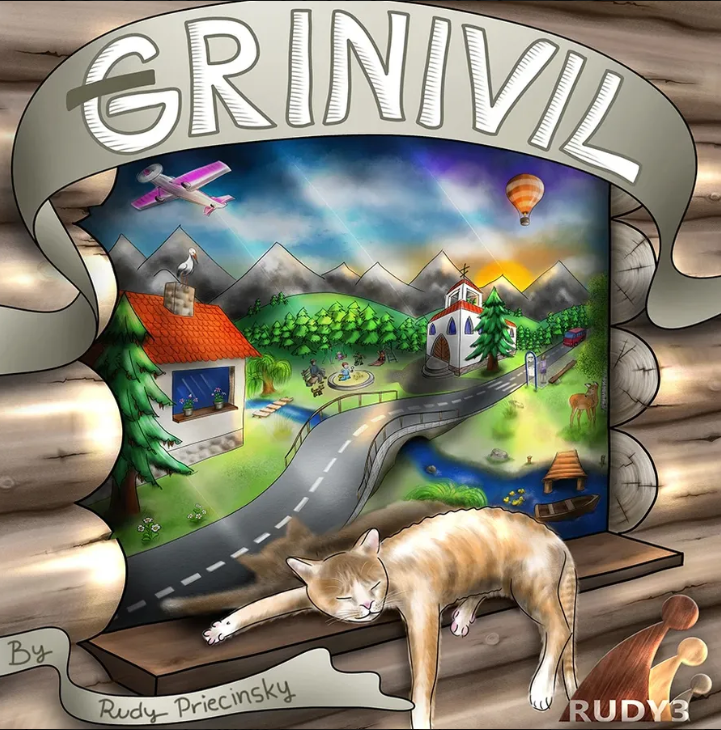

Soms kom je van die spellen tegen waar je een haat-liefde verhouding mee hebt. Dat je voelt dat je een fantastisch spel aan het spelen bent met alle potentie van een groot succes, maar dat je óók begrijpt waarom dat is uitgebleven. Gewoon omdat er het her en der nog wat rammelt. Gelukkig kan ik erg goed door rammeldingen heen kijken. En hoewel niet al mijn testpubliek enthousiast was, ben ik dat wél! Ik hou wel van een lange zit waarbij je zo slim mogelijk een stad gaat bouwen, wegen aanlegt en huizen verkoopt aan bewoners. Voldoe aan zoveel mogelijk koopwensen van de bewoners en het levert lekker veel punten op! Leuk hoor, deze potpourri van mechanismes!
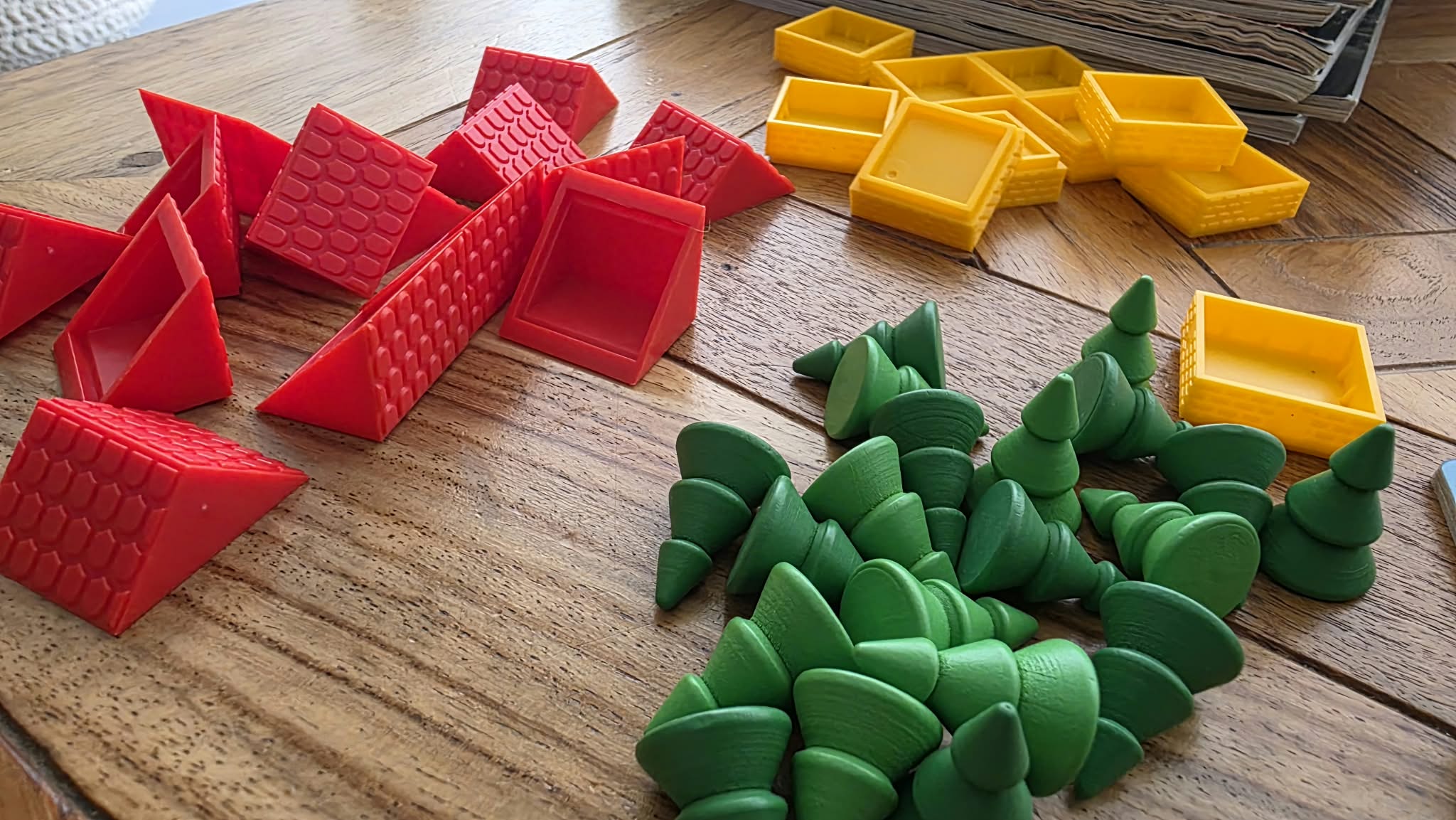
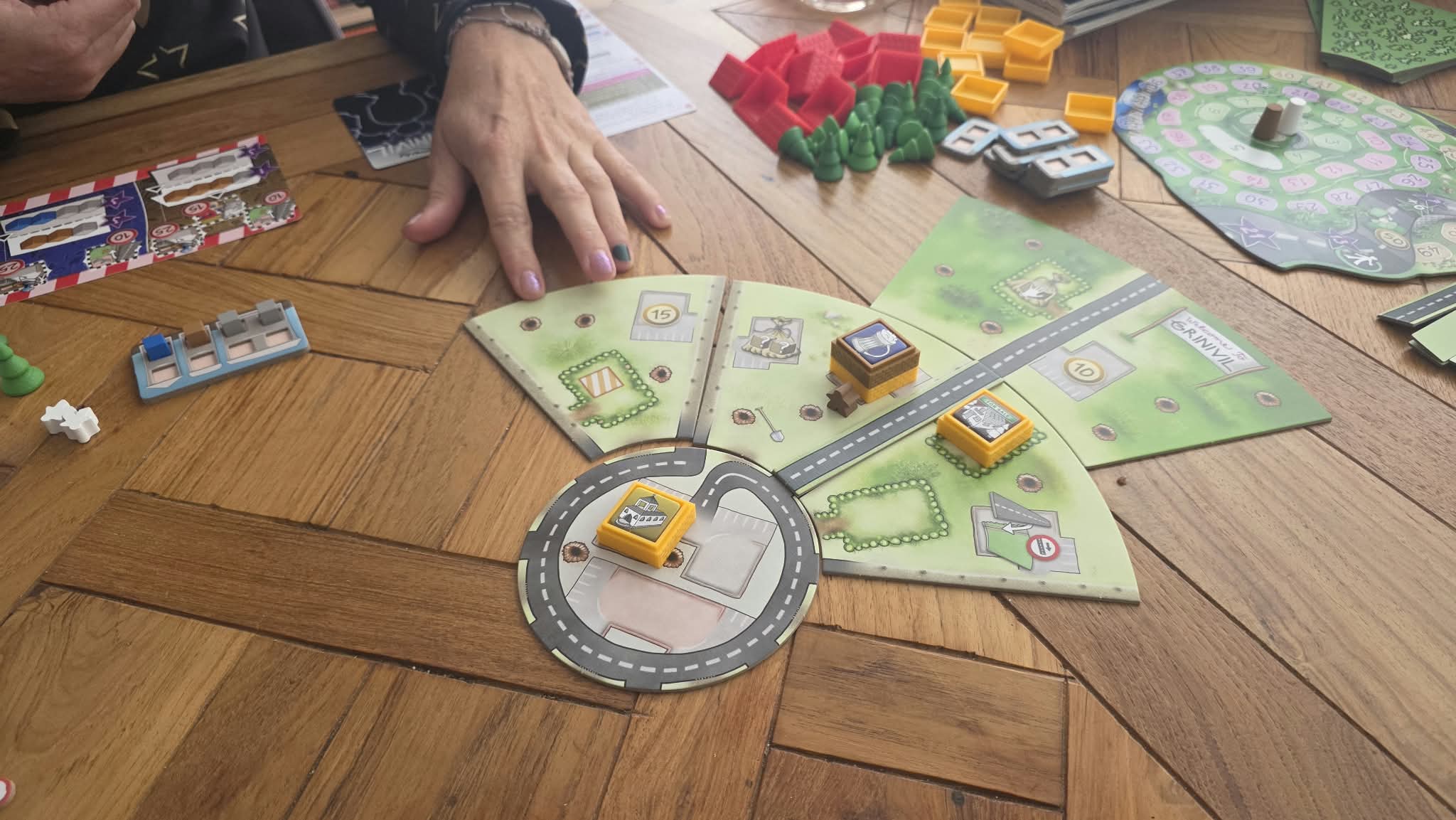
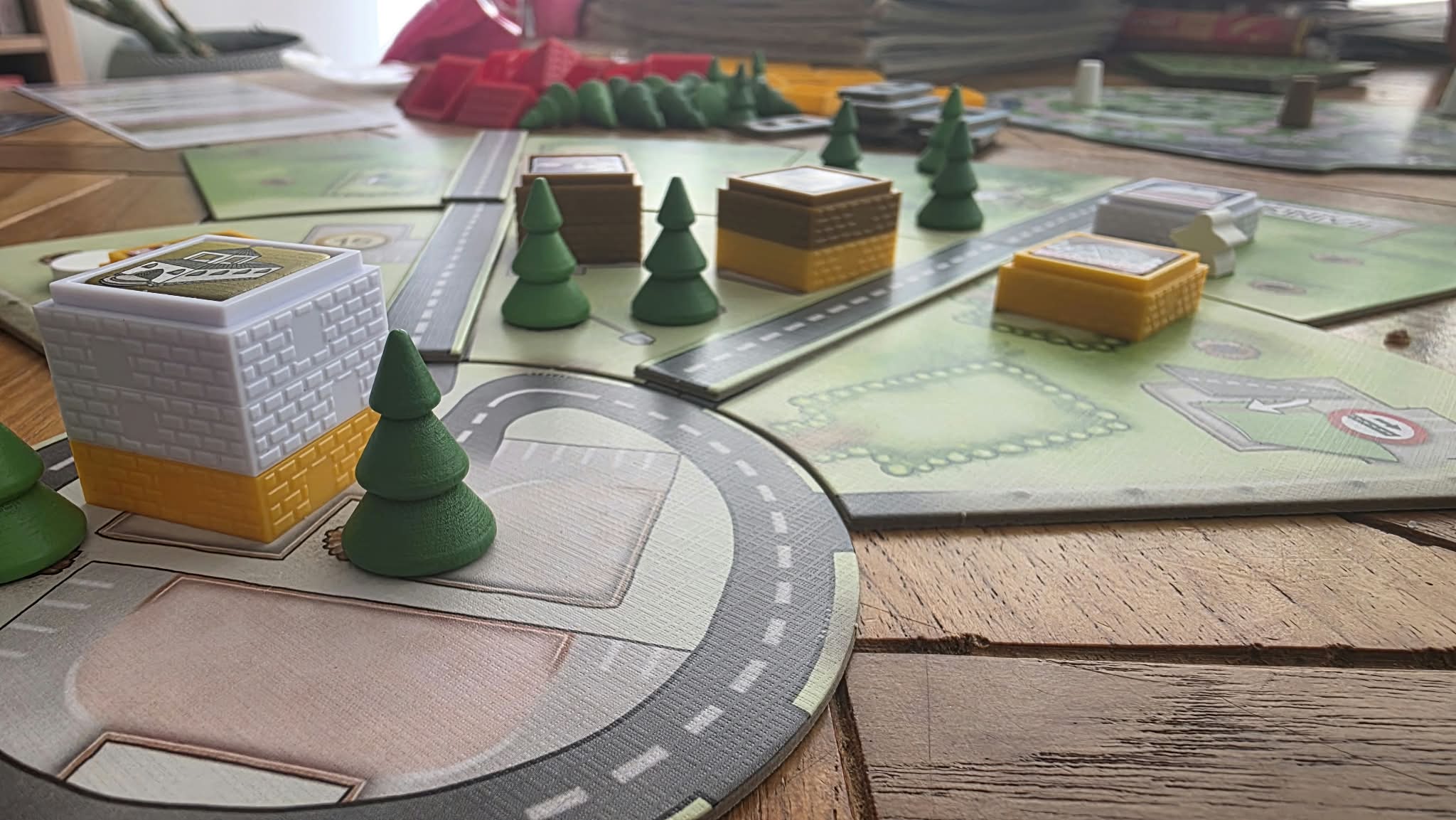
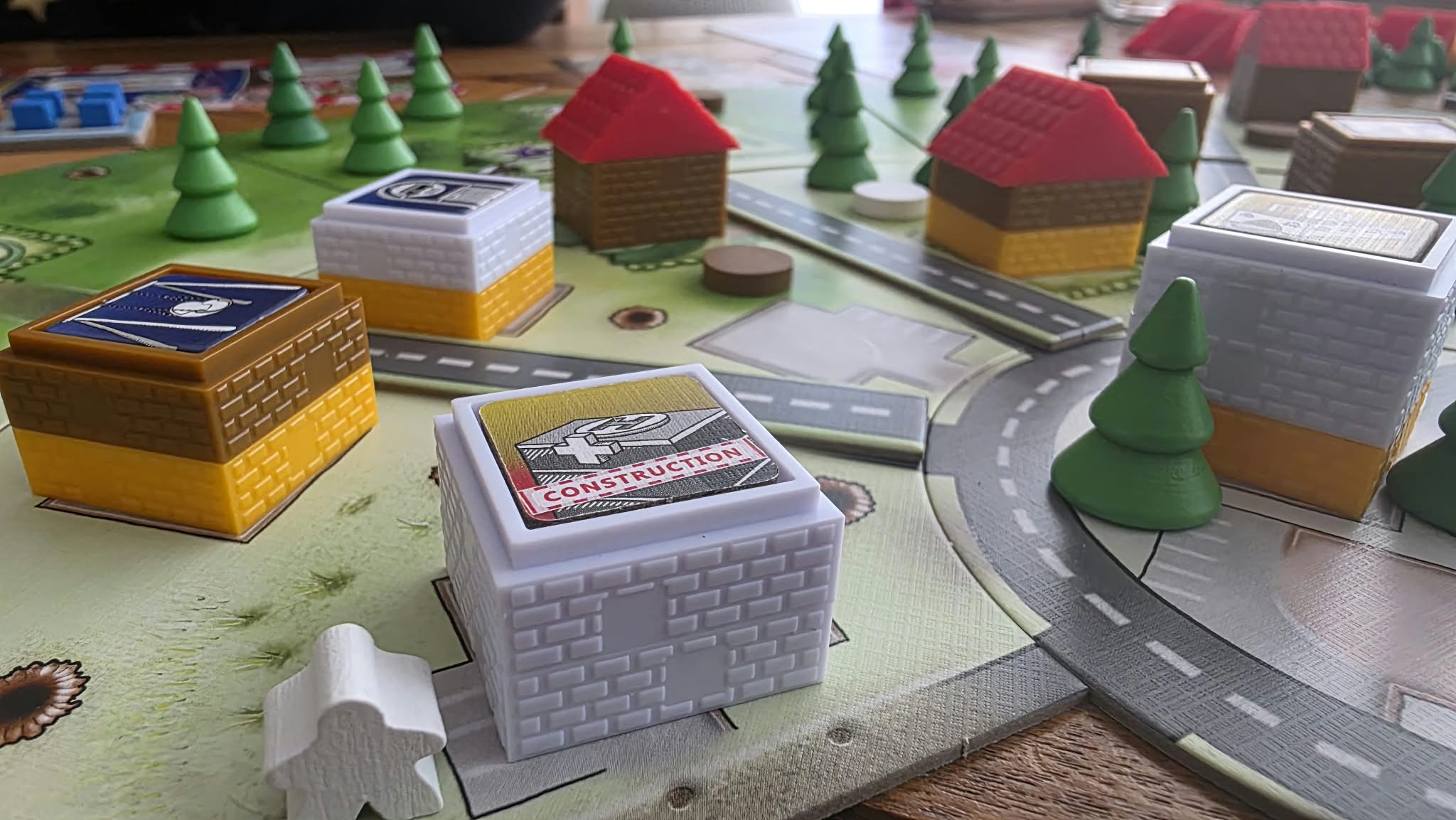
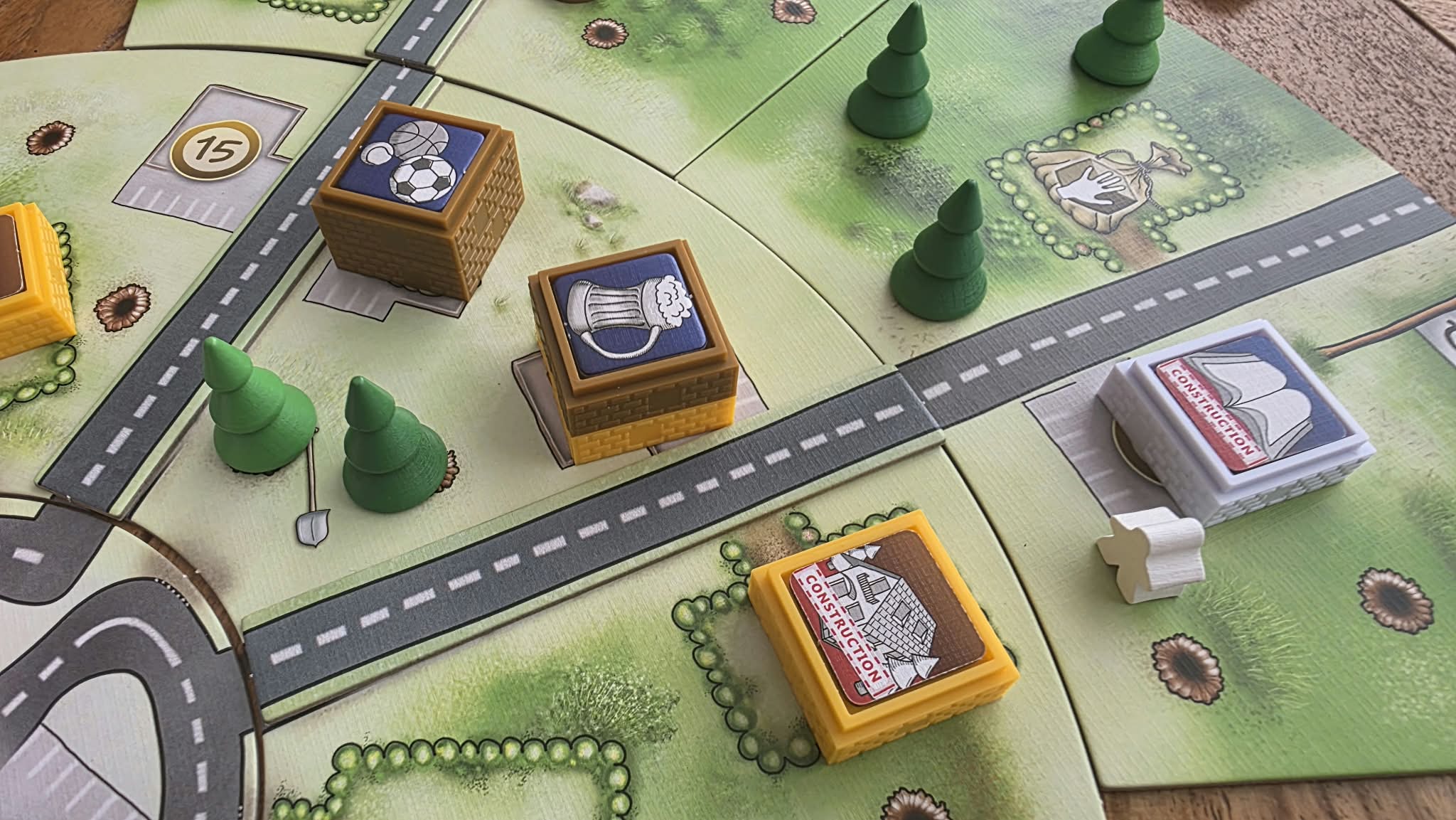
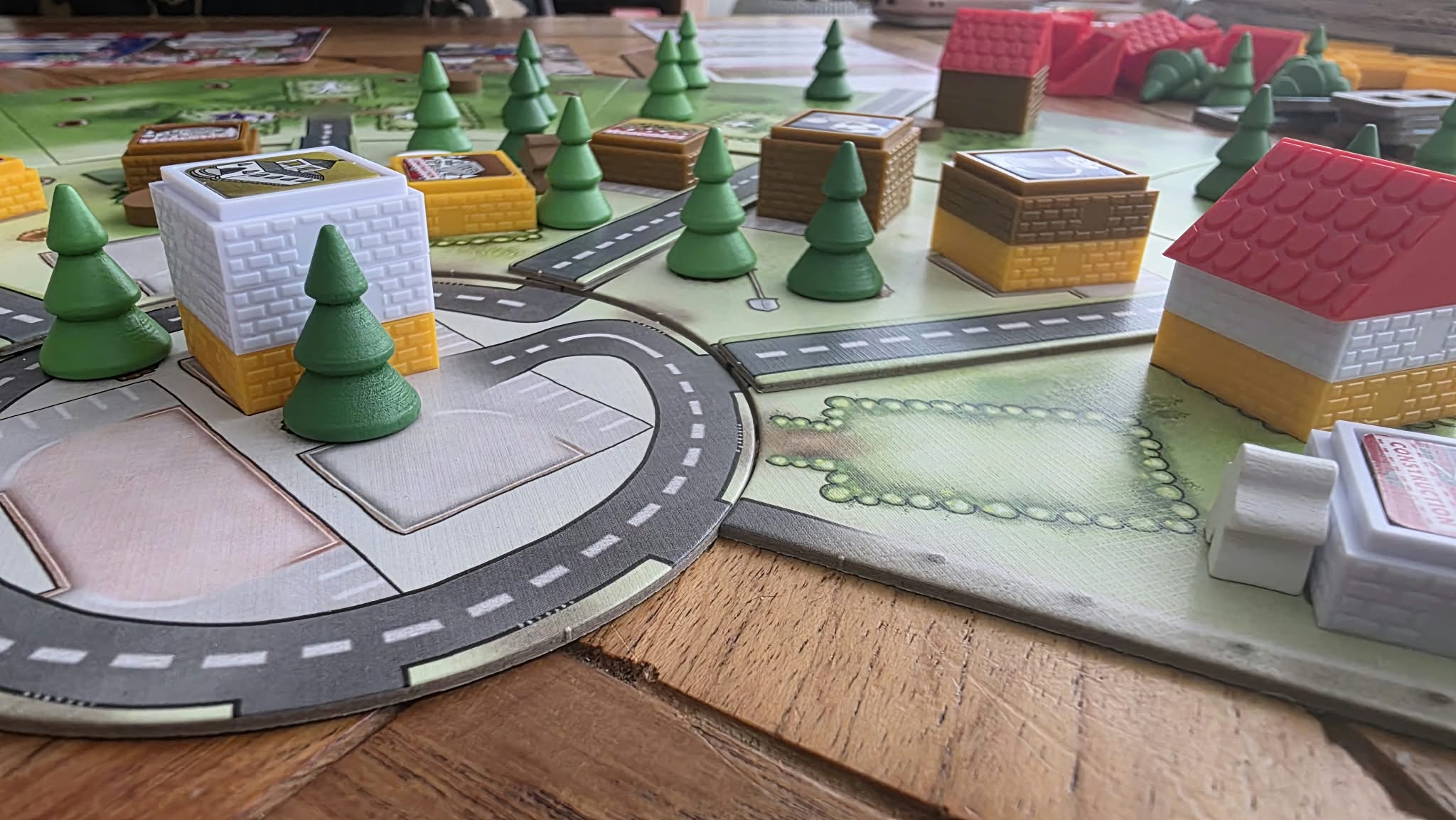
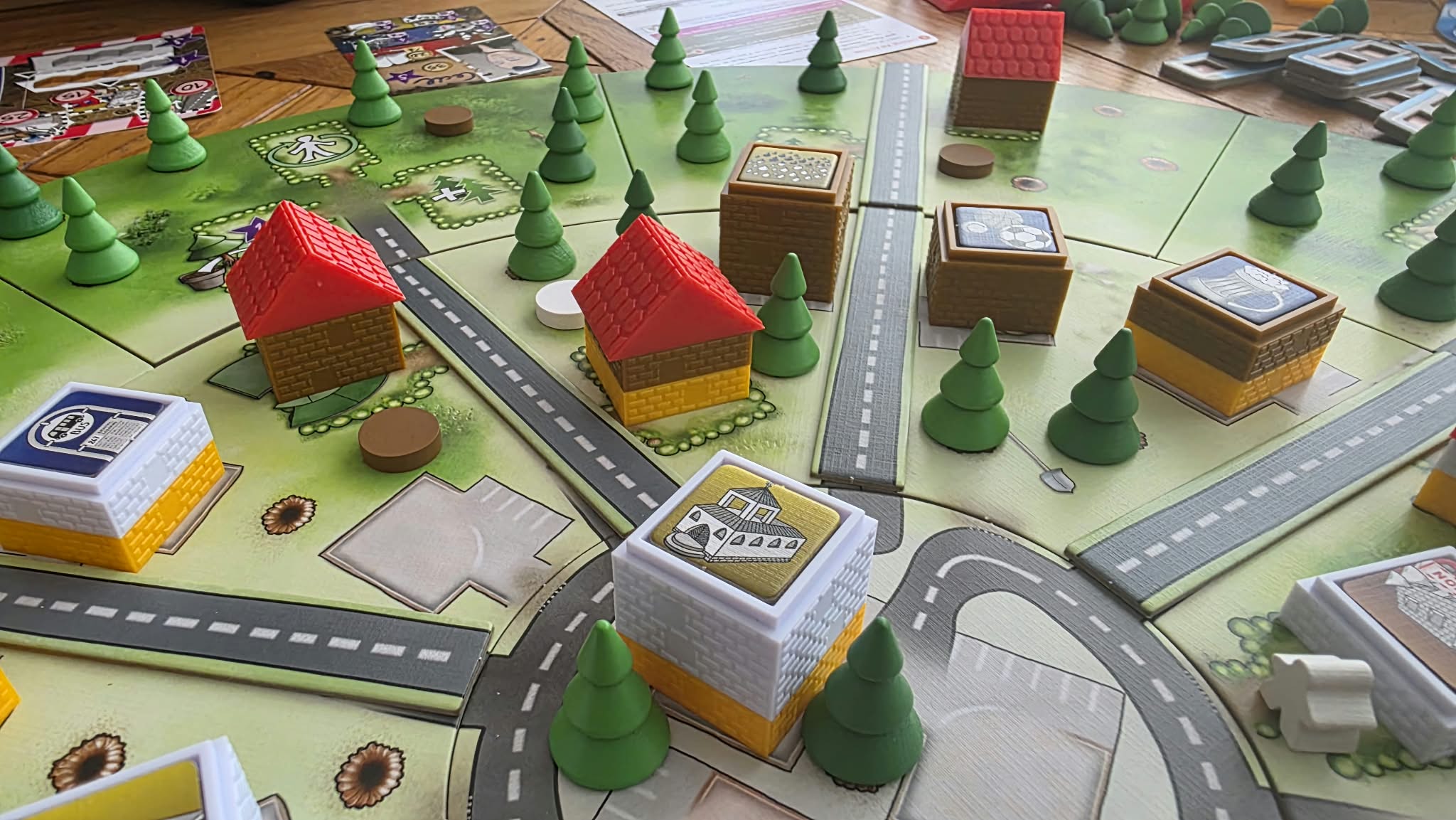
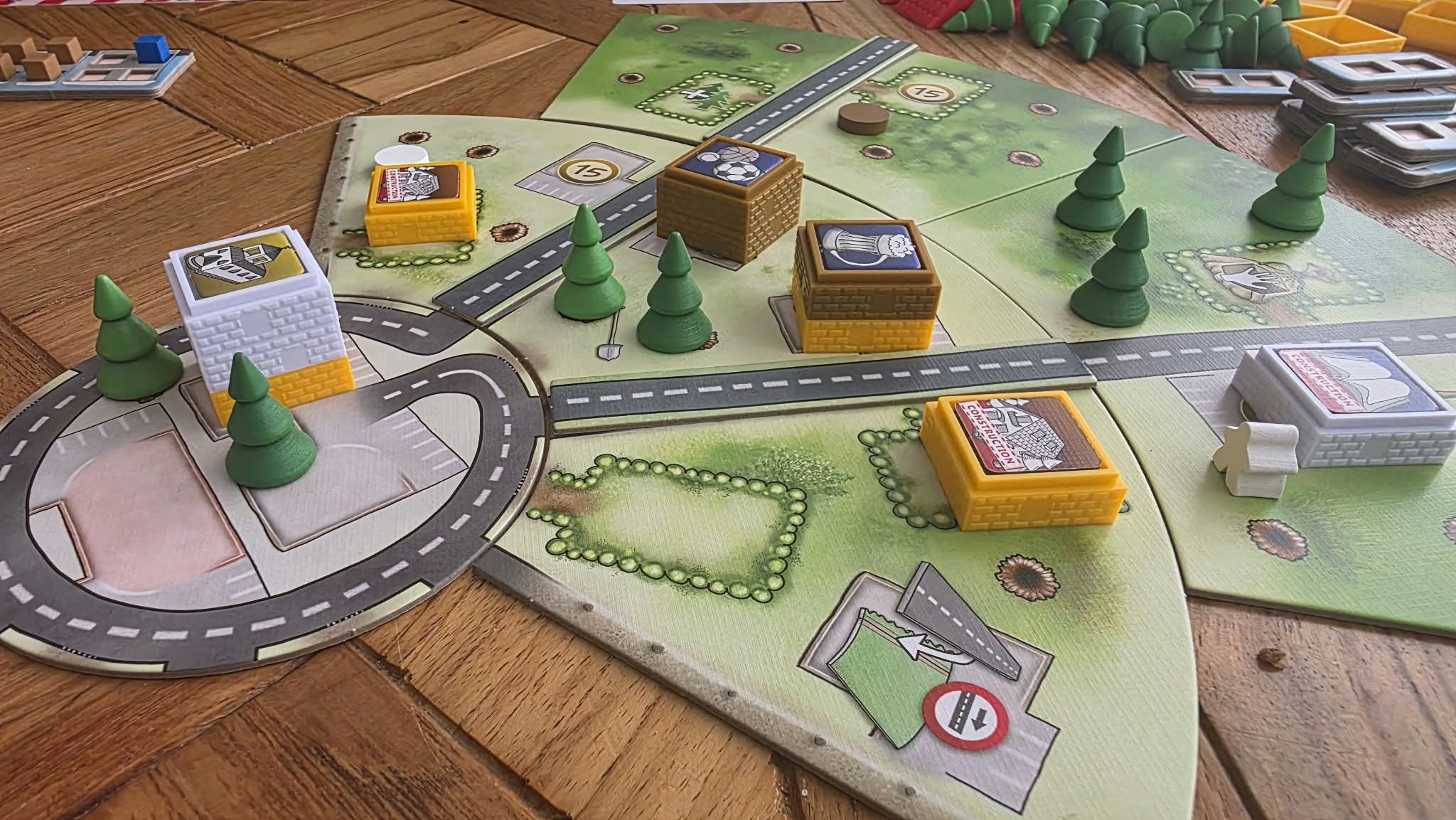
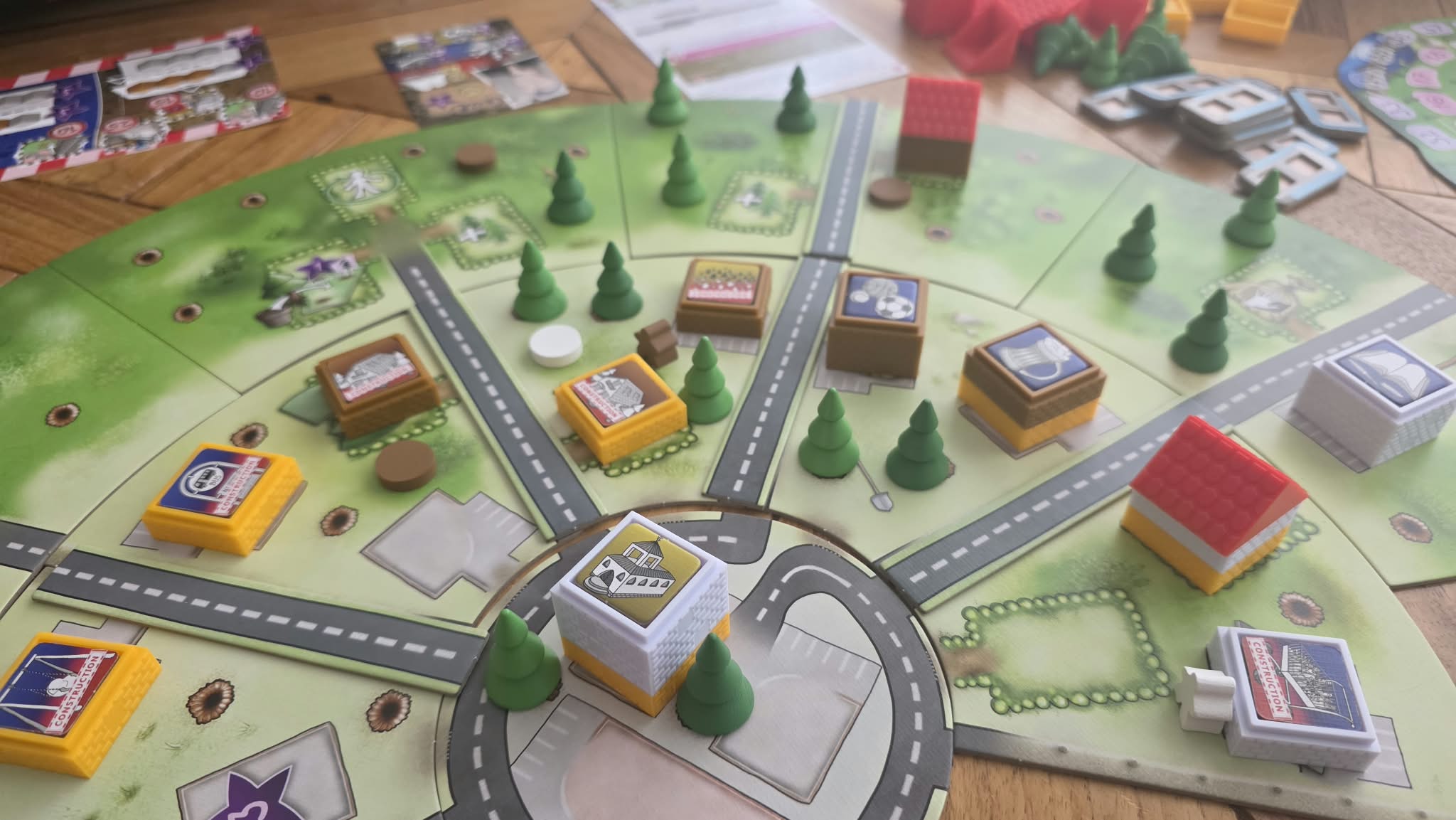
De basis van Grinivil is eigenlijk simpel. Je verplaatst je pion over een timetrack, zover als je wilt. Een timetrack vol met opties voor je werker. En hoewel je maar één werker hebt om mee over t track te wandelen, wordt dit toch een soort van worker placement. De keuzes die je hebt zijn elk spel anders, want de tack is op vernuftige wijze modulair gemaakt en zal er dus altijd anders uit zien. De opties zijn altijd ten behoeve van het bouwen van een stad. Je helpt mee aan het bouwen van meer grond, gebouwen en huizen en waarbij je dus ook mee kan bouwen (en later profiteren) van het bouwen aan huizen en gebouwen waar al door anderen aan is gebouwd. Daarnaast is Grinivil een zeer groene stad, dus kun je je geluk ook op met het telen en planten van bomen, opdat Grinivil een groene stad wordt.
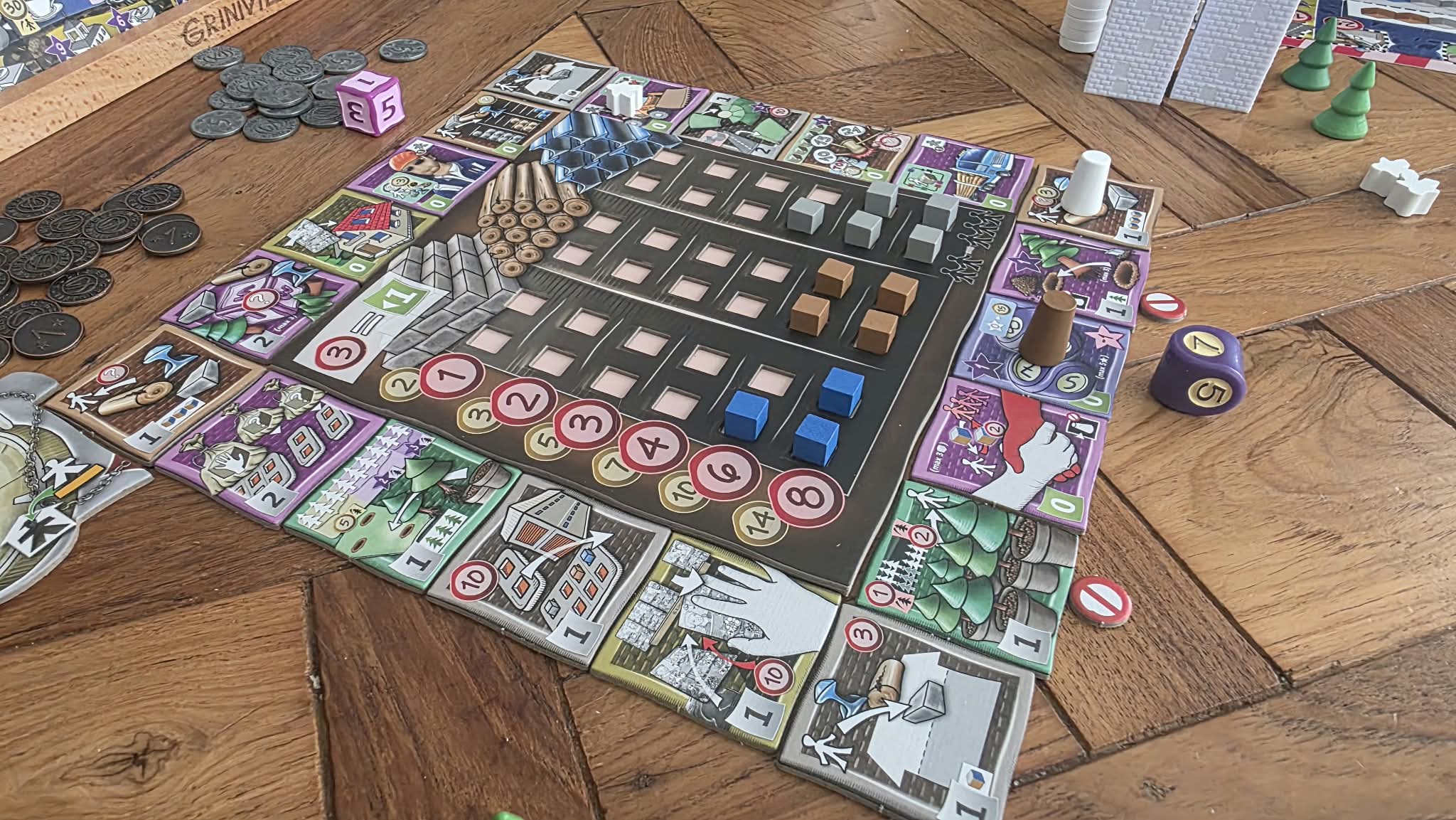
Alle acties die je hiervoor nodig hebt vind je op het tijdsspoor. En doordat de soorten en volgorde van acties altijd anders zijn, zul je zien dat elk spel anders is. Leuke aan dit spoor is ook, dat de plek waar je eindigt, niet de plek is waar je je volgende beurt start. Op de tegel/actie waar je naar toe bent verplaatst staat ook een aantal stappen die je moet verplaatsen ná je actie. Wat het soms onmogelijk maakt om soms twee héle waardevolle acties achter elkaar te doen, tenzij je een heel rondje loopt om het spoor!
En dát kan je dan weer duur komen te staan. Want elke keer als je langs de starttegel van de track komt, betaal je behoorlijk wat belasting. Geld dat je moet zien te verdienen gedurende je ronde. Iets wat je natuurlijk niet doet wanneer je in één beurt een heel rondje loopt. Je keuzemogelijkheden zijn dus zeer breed, maar je moet ze wel strategisch uitmikken. Mede ook omdat de kosten van de grondstoffen voor het bouwen ook nog eens fluctueren omdat ze worden beïnvloed door de al eeuwenoude marktwerking. Grote vraag = prijs omhoog. Schaarste op de markt leveren dus hoge prijzen op. Dat komt je dus duur te staan als je wilt bouwen net nadat al je medespelers dit al hebben gedaan en het gezamenlijk aanbod geplunderd hebben.
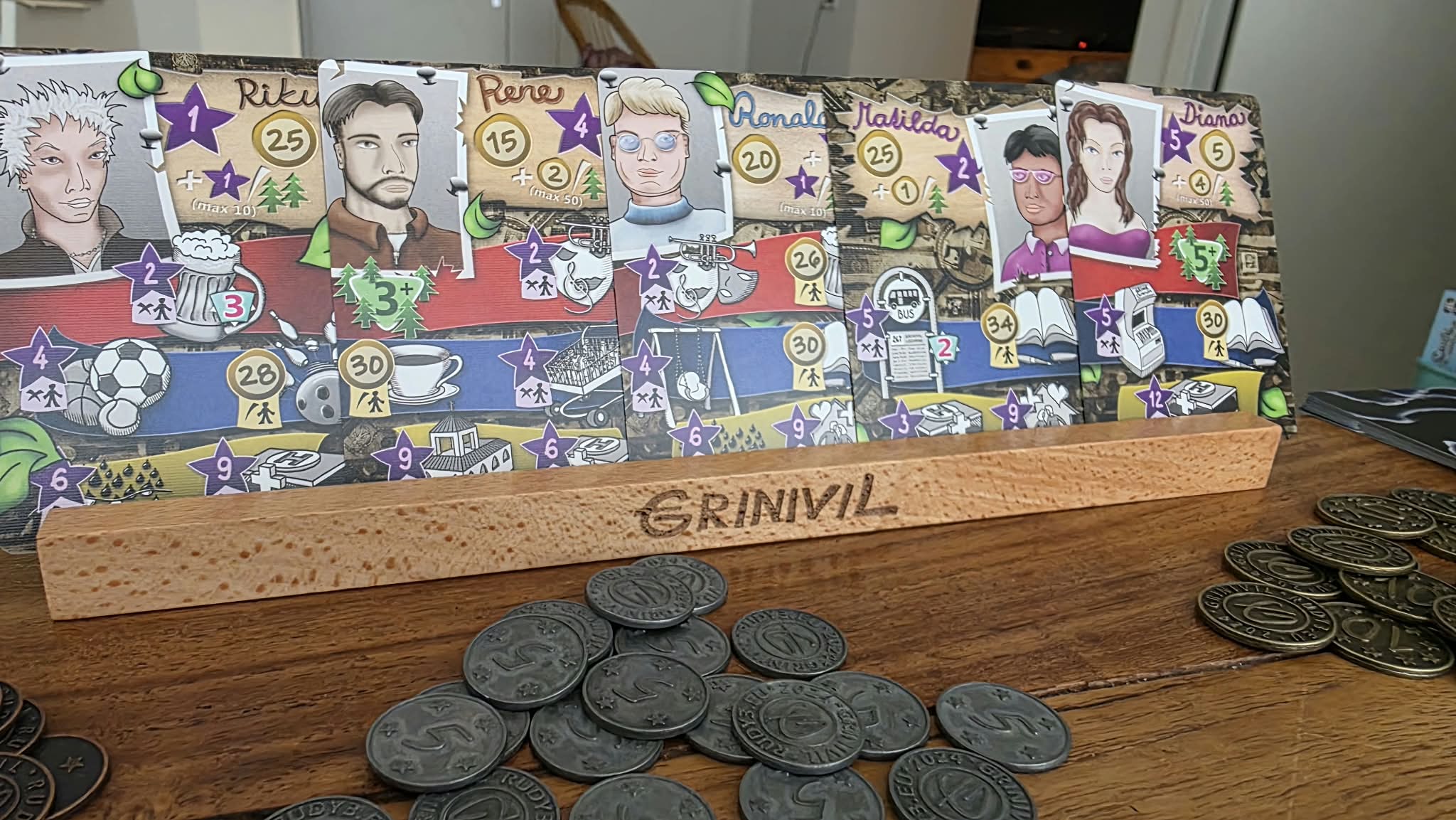
Uiteindelijk wil je natuurlijk dat Grinivil wordt bewoond en verkoop je de huizen. Je start het spel met twee potentiële bewoners op hand. In de vorm van handkaarten. Gedurende het spel kun je deze potentiële bewoners ruilen of bijkopen. Maar niet geplaatste bewoners aan het einde van het spel zijn een hoop minpunten. Op de kaarten van de bewoners staan de eisen waaraan een huis moet voldoen. Zo willen ze bijvoorbeeld in de buurt van de school wonen of moet er maximaal twee straten verderop een bushalte zijn. Pas als je daaraan voldoet, mag je een huis aan de bewoners verkopen. Maar let goed op: de bewoners scoren ook voor je medespelers, wanneer zij meegebouwd hebben aan de gewenste gebouwen en aan het einde van het spel ook nog als er meegebouwd is aan gebouwen die gelden voor de eindtelling. Die hoeven er nog niet te staan bij het plaatsen van je bewoners/bij de verkoop van je huis, maar wél aan het einde van het spel. En dat is tricky, want dit maakt dat je het liefst zo laat mogelijk in het spel verkoopt, maar dan is voor je het door hebt er zomaar al iemand met je huis vandoor. Dus of dat altijd verstandig is?
Het einde is in zicht als één speler nog maar twee van zijn of haar bouwstenen over heeft. Elke speler mag dan kiezen om het track af te maken vanaf waar ze staan, of nog éémaal aan het begin van het track opnieuw te beginnen en zo nog een hele ronde te spelen. Je zou denken: nou dan begin je toch allemaal opnieuw. Dat hoeft niet persee waar te zijn. Want voor elke beurt die je wordt overgeslagen omdat je eerder binnen bent dan je tegenstanders, ontvang je geld, dat bij de eindtelling wel eens meer punten op kan leveren. Keuzes keuzes keuzes. Zodra iedere speler binnen is volgt een eindtelling en wint de speler met de meeste punten.
Wat vind ik er van?
Ik vind het spel in de basis geniaal. Ik kan erg genieten van de diepgang die de makers er in hebben gestopt. Zeker als je beseft dat je met relatief nieuwe game-makers te maken hebt die het spel in eigen beheer hebben uit gegeven, kan ik niets anders dan mijn petje af nemen. De mechanismes zitten vernieuwend en erg leuk in elkaar en de herspeelbaarheid is erg groot, door de originele wijze waarop het bord in elkaar zit (hij is ook nog eens rond!). Ik heb veel plezier gehaald uit alle keren dat ik Grinivil heb gespeeld.
Toch neem ik de feedback van mijn medespelers ook ter harte. Zeker omdat dit maakt dat niet iedereen het nog met me wilt spelen.
Allereerst dient te zeggen dat de vormgeving niet doorgaans is. Ik hou ervan, maar als je er gevoelig voor bent en het je smaak niet is, laat je het links liggen. Hoewel ik de vormgeving prachtig vind, doet het het spel niet persee eer aan. Ik vind de keuze voor geen main-stream vormgeving getuigen van veel lef, maar als mensen hierdoor afhaken, schiet je jezelf toch een beetje in de voet. Ik als werkzaam in de kunstsector, begrijp maar al te goed dat dit een eeuwig struikelblok is van een kunstenaar. Maak je wat je zelf mooi vindt en waar je voor staat, of maak je wat het publiek wilt zien? En ik vrees een beetje dat potentiële liefhebbers van dit spel, vormgeving technisch wellicht graag iets anders hadden willen zien. Hierbij is niet alleen de stijl een struikelblok, maar ook de keuze voor het gebruik van niet alledaagse iconografie en het niet overal consequent (logisch) doorvoeren hiervan, wat de eerste drie keer spelen erg stroperig maakte. We moesten veel terugzoeken. Natuurlijk hoort dat bij elk nieuw spel wat je leert, maar er schuurt daar iets. We geraakten niet helemaal in de denkwijze van de vormgevers waardoor zelf na drie keer spelen icoontjes niet allemaal logisch voelden of automatisch begrepen werden doordat er consistentie is, waardoor je op een zeker moment de beeldtaal van de maker begrijpt. Dat bleef deels uit.
Dan, een laatste en veel gehoord kritiekpunt, die ik óók begrijp: mijn medespelers vonden het spel dikwijls te lang. Met aftrek van lees en opzoektijd, tikte we vaak de twee a drie uur aan, langer dan op de doos vermeld staat. Ook dáár ben ik een liefhebber van, dus voor mij geen probleem. Ik snap echter wel waarom het dit keer voor mijn medespelers wél een probleem was. Drie uur spelen is natuurlijk helemaal niet erg, wanneer je het gevoel hebt dat er tempo in het spel zit en je de tijd vergeet. Maar dat was helaas niet het geval.
Al met ál ben ik zelf erg (enorm!) enthousiast. Het spel lijkt een niche aan te boren die ik blijkbaar erg kan waarderen en een 8 zou willen geven. Echter snap ik de kritiek van al mijn medespelers ook, waardoor ik gemiddeld op een 7 uit kom, omdat ik denk dat dat meer kloppend is bij de meeste lezers van ons platform. Maar mocht je niet als ik niet perse afhaken op de gegeven kritiekpunten, zou ik deze parel zeker even proberen!

Grinvil
Players: 2-6
Time: 90-150 minutes
Age: 10+
Author: Rudy Priecinsky
Publisher: RUDY3 Publishing
Year: 2026
Sometimes you come across a game that you develop a love-hate relationship with. You can feel that you’re playing a fantastic game with all the potential to become a huge success, while at the same time understanding why that success never quite happened. Simply because there are still a few rough edges here and there. Fortunately, I’m pretty good at looking past those imperfections. And although not everyone in my test group was enthusiastic, I definitely am! I enjoy a long game where you try to build a city as cleverly as possible, construct roads, and sell houses to residents. Fulfill as many of the residents’ wishes as you can, and you’ll score a nice pile of points! This potpourri of mechanisms is a lot of fun!
At its core, Grinivil is actually quite simple. You move your pawn along a time track as far as you want. It’s a time track filled with different options for your worker. And even though you only have one worker moving around the track, it still turns into a kind of worker-placement game. The choices available to you are different every game, because the track has been cleverly designed to be modular, so it will always look different. The options all revolve around building a city. You help expand the land, construct buildings and houses, and you can also contribute to—and later benefit from—houses and buildings that other players have already started. On top of that, Grinivil is a very green city, so you can also have fun growing and planting trees to make sure Grinivil lives up to its green ambitions.
All the actions you need can be found on the time track. And because the types and order of the actions are always different, every game plays differently. Another fun thing about this track is that the space where you end your turn isn’t where you start your next one. The tile/action you moved to also shows a number of spaces you must move after taking your action. This can sometimes make it impossible to take two extremely valuable actions in a row—unless you go all the way around the track!
And that can get expensive. Every time you pass the starting tile on the track, you have to pay a hefty amount in taxes. That’s money you’ll need to earn during the round—something you obviously won’t be doing if you race around the entire track in a single turn. So while you have a wide range of options, you need to plan them strategically. Especially because the cost of building resources also fluctuates, influenced by that age-old force: supply and demand. High demand means higher prices. Scarcity in the market leads to expensive resources, which can really hurt if you want to build right after all your opponents have done the same and collectively cleaned out the available supply.
Eventually, of course, you want people to actually live in Grinivil, so you’ll sell the houses you’ve built. You start the game with two potential residents in your hand, represented by cards. During the game, you can trade these potential residents or acquire new ones. But any residents you haven’t placed by the end of the game will cost you a lot of negative points. Each resident card lists the requirements their house must meet. For example, they might want to live near the school, or there may need to be a bus stop no more than two streets away. Only once you meet those requirements you can sell a house to that resident.
But pay close attention: residents can also score points for your opponents. During the game, other players can benefit if they helped construct buildings that your resident wanted nearby. And at the end of the game, they may score again if they contributed to buildings that count toward final scoring. Those buildings don’t necessarily have to exist yet when you place your resident/sell the house, but they do need to be there by the end of the game. And that’s tricky, because it makes you want to wait as long as possible before selling. But before you know it, someone else may have snapped up the house you wanted. So is waiting always the smartest move?
The end of the game comes into sight when one player has only two building pieces left. At that point, each player can choose either to finish the track from their current position or to return to the beginning of the track one final time and play one more full round. You might think: well, then everyone will obviously start over. But that isn’t necessarily true. For every turn you miss because you finish before your opponents, you receive money—and that money may end up being worth more points during final scoring. Choices, choices, choices. Once every player has finished, final scoring takes place, and the player with the most points wins.
What do I think?
At its core, I think this game is brilliant. I really enjoy the depth the designers have put into it. Especially when you realize that these are relatively new game designers who self-published the game. The mechanisms feel fresh and are put together in a very enjoyable way, and replayability is high thanks to the original way the board is constructed (it’s even round!). I’ve had a lot of fun every time I’ve played Grinivil.
That said, I also take my fellow players’ feedback seriously—especially because some of it means they don’t really want to play it with me again.
First of all, it has to be said that the graphic design is anything but conventional. I love it, but if visual style matters a lot to you and this particular look isn’t your taste, you may dismiss the game immediately. Although I personally think the artwork is beautiful, I’m not sure it always does the game justice. I think choosing a non-mainstream visual style shows a lot of courage, but if it causes people to walk away from the game, you’re also shooting yourself in the foot a little.
Working in the arts myself, I understand all too well that this is an eternal dilemma for artists: do you create what you personally find beautiful and believe in, or do you create what the audience wants to see? And I’m a little afraid that some potential fans of this game might have preferred a different visual approach. The style itself isn’t the only hurdle. The game also uses some unconventional iconography, and that visual language isn’t always applied in a consistently logical way. As a result, our first three plays felt rather sluggish because we had to look things up frequently.
Of course, having to check the rules is part of learning any new game, but something felt slightly off here. We never fully got into the designers’ way of thinking, which meant that even after three plays, some of the icons still didn’t feel intuitive or immediately understandable. With a consistent visual language, you usually reach a point where you understand how the designer communicates information almost automatically. Here, that only happened to a certain extent.
Then there’s one final criticism I heard frequently—and one I also understand: my fellow players often thought the game was too long. Even after subtracting the time we spent reading and looking things up, our games often reached the two-to-three-hour mark, which is longer than the playtime stated on the box. Personally, I enjoy long games, so that wasn’t a problem for me. But I do understand why, in this case, it was a problem for the people I played with. There’s nothing wrong with playing for three hours when the game has a good pace and makes you lose track of time. Unfortunately, that wasn’t quite the case here.
All in all, I’m personally very—extremely!—enthusiastic about Grinivil. The game seems to occupy a niche that apparently suits me very well, and based purely on my own enjoyment, I’d give it an 8. At the same time, I understand the criticism from all of my fellow players, which brings my overall rating down to a 7, because I think that score will better reflect the experience of most readers on our platform. But if the criticisms I mentioned aren’t necessarily deal-breakers for you, I would absolutely recommend giving this little gem a try!