

Aantal spelers: 2-5
Speelduur: 15 minuten
Leeftijd: 8+
Auteur: Carlo Emanuele Lanzavecchia
Uitgever: Tucker’s Fun Factory
Jaar: 2018
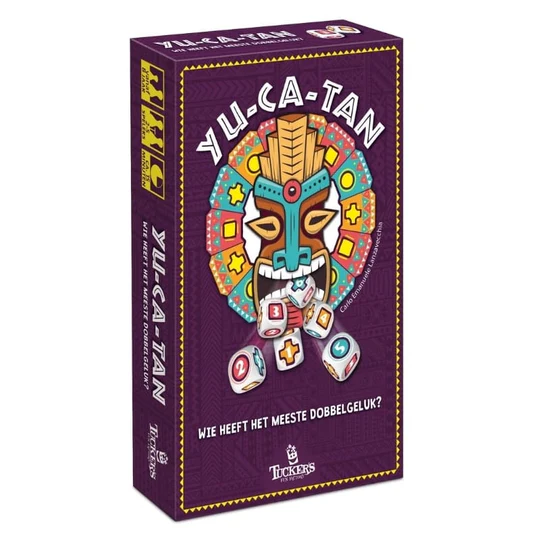

Om Yu-ca-tan te winnen heb je stalen zenuwen en een dosis geluk nodig. Kies een kaartpunt en beproef je geluk. Hoe meer risico je neemt, hoe meer punten je verdient. Als je durft, ga je verder, maar pas op, als je worp mislukt, verlies je al je punten.
Yu-ca-tan; een eerste indruk
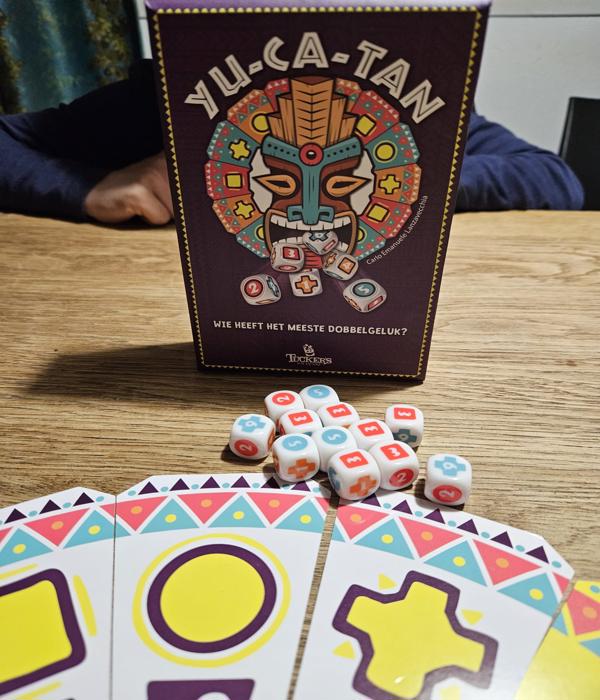
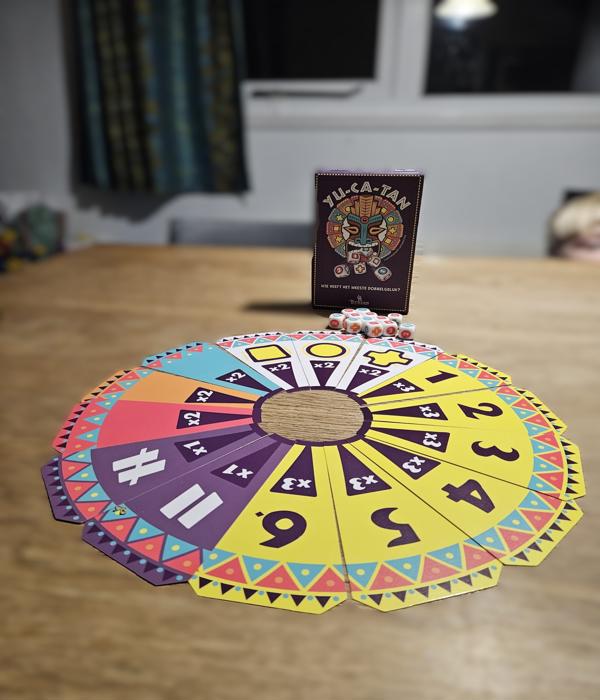
Yu-ca-tan zit in hetzelfde praktische doosje als Namaste, Calavera en Rock de bok, uit dezelfde serie. Persoonlijk ga ik daar goed op, lekker uniform. Door de vormgeving van het doosje blijven alle onderdelen goed op zijn plek zitten. De regels zijn kort en duidelijk. Er zijn weinig spelonderdelen; kaartpunten en dobbelstenen. De kaartpunten zien er wat simpel, maar effectief uit. De dobbelstenen zijn wat kleiner, zodat je, hopelijk, 12 dobbelstenen tegelijk kunt gooien.
Hoe wordt het gespeeld?
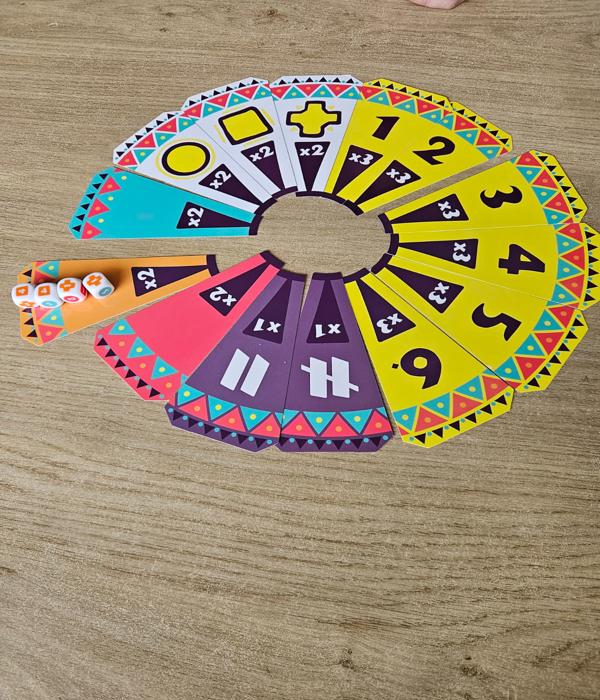
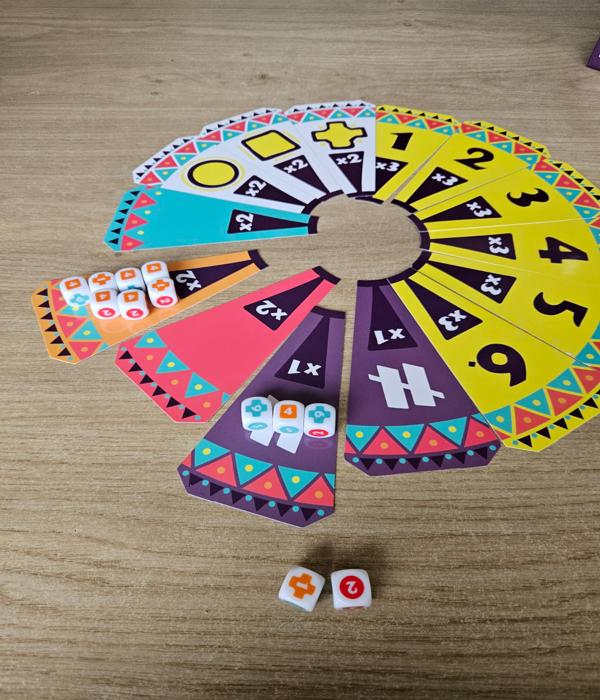
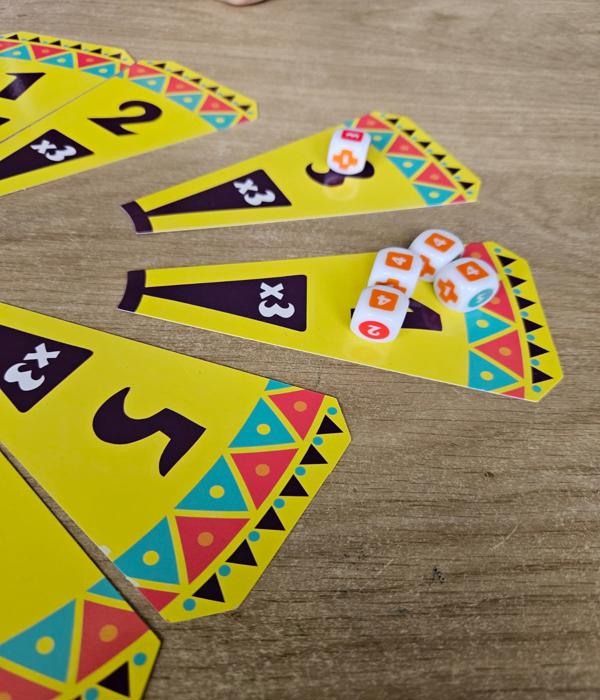
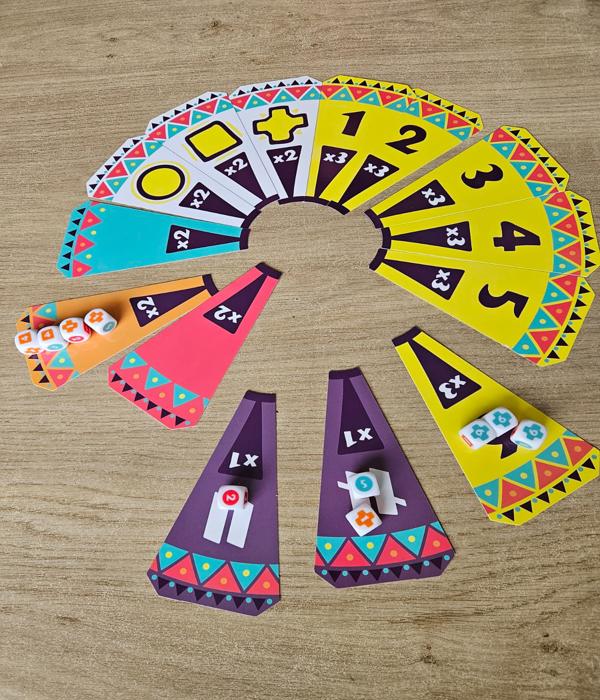
Zoals hierboven gezegd, de regels zijn simpel, dus een korte uitleg is op zijn plek en dan kun je beginnen met spelen. De kaartpunten worden als een cirkel op tafel gelegd. De speler die aan de beurt is kiest een kaartpunt (voordat hij gooit!) en schuift deze uit de cirkel. Vervolgens gooit hij alle dobbelstenen. De dobbelstenen die overeenkomen met de gekozen kaartpunt worden op de kaartpunt gelegd. Nu mag de speler kiezen om door te gaan; hij kiest een nieuwe kaartpunt en gooit opnieuw. Of hij stopt.
Wanneer de speler stopt worden de punten op de kaartpunten bij elkaar opgeteld, verschillende kaartpunten scoren op verschillende manieren.
Wanneer een speler kiest om door te gooien, maar hij gooit zichzelf ‘dood’ (geen resultaat) dan scoort hij niets, dus ook niet de dobbelstenen die in de eerdere worpen op de kaartpunten gelegd zijn.
Hierna is de volgende speler aan de beurt.
Je kiest er van tevoren voor om een bepaald aantal ronden te spelen, bijvoorbeeld 5. Wie aan het eind van het spel de meeste punten heeft, heeft gewonnen.
Wat vinden wij van Yu-ca-tan?
Yu-ca-tan vind ik een moeilijke om te beoordelen. Het is echt een typisch push-your-luck spel. Denk bijvoorbeeld aan Flip7 of Can’t Stop. Dat zijn 2 spellen die het in mijn spellenomgeving erg goed goed, maar waarvan ik weiger om mee te doen, omdat het gewoon echt niet mijn ding is. Dat maakt dus dat Yu-ca-tan bij mij eigenlijk niet ‘aan het juiste adres’ is. Dat gezegd hebbende, heb ik inmiddels genoeg spellen gespeeld en heb ik genoeg inkijk in wat werkt en wat niet werkt etc., dat ik, ondanks mijn persoonlijke smaak, iets nuttigs kan zeggen. Yu-ca-tan zit in de basis prima in elkaar. Het is overduidelijk push-your-luck, gooien en maar hopen dat je scoort. Toch zit er wel iets meer achter. Welk kaartpunt kies je? Bij sommige is de score hoger, maar de kans lager en vice versa. Als je doorgaat, gooi je natuurlijk met steeds minder dobbelstenen, dat is iets waar je je keuzes en tactiek op kunt aanpassen. In het begin dacht ik dat de dobbelstenen allemaal anders waren. Nadere bestudering van de dobbelstenen van de dobbelstenen leerde mij dat dit niet het geval was. Jammer, ik denk dat dat het spel leuker had gemaakt. Verder mis ik stiekem toch wel een scoreblokje. Dat had wel een fijne toevoeging geweest en in het doosje is ruimte zat.
Al met al is Yu-ca-tan een prima spel, als push-your-luck jouw ding is. Wat mij betreft hadden er nog best wat kleine dingetjes verbeterd mogen worden voor een nog leuker spel. Daarom krijgt Yu-ca-tan van mij een 6,5

Yu-ca-tan
Players: 2-5
Time: 15 minutes
Age: 8+
Author: Carlo Emanuele Lanzavecchia
Publisher: moses. Verlag GmbH
Year: 2018
To win Yu-ca-tan, you need nerves of steel and a dose of luck. Choose a card point and try your luck. The more risk you take, the more points you earn. If you dare, you continue, but be careful, if your throw fails, you lose all your points.
Yu-ca-tan; a first impression
Yu-ca-tan comes in the same practical box as Namaste, Calavera, and Rock de bok, from the same series. Personally, I like that, nice and uniform. The design of the box keeps all the pieces in place. The rules are short and clear. There are few game components: card points and dice. The card points look a bit simple, but effective. The dice are a bit smaller, so that you can hopefully throw 12 dice at once.
How is it played?
As mentioned above, the rules are simple, so a brief explanation is all you need to start playing. The card points are placed on the table in a circle. The player whose turn it is chooses a card point (before throwing!) and slides it out of the circle. Then they roll all the dice. The dice that match the chosen card point are placed on the card point. Now the player can choose to continue; they choose a new card point and roll again. Or they can stop.
When the player stops, the points on the card points are added up, with different card points scoring in different ways.
If a player chooses to continue throwing but throws himself ‘dead’ (no result), he scores nothing, including the dice that were placed on the card points in previous throws.
Then it is the next player’s turn.
You decide in advance to play a certain number of rounds, for example 5. Whoever has the most points at the end of the game wins.
What do we think of Yu-ca-tan?
I find Yu-ca-tan difficult to evaluate. It is really a typical push-your-luck game. Think, for example, of Flip7 or Can’t Stop. These are two games that are very popular in my gaming circle, but which I refuse to play because they are just not my thing. That means that Yu-ca-tan is not really ‘the right fit’ for me. That said, I’ve played enough games and have enough insight into what works and what doesn’t, etc., that I can say something useful, despite my personal taste. Yu-ca-tan is basically well designed. It’s clearly a push-your-luck game, where you roll the dice and hope you score. However, there is more to it than that. Which card point do you choose? Some have a higher score but a lower chance of success, and vice versa. If you continue, you naturally throw fewer and fewer dice, which is something you can adjust your choices and tactics to. At first, I thought the dice were all different. Upon closer inspection of the dice, I learned that this was not the case. Too bad, I think that would have made the game more fun. I also secretly miss a score pad. That would have been a nice addition, and there is plenty of room in the box.
All in all, Yu-ca-tan is a great game if push-your-luck is your thing. As far as I’m concerned, a few small things could have been improved to make the game even more fun. That’s why I give Yu-ca-tan a 6.5.