

Aantal spelers: 2-5
Speelduur: 30-60 minuten
Leeftijd: 14+
Auteur: Douglas Hettrick
Uitgever: 999 Games
Jaar: 2025
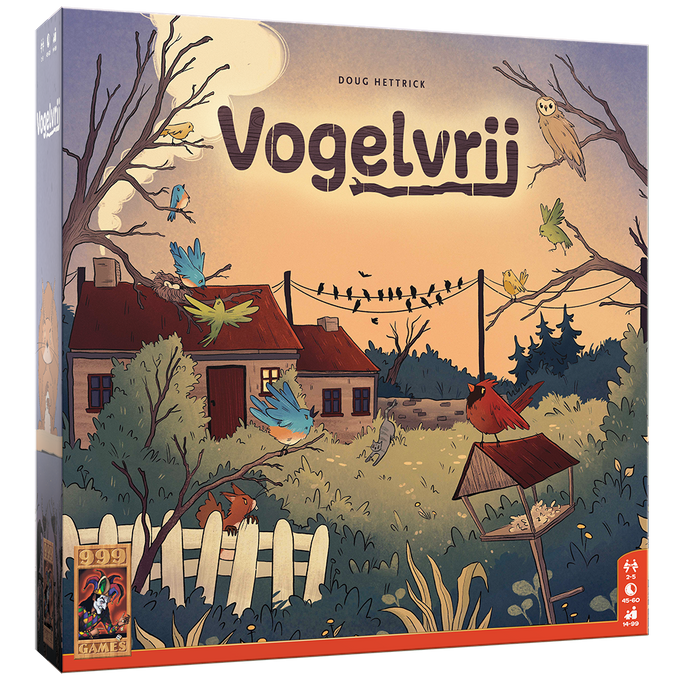

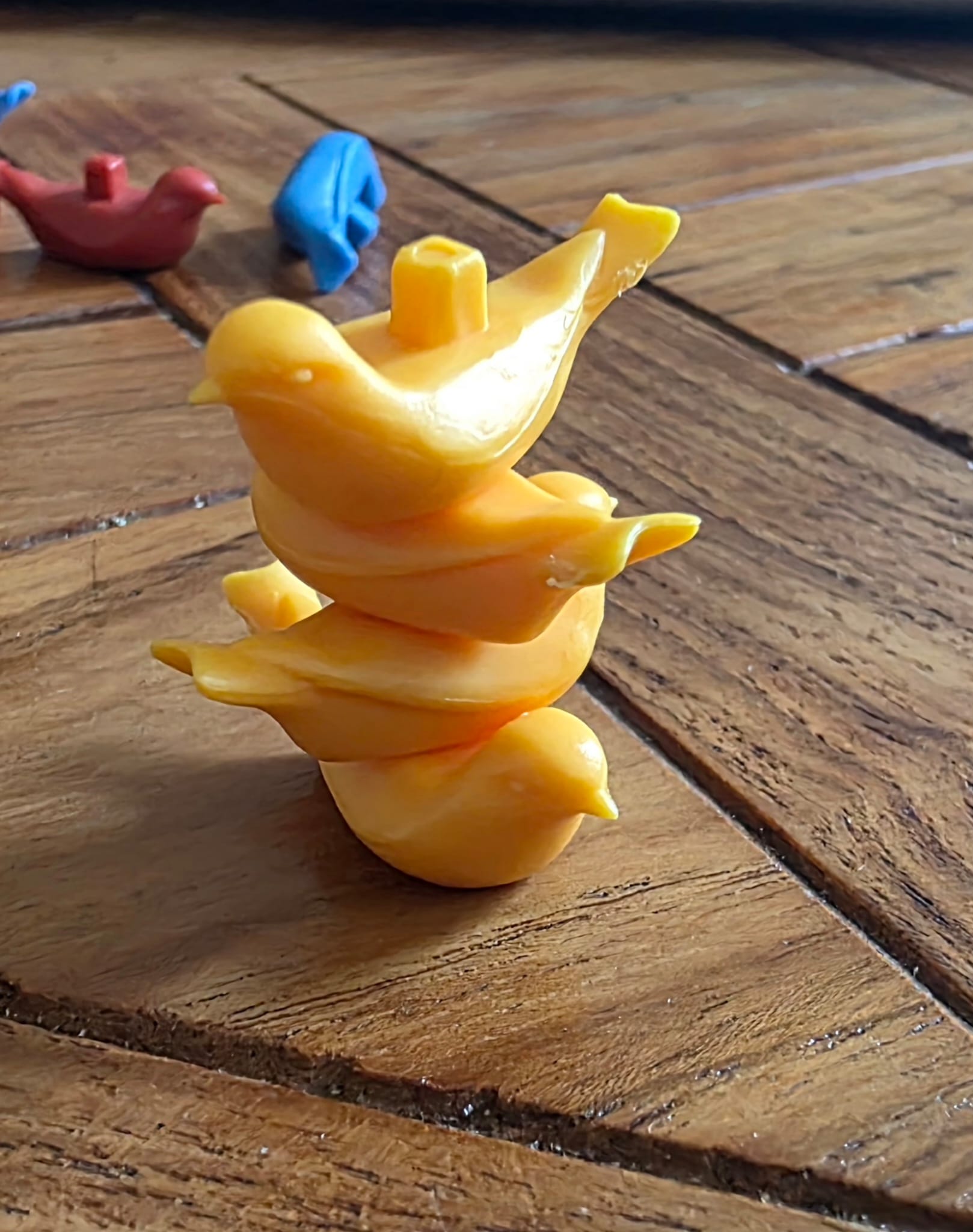
Vogelvrij, een spel die mijn aandacht al trok toen hij enkel al in het Engels uit was. Dus wat was ik blij met de vertaling! Het schattigheidsgehalte is hoog. En wie van natuur en dierenspellen houdt en zoals ik een zwak heeft voor dieren-meeples, die zit gebakken. Als je van area control houdt tenminste. Ik denk dat dát ook is wat mij al die tijd heeft tegen gehouden. Want dat is niet zo’n mijn ding. Maar Vogelvrij laat zien dat je area control prima kan combineren met workerplacement achtige taferelen, die erea’s functies en voordelen geven. Daarnaast krijg je soms punten als je niet oppermachtig bent, maar juist tweede of derde! Kijk, toen werd het interessant en sloeg ik toch aan het proberen…
Hoe wordt het gespeeld?
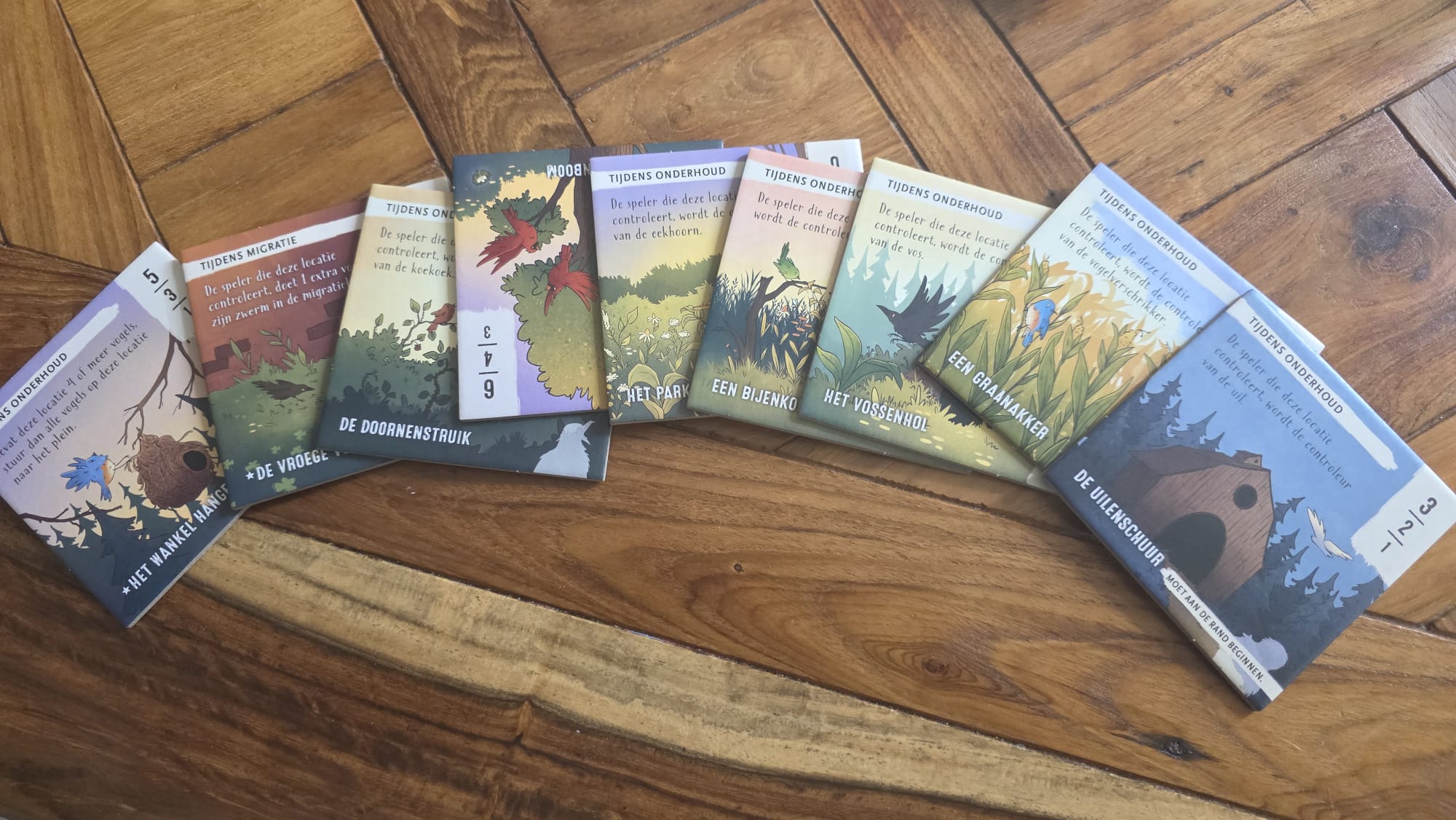
In vogelvrij ga je in vijf rondes, bestaande uit vier fases vogels uit (mogelijk verschillende, dus niet alleen je eigen kleur) zwermen plaatsen op het bord. Het bord is modulair en bestaat uit steeds wisselende (hoeveelheid) locaties met verschillende scoringsvoorwaardes en functies. Wie aan het einde van het spel de meeste punten heeft wint. Als je wilt kun je met extra einddoelen spelen om het spel nog uitdagender te maken.
Je beurt
Een beurt bestaat uit vier fases.
1. Migratie
2. Ronselen
3. Landen
4. Onderhouden
1.Migratie
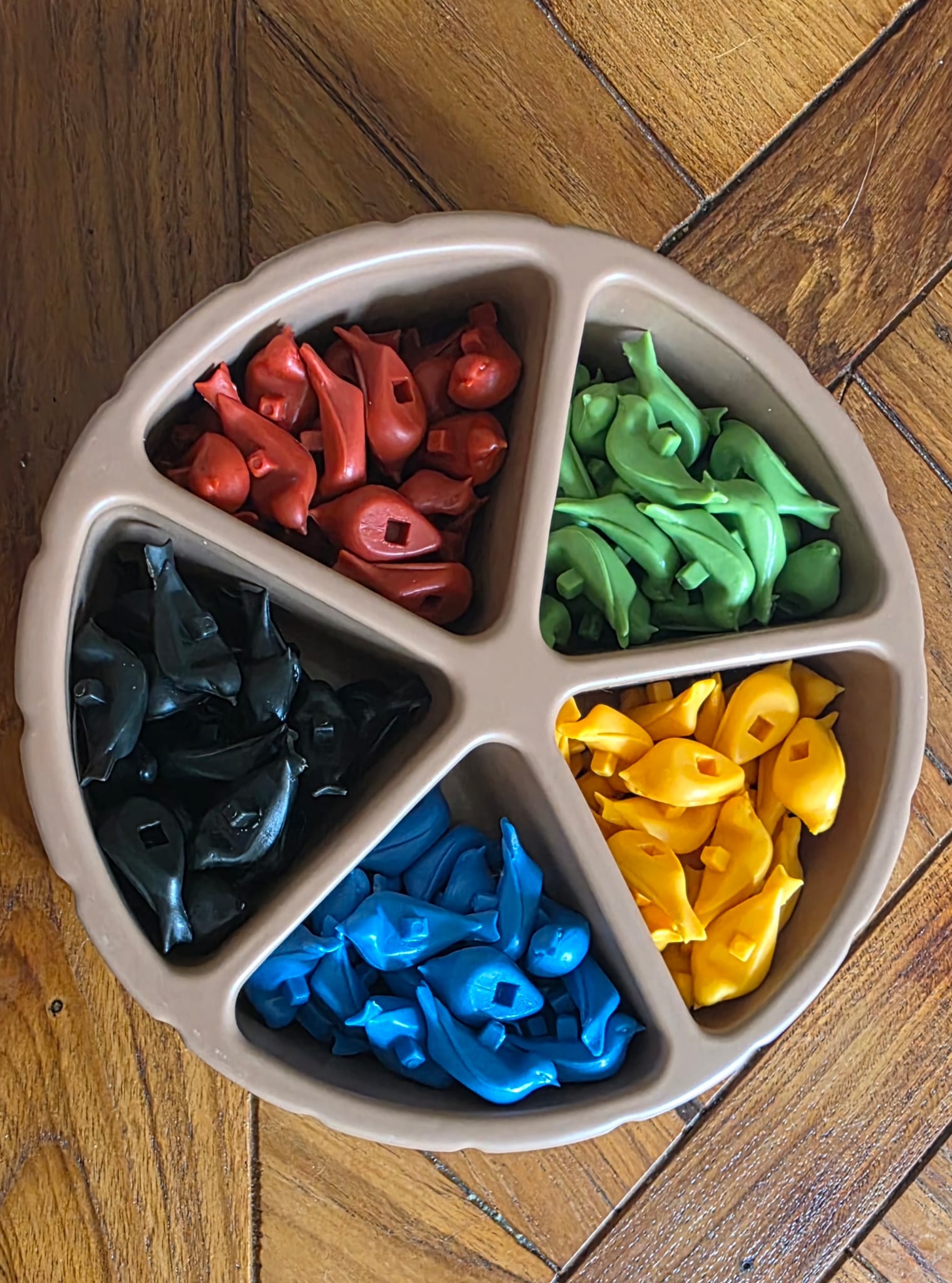
Deze fase doet iedereen tegelijk. Je doet twee vogels van je eigen kleur zwerm in een zak. Wanneer je met twee spelers speelt voeg je een van de andere kleuren toe als derde zwerm. De hoeveelheid van deze extra speler verschilt per ronde, voor wat extra weerstand. In de loop van het spel zul je zien dat je wellicht machtig bent op locaties, waardoor je in volgende rondes meer dan twee vogels kan toevoegen aan de zak.
- Ronselen
Je trekt twee vogels uit je zak én pakt twee vogels van je eigen zwerm. Het kan dus zijn dat je vogels van andere zwermen (kleuren) trekt dan die van je zelf.
- Landen
Al je geronselde vogels plaats je op een locatie op het bord, dus óók de vogels die mogelijk niet van je eigen zwerm zijn. Dit gaat om de beurt, vogel voor vogel. Het kan zijn dat je tijdens deze acties bonusacties kan doen, omdat je in eerder rondes de macht hebt gekregen over een van de locaties, die voordelen met zich meebrengen. Ook brengen een aantal rondes in het spel standaard bonus acties met zich mee en kun je andere vogels aanvallen en vogelhuisjes bouwen. (Die beschermen tegen bijvoorbeeld aanvallen).
- Onderhoud
Deze ronde is als het ware de afwikkeling van de ronde/ de rondetelling. Deze gaat in een aantal stappen.
- Alle locaties tellen
- Nieuwe beurt volgorde bepalen
- Locaties activeren die acties hebben tijdens de onderhoudsfase
- Rondesteen verplaatsen
Wat vind ik er van?
Vogelvrij is mijn inziens een vermakelijk familiespelletje. Het zou zomaar een gateway kunnen zijn naar ingewikkeldere area control spellen of worker placement spellen. Het is een mooie mix van strategie en geluk op redelijk instap niveau. Het biedt gelaagdheid, afwisseling en een grote herspeelbaarheid en variatie door het modulaire bord, zonder ontoegankelijk te worden.
Al spelende zul je merken dat sommige locaties niet helemaal lekker met/op elkaar in werken, of dat sommige juist wat meer denkwerk verrichten en je elkaar lekker dwars kan zitten. Hierdoor is elk spel anders en het is leuk om dat te ontdekken.
Wanneer je vogels uit zwermen van je medespelers moet plaatsen heb je dus invloed op waar hun vogels op landen, wat dus ook nadelige gevolgen kan hebben voor je medespelers.
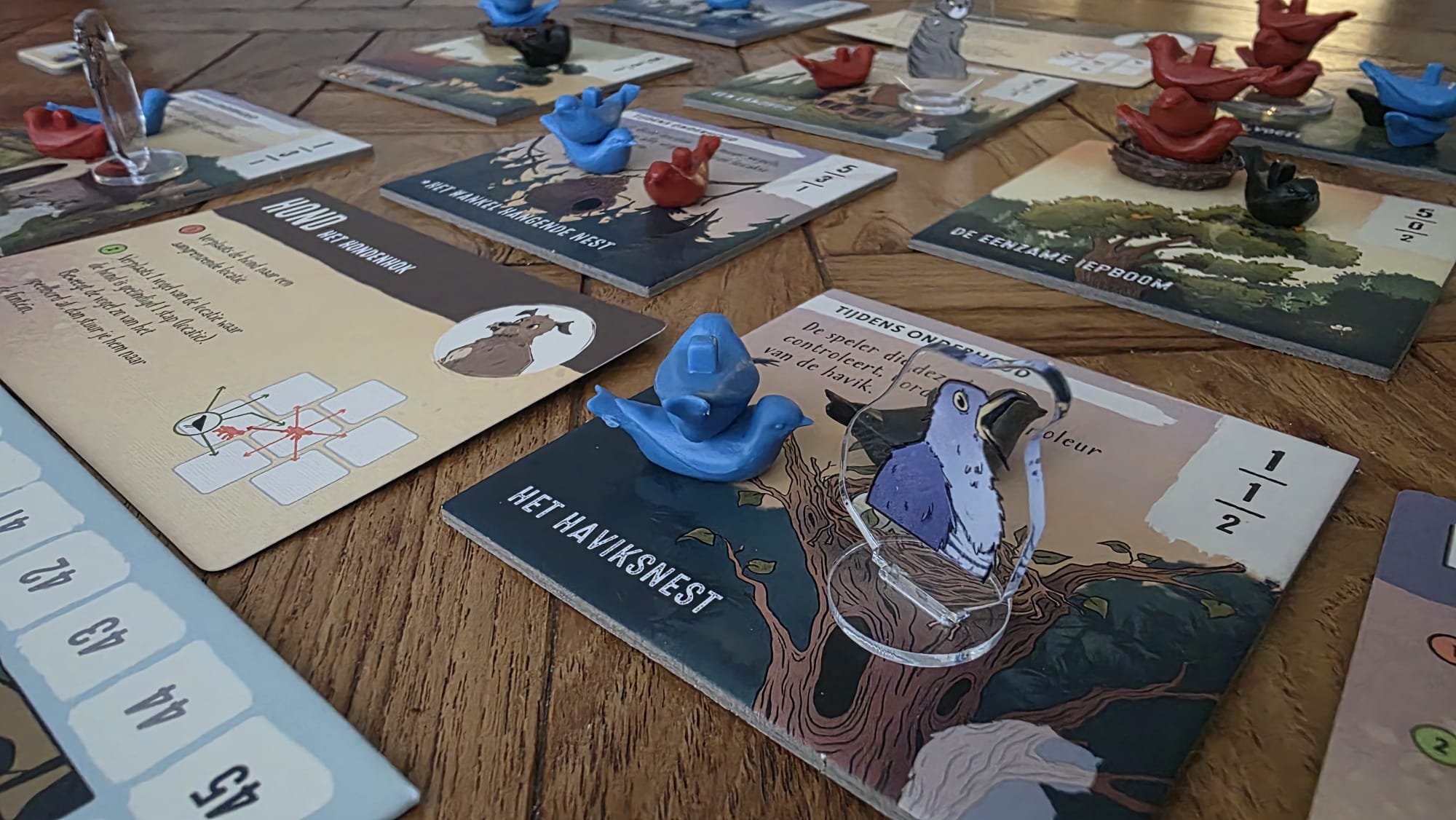
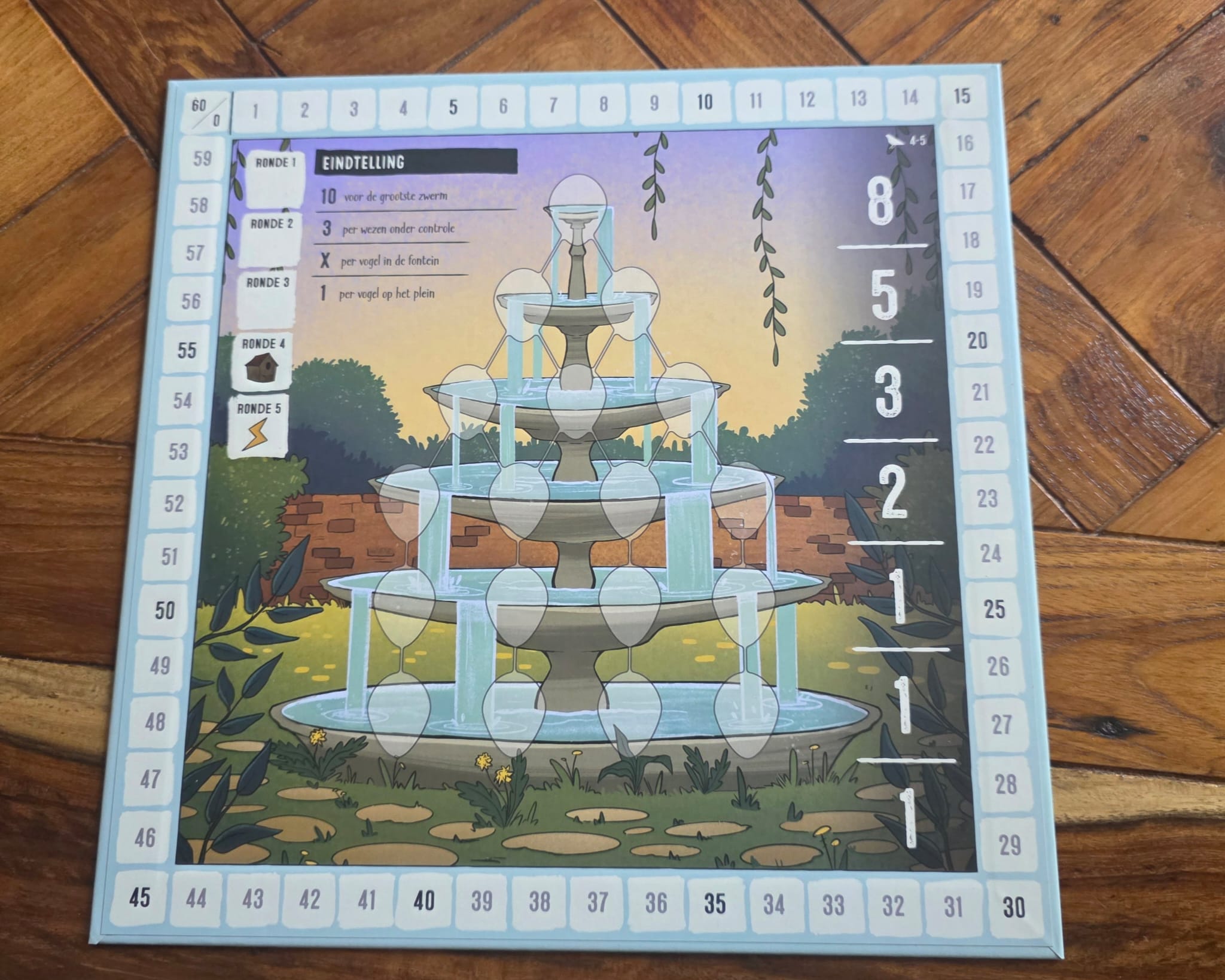
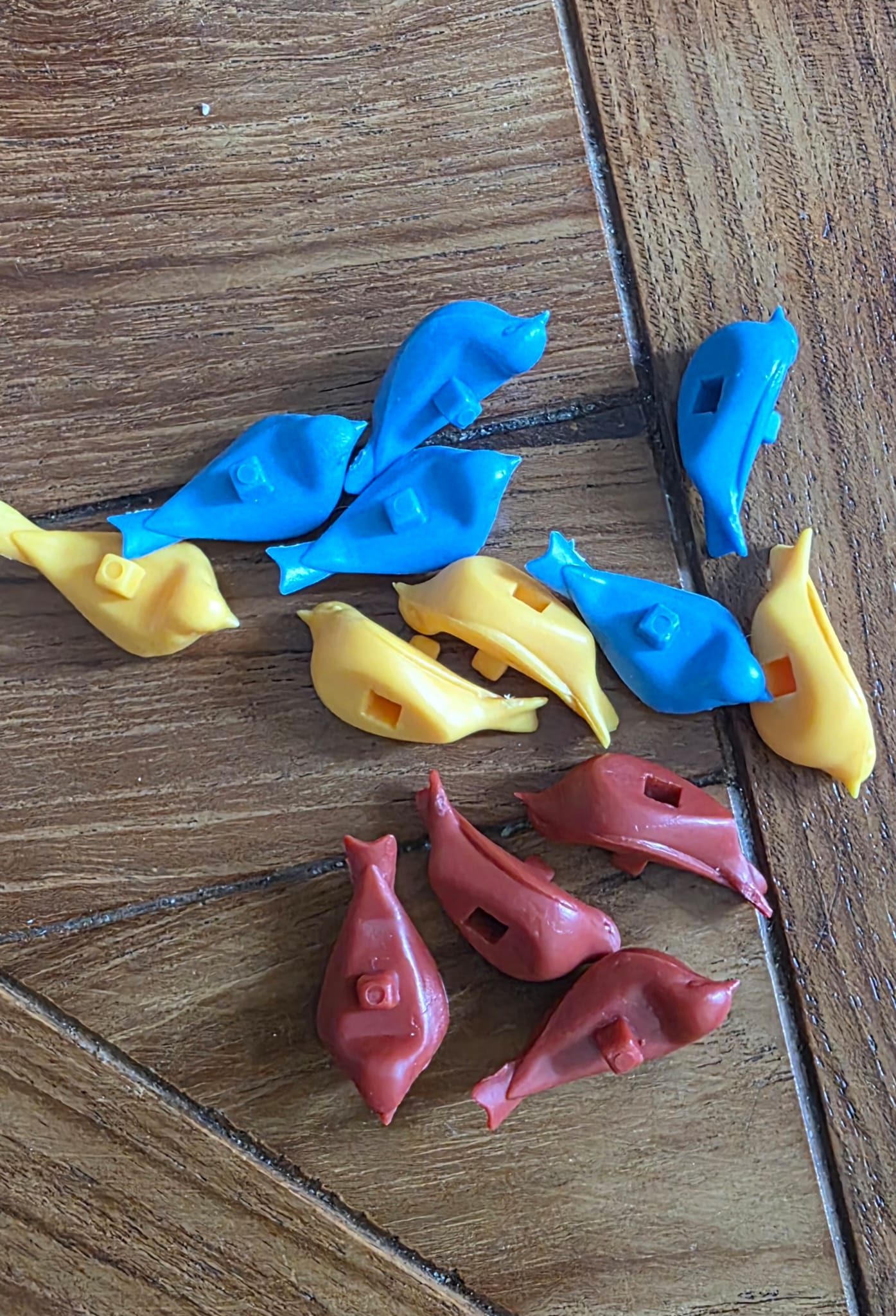
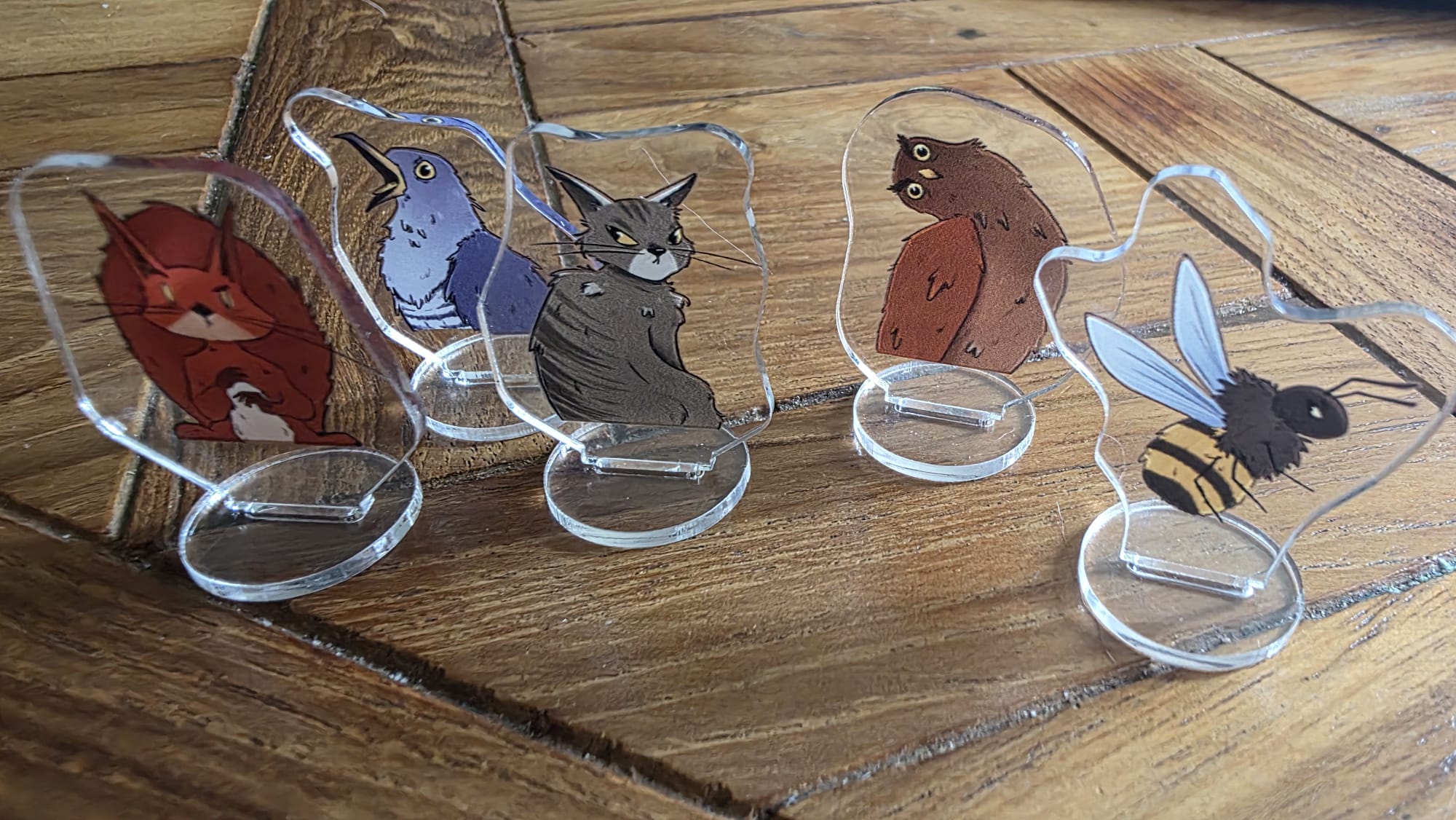
Het spel is vormgevings-technisch prachtig en thematisch goed doorgevoerd. Zo kun je spelers ook van het bord afspelen naar een binnenplaats of fontein, doen andere dieren/wezens hun intrede wanneer je bepaalde locaties domineert en zijn er schattige vogelnestjes die de zwermen goed op zijn plaats houden.
Al met al een klein feestje, die zelfs een erea-control disliker als ik zeker aan het spelen krijgt.
Er zijn wel ook een paar kanttekeningen. Zo is de voorbeeldopzet die gebruikt wordt in het boekje wel érg laagdrempelig. De al ietwat doorgewinterde of geroutineerde speler kan dit als saai ervaren en dat is dan misschien niet de beste kennismaking met het spel. Dit hadden wij in eerste instantie ook. Mijn advies zou zijn om dan even door de locaties te struinen en te kijken wat je leuk vindt én om meteen de einddoelkaarten toe te voegen die er optioneel bij zitten. Die geven het spel net iets meer gelaagdheid en puzzelmogelijkheden. Het is niet nodig om eerst gewend te raken aan het mechenisme van het spel. Dat kan net iets te veel voelen als enkel om de beurt vogeltjes plaatsen en that’s it. De doelen verhogen echt de strategie. Ook omdat je doelen soms in strijd kunnen zijn met de locatietegels en dan zul je voor dilemma’s en keuzes komen te staan, waardoor het spel meer beïnvloed wordt door je eigen strategie, en niet enkel door de vogels die je in de ronselfase uit de zak trekt. Want ga je voor je doelkaart(en) of zijn de meeste punten op het bord te behalen?
Al met al enorm leuk als familiespel! Maar wellicht wat te simpel/eenzijdig voor de geroutineerde spelers. Maar als de beginnende speler toe is aan een nieuwe uitdaging en de expert speler het niet erg vindt om wat af te zakken naar een doordenker van een wat simpelere categorie, hebben beide spelers aan Vogelvrij een enorm leuk spel en kun je elkaar met een groep spelers van wisselend niveau uitstekend tegemoet komen! (En het staat sowieso prachtig in je kast!)

Perch
Players: 2-5
Time: 30-60 minutes
Age: 14+
Author: Douglas Hettrick
Publisher: Inside Up Games
Year: 2025
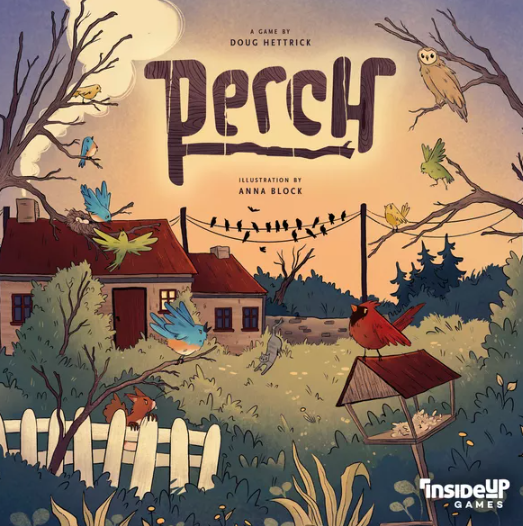
Perch, a game that caught my attention even when it was only available in English. So I was thrilled with the translation! The cuteness factor is high. And anyone who loves nature and animal games, and who, like me, has a soft spot for animal meeples, is in luck. At least, if you like area control. I think that’s what held me back all this time. Area Control isn’t really my cup of tea. But Petch shows that you can combine area control perfectly well with worker placement-style scenarios that give areas functions and benefits. Additionally, you sometimes get points if you aren’t all-powerful, but rather second or third! See, that’s when it became interesting, and I started giving it a try after all…
How is it played?
In Perch, you place birds from flocks (possibly different ones, so not just your own color) on the board, during five rounds consisting of four phases. The board is modular and consists of constantly changing (quantity of) locations with different scoring conditions and functions. Whoever has the most points at the end of the game wins. If you wish, you can play with extra end goals to make the game even more challenging.
Your Turn
A turn consists of four phases.
- Migration
- Recruiting
- Landing
- Maintaining
- Migration
Everyone performs this phase simultaneously. You place two birds from your own color flock into a bag. When playing with two players, you add one of the other colors as a third flock. The number of this extra player varies per round, for some extra resistance. As the game progresses, you will see that you may be powerful at locations, allowing you to add more than two birds to the bag in subsequent rounds.
- Recruiting
You draw two birds from your bag AND take two birds from your own flock. Therefore, it is possible that you draw birds from other flocks (colors) than your own.
- Landing
You place all your recruited birds on a location on the board, including birds that may not be from your own flock. This is done in turns, bird by bird. It is possible that you can perform bonus actions during these actions, because you gained control over one of the locations in previous rounds, which brings benefits. Additionally, a number of rounds in the game bring standard bonus actions, and you can attack other birds and build birdhouses (which protect against attacks, for example).
- Maintenance
This round is essentially the conclusion of the round/the round count. This proceeds in a number of steps.
- Count all locations
- Determine new turn order
- Activate locations that have actions during the maintenance phase
- Move round stone
What do I think?
In my opinion, Perch is an entertaining family game. It could easily be a gateway to more complex area control or worker placement games. It is a nice mix of strategy and luck at a reasonably accessible entry level. It offers depth, variety, and great replayability and variation thanks to the modular board, without becoming inaccessible.
While playing, you will notice that some locations don’t quite work well together, or that others require a bit more thought, allowing you to really get in each other’s way. This makes every game different, and it is fun to discover what works for you.
When you have to place birds from your fellow players’ flocks, you influence where their birds land, which can therefore have adverse consequences for your fellow players.
Design-wise, the game is beautiful and thematically well executed. For instance, you can also move players off the board to a courtyard or fountain, other animals/creatures make their appearance when you dominate certain locations, and there are cute bird nests that keep the flocks securely in place.
All in all, a little treat that will certainly get even an Area Control disliker like me playing.
However, there are a few caveats. For instance, the example setup used in the booklet is very simplistic. A somewhat seasoned or experienced player might find this boring, and that might not be the best introduction to the game. We felt this way initially as well. My advice would be to search through the locations for a bit to see what you like, and to immediately add the optional end-goal cards. These give the game just a little more depth and puzzle possibilities. It is not necessary to get used to the game’s mechanics first. That can feel a bit too much like simply placing birds in turns and that’s it. The goals really enhance the strategy. Also because your goals can sometimes conflict with the location tiles, you will face dilemmas and choices, meaning the game is influenced more by your own strategy than just by the birds you draw from the bag during the recruitment phase. After all, do you go for your goal card(s), or are the most points to be gained on the board?
All in all, a hugely fun family game! But perhaps a bit too simple/one-sided for seasoned players. However, if the beginner is ready for a new challenge and the expert player doesn’t mind dropping down a bit to a brainteaser of a somewhat simpler category, both players will find Perch a hugely fun game, and you can play with a group of players of varying skill levels! (And it looks beautiful on your shelf anyway!)