

Aantal spelers: 1-4
Speelduur: 30-45 minuten
Leeftijd: Vanaf 8 jaar (?)
Auteur: Yeom.C.W
Uitgever: DSV Games
Jaar: 2025
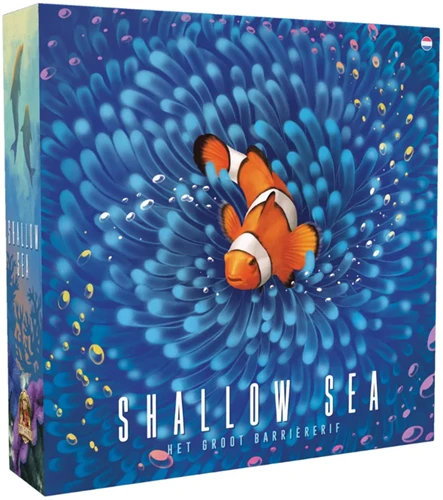

Shallow Sea speelt zich af in het adembenemende Groot Barrièrerif. In dit puzzelspel creëren spelers hun eigen oceaanlandschap door koralen, vissen en andere zeedieren te plaatsen. Het resultaat is een kleurrijke onderwaterwereld, maar schijn bedriegt: achter het rustgevende thema schuilt een verrassend gelaagde puzzel.
Wat wij ervan vinden? Lees snel verder!
Een eerste kennismaking met Shallow Sea
Op de een of andere manier had ik de komst van Shallow Sea helemaal gemist. Best vreemd eigenlijk, want meestal ben ik redelijk op de hoogte van nieuwe bordspellen. Bovendien lijkt dit precies een spel voor mij: puzzelen, tegels leggen én een dierenthema.
Kort na de Nederlandse release zag ik het spel ineens overal opduiken. Hoe meer ik ervan zag, hoe meer ik overtuigd raakte dat dit weleens helemaal mijn ding kon zijn. Dus besloot ik het spel aan te schaffen.
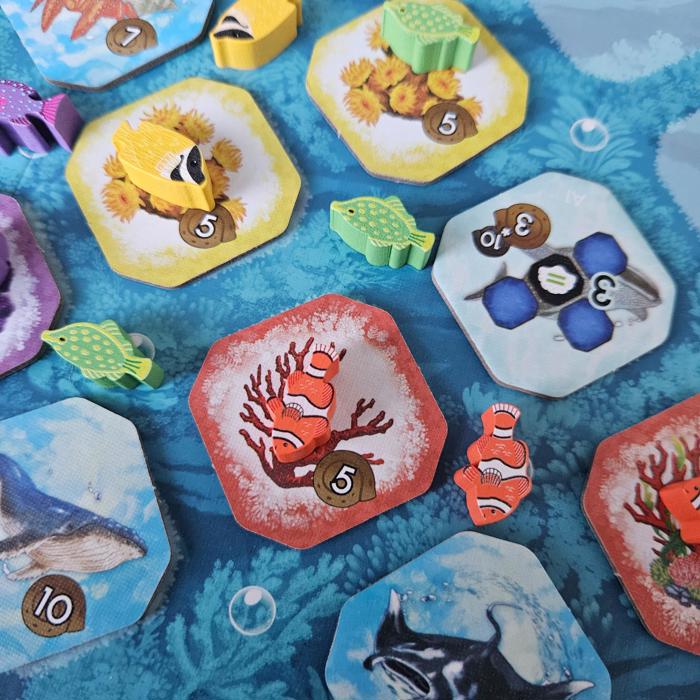
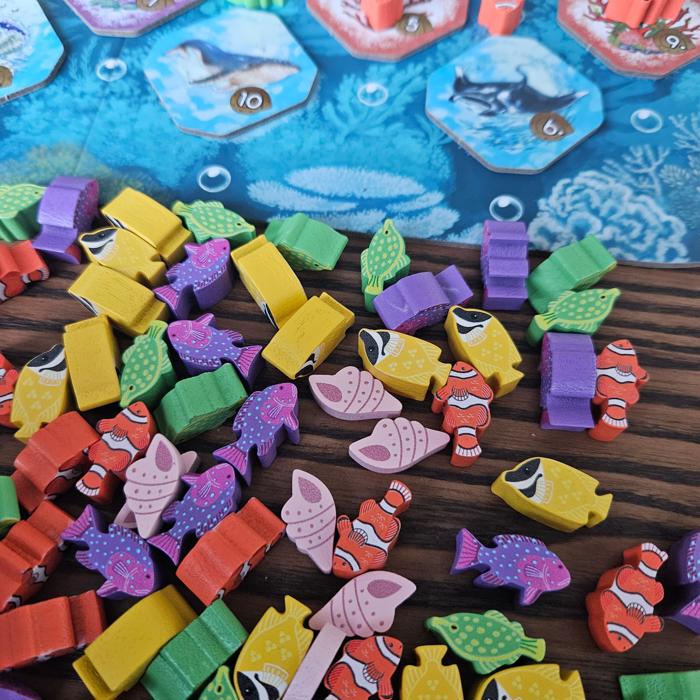
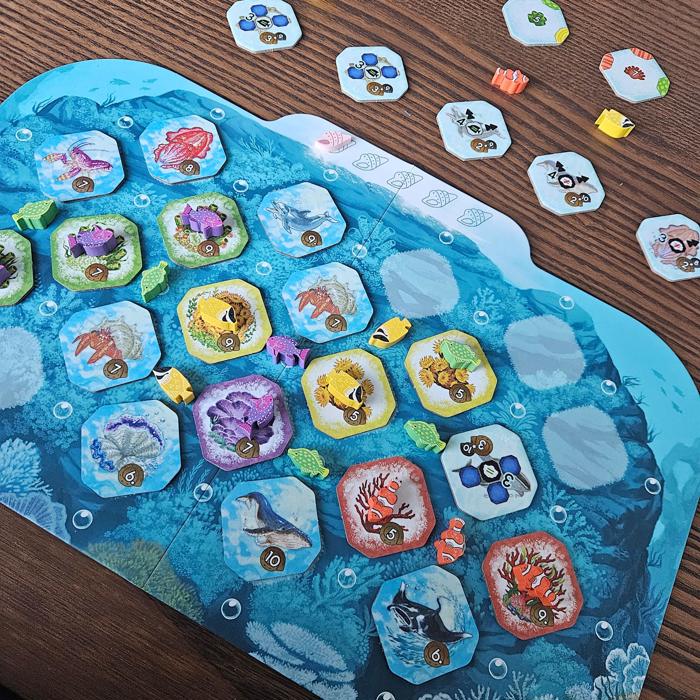
De doos is prachtig, maar de inhoud doet daar zeker niet voor onder. Tijdens het uitpakken volgde het ene “Ach, kijk nou!” na het andere. De kleurrijke vissenmeeples stelen direct de show, maar ook de koralen zien er fantastisch uit. De productie straalt kwaliteit uit en nodigt meteen uit om een eerste potje te spelen.
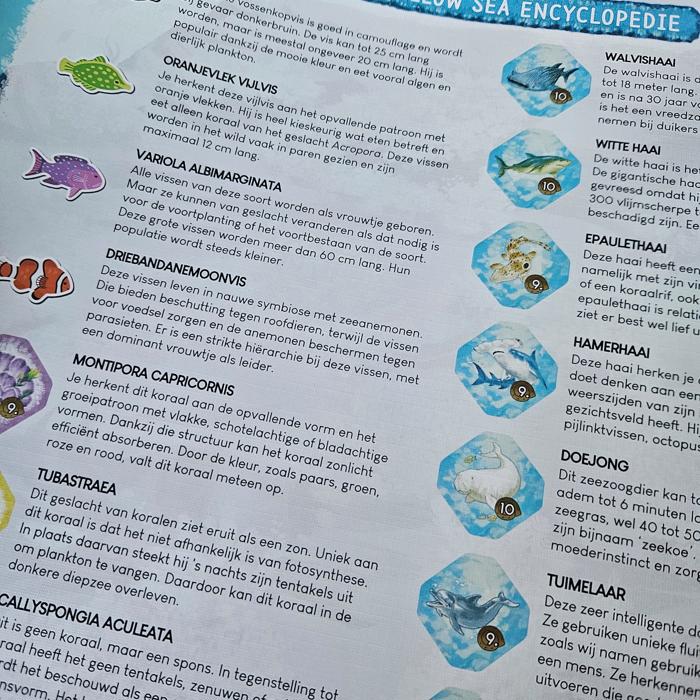
Het regelboekje oogt behoorlijk uitgebreid, maar laat je daardoor niet afschrikken. De hoeveelheid tekst komt vooral door de vele voorbeelden. Daarnaast bevat het boekje verschillende scenario’s, extra uitdagingen en leuke achtergrondinformatie over de dieren uit het Groot Barrièrerif.
Hoe speel je Shallow Sea?
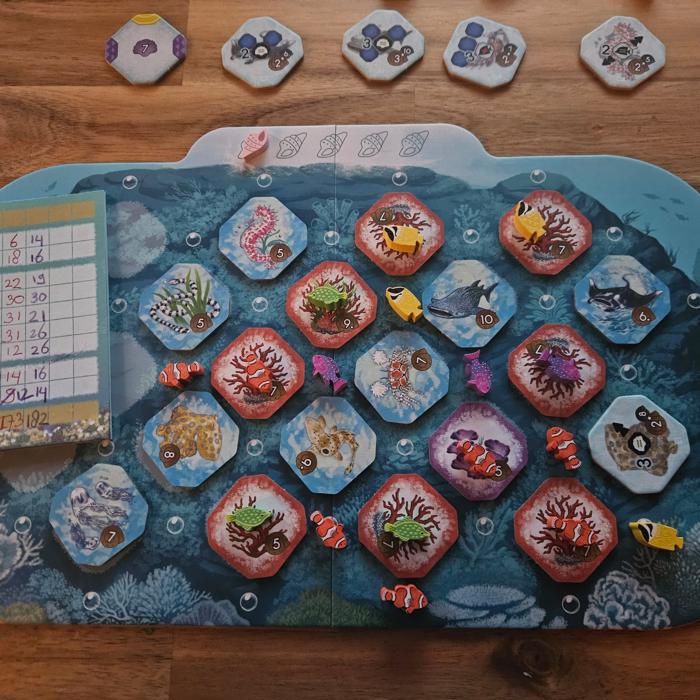
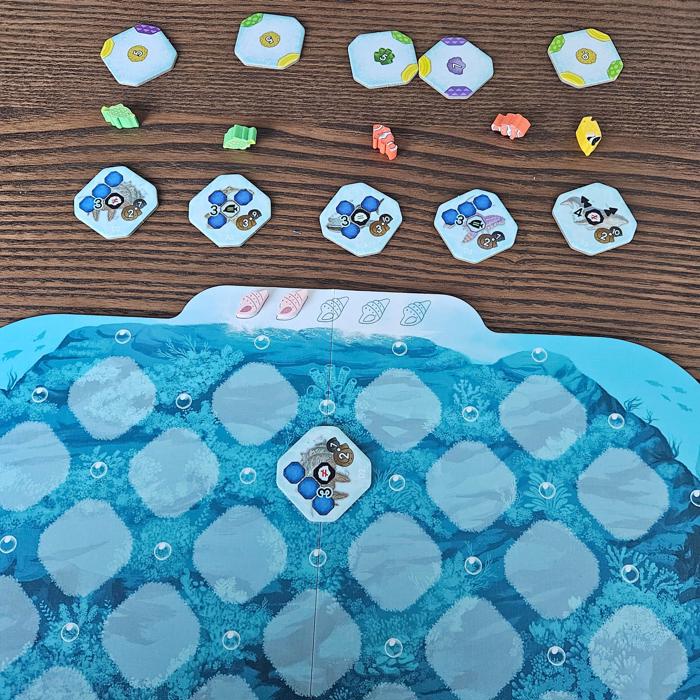
Iedere speler krijgt een persoonlijk speelbord en vijf schelpen. Twee daarvan mogen direct op het speelbord worden geplaatst. Vervolgens kiest iedere speler twee opdrachttegels waarmee hij het spel begint.
Daarna kan het puzzelen beginnen.
Tijdens het spel kies je telkens een combinatie van een tegel en een vis uit het gezamenlijke aanbod. Beide moeten vervolgens op je eigen speelbord worden geplaatst, waarbij ze aansluiten op eerder geplaatste tegels.
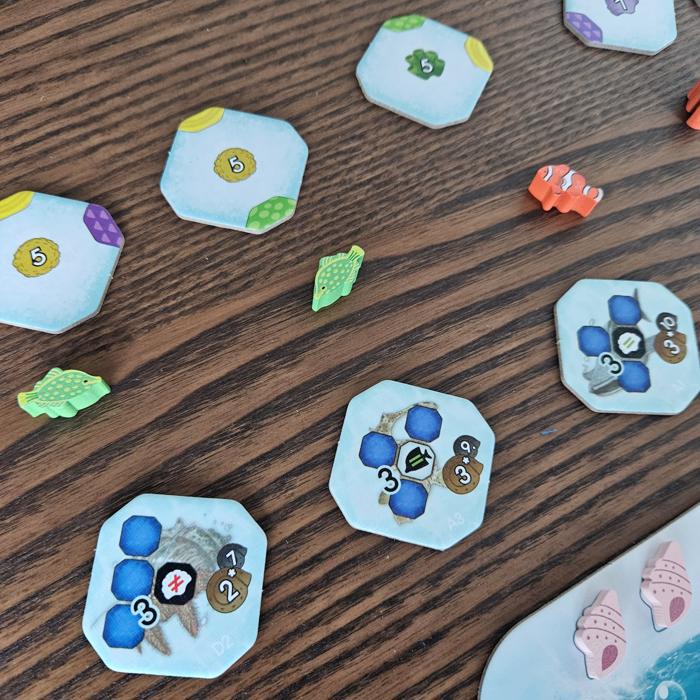
Koraaltegels bevatten gekleurde hoeken die overeenkomen met de verschillende vissoorten in het spel. Door de juiste vissen op een koraal te verzamelen, voltooi je het koraal, en draai je de tegel om.
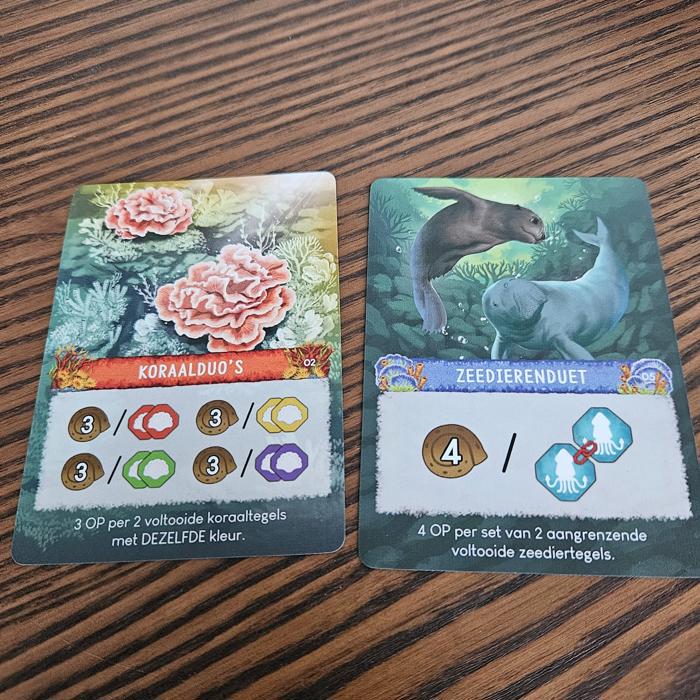
Daarnaast zijn er zeediertegels. Deze bevatten opdrachten die bijvoorbeeld vragen om bepaalde patronen van koralen of rijen met vissen. Zodra aan de voorwaarden is voldaan, draai je de tegel om en scoor je punten.
Elke keer dat je een tegel voltooit, mag je bovendien een schelp naar je speelbord verplaatsen. Die schelpen vormen een waardevolle ‘grondstof’ waarmee je tijdens het spel extra mogelijkheden krijgt. Zo kun je:
* een willekeurige combinatie van vis en tegel kiezen;
* een rij van het aanbod vernieuwen;
* of een onvoltooide vis verplaatsen.
Na iedere beurt wordt het aanbod weer aangevuld. Het spel eindigt zodra iedere speler nog vier lege vakken op zijn speelbord over heeft.
De eindscore bestaat;
* punten voor de 2 gemeenschappelijke opdrachten;
* punten voor zeedieren en voltooide koralen
* punten voor slim geplaatste vissen;
* punten voor verschillende soorten voltooide zeedieren.
Wat vind ik van Shallow Sea?
Ik denk dat ik een beetje verliefd ben.
Bij het zien van de vissenmeeples werd ik al ontzettend enthousiast, maar een mooi uiterlijk zegt natuurlijk niet alles. Gelukkig zit er ook een geweldig spel onder.
Shallow Sea doet in eerste instantie sterk denken aan Cascadia. Heb je dat spel gespeeld, dan zullen veel mechanismen direct vertrouwd aanvoelen. Toch voelt Shallow Sea uiteindelijk anders.
Waar Cascadia voor mij draait om een elegante puzzel, voelt Shallow Sea een stuk gelaagder. Je bent voortdurend met verschillende doelen tegelijk bezig. Je probeert koralen te voltooien, opdrachten van de zeedieren af te ronden, rekening te houden met de algemene opdrachten én ondertussen de juiste vissen op de juiste plekken te krijgen.
Juist die combinatie maakt de puzzel ontzettend interessant.
Soms lukt het om meerdere opdrachten tegelijk te voltooien met dezelfde vissen of koralen. Dat levert heerlijke momenten op waarop alles precies in elkaar valt. Andere keren moet je juist keuzes maken en accepteren dat je niet alles kunt optimaliseren. Dat zorgt ervoor dat ieder potje weer anders aanvoelt.
Ondanks die diepgang blijft Shallow Sea verrassend ontspannen. Het is zo’n spel waarbij je rustig voor je uit zit te puzzelen, zonder dat het stressvol wordt. Een echte ‘cozy game’, maar wel eentje die je hersenen flink aan het werk zet.
De variatie is bovendien enorm. Iedere pot gebruik je andere combinaties van zeediertegels en algemene opdrachten, waardoor de puzzel telkens een andere insteek krijgt.
Tijdens mijn eerste twee of drie potjes moest ik nog wel wennen aan de verschillende opdrachttegels. De iconografie is eigenlijk heel duidelijk, maar het duurde bij mij even voordat alle symbolen echt vanzelfsprekend aanvoelden.
Ook het gelukselement is precies goed gedoseerd. Natuurlijk heb je niet volledig in de hand welke combinaties van vissen en tegels beschikbaar zijn. Toch voelt dat zelden frustrerend. Het aanbod is groot en dankzij de schelpen heb je voldoende mogelijkheden om het aanbod naar je hand te zetten. Daardoor voelt geluk nooit bepalend.
Qua interactie moet je overigens niet te veel verwachten. Iedere speler bouwt vooral aan zijn eigen onderwaterwereld. Hooguit kiest een tegenstander nét de combinatie die jij graag had willen hebben. Voor liefhebbers van interactieve spellen zal dat misschien wat mager zijn, maar voor een puzzelspel als dit past het eigenlijk perfect.
Wat mij misschien nog wel het meest verraste, is hoe vaak het spel opnieuw op tafel wilde komen. Tijdens mijn vakantie heb ik Shallow Sea in de eerste week meer dan tien keer gespeeld — allemaal solo. Dat zegt eigenlijk genoeg. Na ieder potje had ik direct zin in nóg een poging om mijn puzzel slimmer op te lossen.
De scenario’s en extra uitdagingen, zoals we die ook kennen van bijvoorbeeld Cascadia en Calico, vergroten de herspeelbaarheid nog verder. Vooral voor solospelers zijn die een enorme meerwaarde.
Eindoordeel
Shallow Sea is wat mij betreft een van de leukste puzzelspellen die ik de afgelopen tijd heb gespeeld.
De eenvoudige regels maken het spel toegankelijk voor beginnende spelers, terwijl de slimme puzzel juist voldoende diepgang biedt voor ervaren bordspelers. Daardoor zie ik dit spel met gemak op tafel komen bij gezinnen, solospelers én liefhebbers van puzzelspellen.
Ben je fan van Cascadia, Calico of andere rustige puzzelspellen? Dan durf ik Shallow Sea eigenlijk zonder twijfel aan te raden. Dankzij de grote variatie aan opdrachten, de vele scoringsmogelijkheden en de prachtige productie blijft ieder potje uitdagend en voelt geen enkele puzzel hetzelfde.
Zoek je juist veel interactie of wil je je tegenstanders voortdurend dwarszitten, dan is Shallow Sea waarschijnlijk minder geschikt. Maar als je houdt van een ontspannen, slimme puzzel waarbij iedere keuze ertoe doet, dan is dit een absolute aanrader.
Eindcijfer: 8,5/10

Shallow Sea
Players: 1-4
Time: 30-45 minutes
Age: 8+ (?)
Author: Yeom.C.W
Publisher: Bad Comet
Year: 2025
Shallow Sea is set in the breathtaking Great Barrier Reef. In this puzzle game, players create their own underwater landscape by placing corals, fish, and other sea creatures. The result is a vibrant underwater world, but don’t be fooled: beneath its relaxing theme lies a surprisingly layered puzzle.
What did we think of it? Read on to find out!
A first look at Shallow Sea
Somehow, I completely missed the announcement of Shallow Sea. Which is actually quite strange, because I usually keep a close eye on new board game releases. Besides, this looked exactly like the kind of game I enjoy: puzzling, tile-laying, and an animal theme.
Shortly after its Dutch release, I suddenly started seeing the game everywhere. The more I saw of it, the more convinced I became that this could be right up my alley. So, I decided to pick up a copy.
The box is beautiful, but the contents certainly don’t disappoint either. While unboxing it, I found myself saying, “Aww, look at that!” over and over again. The colourful fish meeples immediately steal the show, but the coral tiles look fantastic as well. The production quality is excellent and instantly makes you want to dive into your first game.
The rulebook looks fairly extensive, but don’t let that intimidate you. Most of the text consists of examples. It also includes various scenarios, additional challenges, and interesting background information about the animals that inhabit the Great Barrier Reef.
How do you play Shallow Sea?
Each player receives their own player board and five shells. Two of those shells are placed on the board before the game begins. Next, each player selects two objective tiles to start with.
Then the puzzling can begin.
On your turn, you choose a combination of one tile and one fish from the shared display. Both must then be placed on your player board, adjacent to previously placed tiles.
Coral tiles feature coloured corners that correspond to the different fish species in the game. By collecting the correct fish on a coral tile, you complete it and flip it over.
There are also sea creature tiles. These contain objectives, such as creating specific coral patterns or arranging rows of matching fish. Once you meet the requirements, you flip the tile over and score points.
Whenever you complete a tile, you may also move one shell onto your player board. These shells act as a valuable resource that grants additional options during the game. You can use them to:
-
choose any combination of a fish and a tile;
-
refresh one row of the display;
-
or move an unfinished fish.
After each turn, the display is refilled. The game ends once every player has only four empty spaces remaining on their player board.
Final scoring consists of:
-
points for the two shared objectives;
-
points for sea creatures and completed corals;
-
points for cleverly placed fish;
-
points for different types of completed sea creatures.
What do I think of Shallow Sea?
I think I’m a little bit in love.
The fish meeples had me excited from the moment I saw them, but beautiful components alone don’t make a great game. Thankfully, there’s an excellent game underneath all that beauty.
At first glance, Shallow Sea feels very reminiscent of Cascadia. If you’ve played that game, many of the mechanisms will immediately feel familiar. Still, Shallow Sea ultimately offers a different experience.
Where Cascadia is, to me, an elegant puzzle, Shallow Sea feels much more layered. You’re constantly working towards several objectives at once. You’re trying to complete corals, fulfil the sea creature objectives, keep the shared objectives in mind, and at the same time place the right fish in the right locations.
That combination is exactly what makes the puzzle so engaging.
Sometimes you’ll manage to complete multiple objectives using the same fish or corals, leading to those wonderfully satisfying moments when everything falls perfectly into place. Other times, you’ll have to make difficult choices and accept that you simply can’t optimise everything. That ensures every game feels different.
Despite its depth, Shallow Sea remains remarkably relaxing. It’s the kind of game where you quietly focus on your own puzzle without ever feeling stressed. It’s a true cozy game, but one that still gives your brain a solid workout.
The variety is another major strength. Every game uses different combinations of sea creature tiles and shared objectives, giving each puzzle a fresh twist.
During my first two or three games, I did need some time to get used to the different objective tiles. The iconography is actually very clear, but it took a few plays before all the symbols felt completely intuitive.
The luck factor is also very well balanced. Of course, you can’t fully control which combinations of fish and tiles become available. However, this rarely feels frustrating. The display offers plenty of choices, and the shells give you enough flexibility to influence your options. As a result, luck never feels like the deciding factor.
As for player interaction, don’t expect too much. Everyone is mainly focused on building their own underwater world. Occasionally another player will take the combination you were hoping for, but that’s about it. Fans of highly interactive games may find this a little lacking, but for a puzzle game like this, it feels perfectly appropriate.
What surprised me most, though, was how often I wanted to play it again. During my holiday, I played Shallow Sea more than ten times in the first week alone—all of them solo. That probably says enough. After every game, I immediately wanted another attempt to solve the puzzle even more efficiently.
The scenarios and additional challenges, much like those found in games such as Cascadia and Calico, add even more replayability. They’re especially valuable for solo players.
Final thoughts
As far as I’m concerned, Shallow Sea is one of the best puzzle games I’ve played in quite some time.
Its straightforward rules make it accessible to newcomers, while the puzzle itself offers more than enough depth to keep experienced gamers engaged. I can easily see this becoming a favourite for families, solo players, and puzzle enthusiasts alike.
If you’re a fan of Cascadia, Calico, or other relaxing puzzle games, I can wholeheartedly recommend Shallow Sea. Thanks to the wide variety of objectives, the many different scoring opportunities, and the beautiful production quality, every game remains engaging and every puzzle feels unique.
If you’re looking for constant player interaction or a game where you’re frequently disrupting your opponents, Shallow Sea probably isn’t the right choice. But if you enjoy a relaxing yet thoughtful puzzle where every decision matters, this is an absolute recommendation.
Final score: 8.5/10
Op mijn want-to-play-before-you-buy lijst
Top! Dat wordt een koop 🙂