Aantal spelers: 1-5
Speelduur: 60 minuten
Leeftijd: vanaf 13 jaar
Auteur: Maxime Tardif
Uitgever: Geronimo Games
Jaar: 2023


Deze review werd reeds eerder gepubliceerd op Bordspelwereld.nl.
Ontdek de boeiende fauna en flora van onze unieke planeet met verrassende levensvormen, symbiotische ecosystemen en rijke habitats. Dompel je onder in een veelzijdige wereld van natuurlijke rijkdommen!
Earth is een engine builder voor 1 tot 5 spelers met eenvoudige spelregels maar veel strategische mogelijkheden. Er is ook een variant waarin je met 2 teams tegen elkaar speelt. Creëer een onafhankelijke motor van groei, uitbreiding en bevoorrading waarin zelfs ongebruikte flora nog dienst doet als compost voor latere teelt. Dankzij de vele unieke kaarten en combinaties ontdek je in elk spel nieuwe synergieën, net als in onze boeiende echte wereld. Met alle verschillende startkaarten, zijn er 25.600 mogelijke startopstellingen in dit spel… welkom in de diversiteit van onze natuur!
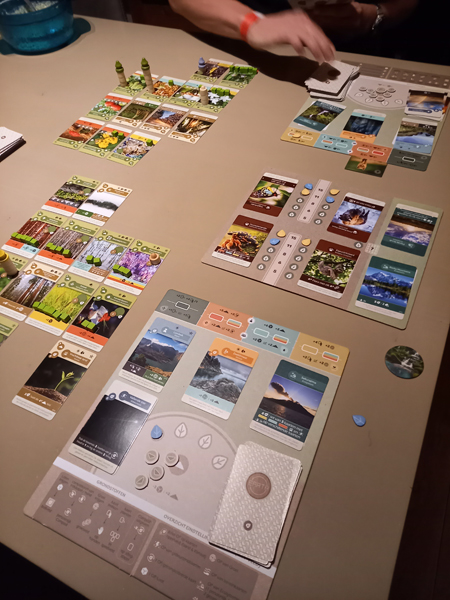
Nadat het spel is opgesteld, krijgt elke speler een aantal kaarten en grond, afhankelijk van zijn eilandkaart. Elke speler start dus met een verschillend aantal kaarten en grond want elke eilandkaart is uniek. Je hebt in het spel 7 soorten kaarten: de flora-, terrein- en gebeurteniskaarten vormen samen de trekstapel van “aardekaarten”. Van de eiland-, klimaat-, ecosysteem- en faunakaarten doen er in elk spel slechts enkele mee die aan het begin van het spel worden getrokken/gekozen, de rest verdwijnt in de doos. De verschillende kaarten zijn:
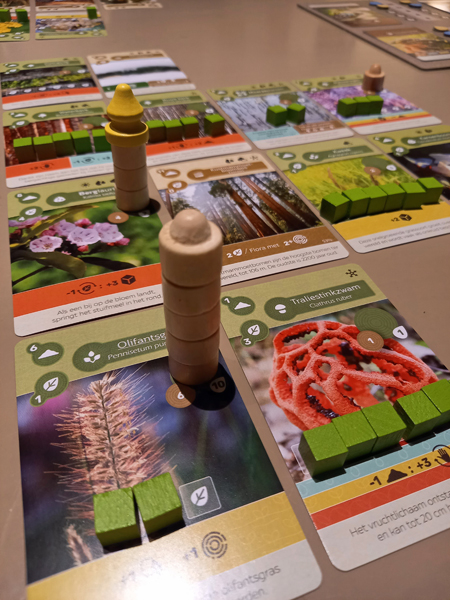
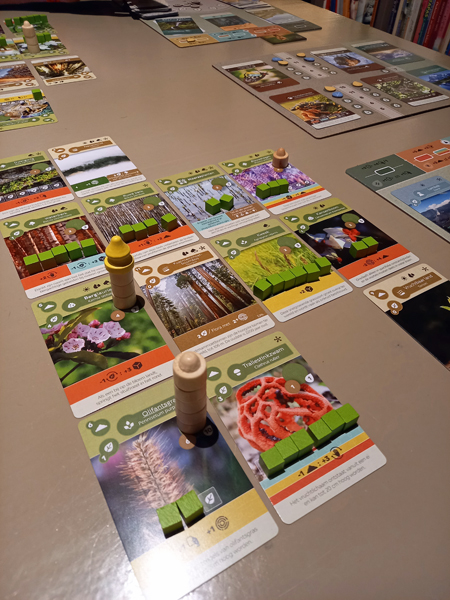
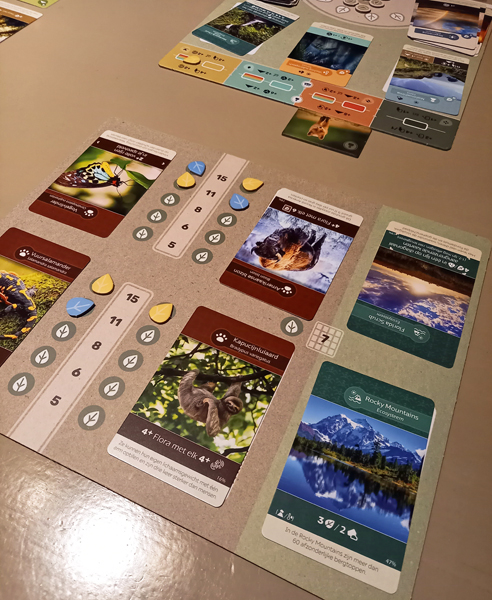
- Florakaarten: deze kaarten worden tijdens het spel gebruikt om het speelveld van 4×4 kaarten te maken. Ze bieden de spelers basispunten aan het einde van het spel en vaardigheden die tijdens het spel kunnen worden ingezet.
- Terreinkaarten: deze kaarten worden tijdens het spel gebruikt om het speelveld van 4×4 kaarten te maken. Ze bieden de spelers vaardigheden die tijdens het spel kunnen worden ingezet en punten aan het einde van het spel die met het vervullen van opdrachten kunnen gescoord worden.
- Gebeurteniskaarten: deze kaarten mogen op elk moment gespeeld worden, ook in de beurt van iemand anders of tussen beurten. Ze bieden de spelers een vaardigheid die eenmalig op dat moment kan gebruikt worden. Let wel: sommige gebeurtenissen geven de speler minpunten aan het einde van het spel.
- Eilandkaarten: deze kaarten bepalen de startsituatie van een speler en geven hem een startvaardigheid.
- Klimaatkaarten: deze kaarten geven een extra startvaardigheid.
- Ecosysteemkaarten: deze kaarten geven aan het einde van het spel overwinningspunten voor elke vervulde opdracht op de kaarten.
- Faunakaarten: deze kaarten geven aan het einde van het spel overwinningspunten als je bepaalde opdrachten tijdens het spel vervulde. Ben je de eerste speler die een bepaalde opdracht vervult, dan krijg je meer punten dan de tweede speler die deze opdracht vervult enz.
Het spel verloopt in verschillende rondes. In elke ronde is elke speler 1x actieve speler. Het leuke aan dit spel is dat de actieve speler een actie kiest, maar dat elke andere speler dezelfde actie mag uitvoeren, weliswaar in een afgezwakte versie. Elke speler komt dus bij elke actie van elke andere speler aan de beurt. Als een speler aan de beurt is als actieve speler, kiest hij 1 van de 4 mogelijke actievelden. De andere spelers mogen de afgezwakte versie van deze actie uitvoeren. De 4 mogelijke acties zijn:
- Planten (groene actie): hierbij mag de speler kaarten in zijn speelveld planten en betaalt hiervoor een bepaalde hoeveelheid grond. Dit kunnen flora- of terreinkaarten zijn (andere soorten kaarten komen nooit in het speelveld van 4×4 kaarten terecht). Hij mag daarna ook nog kaarten trekken waarvan hij er ook weer moet afleggen.
- Composteren (rode actie): hierbij ontvangt de speler grond en mag hij kaarten van de trekstapel composteren.
- Water geven (blauwe actie): hierbij ontvangt de speler loten en grond.
- Groeien (gele actie): hierbij ontvangt de speler kaarten van de trekstapel en groeidelen.
Nadat de actie van de keuze van de actieve speler is uitgevoerd, worden de groene, rode, blauwe, gele of veelkleurige vaardigheden van de kaarten die reeds in het speelveld liggen, bij elke speler geactiveerd. Hierdoor kunnen de spelers nog extra grond, loten, groeidelen, kaarten enz. bekomen. De vaardigheden worden afgehandeld van linksboven naar rechtsonder in het speelveld. De plaats waar je een bepaalde kaart plant, kan dus van heel strategisch belang zijn. Er zijn ook nog zwarte en bruine vaardigheden. De zwarte vaardigheden zijn een eenmalig voordeel dat onmiddellijk wordt gebruikt op het moment dat de kaart geplant wordt. De bruine vaardigheden geven permanente voordelen voor de speler tijdens het spel of extra opdrachten/punten op het einde van het spel.
Het spel eindigt op het einde van de ronde waarin een speler zijn 16e kaart in het 4×4 rooster plant. Iedere speler is dan ook evenveel keer actieve speler geweest. De eerste speler die 16 kaarten in zijn rooster heeft geplant, ontvangt 7 bonuspunten. De speler met de meeste punten aan het einde van het spel is de winnaar. Punten kunnen als volgt worden gescoord:
- Elke flora- en terreinkaart in het 4×4 rooster heeft een basisscore: tel deze scores op.
- Elke gebeurteniskaart die je speelde geeft je (negatieve) punten: tel deze scores op.
- Je krijgt 1 punt per kaart die in je persoonlijke compost ligt.
- Je krijgt 1 punt per loot dat op de kaarten in je speelveld ligt.
- Je krijgt 1 punt per groeideel dat op de groeivelden in je speelveld staat. Als er een bladerdak op het groeiveld van die kaart staat, krijg je het maximum van de punten voor dat groeiveld.
- Je krijgt punten voor vervulde opdrachten op de terreinkaarten die in je speelveld liggen. Tel de scores voor de verschillende terreinkaarten op.
- Je krijgt punten voor een vervulde opdracht van de eerste algemene ecosysteemkaart.
- Je krijgt punten voor een vervulde opdracht van de tweede algemene ecosysteemkaart.
- Je krijgt punten voor een vervulde opdracht van je persoonlijke ecosysteemkaart.
- Je krijgt punten voor de opdrachten van de faunakaarten als je die vervulde tijdens het spel.
Mijn mening over Earth?
Earth is een engine builder waarbij je steeds meer mogelijkheden hebt naarmate het spel vordert. Hoe meer kaarten je in je speelveld hebt liggen, hoe meer vaardigheden en voordelen je kan ontvangen. Het is een hele uitdaging om er voor te zorgen dat je verschillende voordelen elkaar versterken zodat je mooie combinaties hebt die veel opleveren. Dat maakt het spel heel uitdagend. Je moet daarbij uiteraard ook een beetje geluk hebben met de kaarten die je trekt. Maar zelfs de kaarten waar je niets aan hebt in je speelveld, kan je nog composteren en dikwijls omzetten in loten of grond. Dus je kan altijd wel iets interessants doen (en je zal uiteindelijk, zoals bij zoveel spellen, altijd wel het gevoel hebben dat je net 1 of 2 beurten te weinig hebt). Wanneer je een bepaalde actie kiest, houd er dan ook rekening mee dat je de andere spelers óók steeds een (afgezwakte) actie gunt die soms in jouw nadeel kan zijn. Maar dit maakt het voor mij net leuk: alle spelers zijn elke beurt aan de beurt, zij het als actieve speler dan wel als passieve speler.
De negatieve commentaar die ik al op enkele plaatsen gelezen heb, is dat het spel te individueel speelt. In de spelregels staat namelijk: alle spelers voeren deze acties tegelijk uit. Als je effectief zo zou spelen, dan begrijp ik deze commentaar helemaal, want iedereen is op dat moment met zijn eigen speelveldje bezig en ziet niet wat anderen doen of proberen te bereiken. Dan is het voor mij ook geen “gezelschaps”spel meer. Dit heb je bijvoorbeeld ook bij spellen als Ark Nova, Terraforming Mars, Wingspan, Dominion (allemaal spellen die ik heel graag speel)… en zo kan ik nog wel even doorgaan. Hoe lossen wij dat hier in ons gezellige huisje in Antwerpen op? Wij “vertellen” tijdens dat soort spellen en vergeten de zin uit de spelregels “alle spelers voeren deze actie tegelijk uit”. Een actieve beurt van mij in dit spel gaat dan als volgt (alles wat vet cursief gedrukt staat, wordt ook effectief luidop gezegd):
Ik kies de groene actie: ik mag 2 kaarten planten. Als eerste plant ik deze kaart en betaal daar x grond voor. Ik leg deze kaart hier. Deze kaart geeft mij voordeel x. Als tweede plant ik deze kaart en betaal daar x grond voor. Ik leg deze kaart hier. Deze kaart geeft mij vaardigheid x. Nu mag ik nog 4 kaarten trekken… deze kaart houd ik bij en deze 3 kaarten leg ik af (zonder te laten zien welke). Nu ben jij aan de beurt (de speler links van mij die de afgezwakte versie van mijn actie mag doen). Ook die 2e speler vertelt wat hij gaat doen. Dan is de 3e speler aan de beurt enz. tot iedereen zijn hoofdactie gedaan/verteld heeft. Iedereen klaar? Nu worden alle groene acties in het speelveld geactiveerd. Ik ben de actieve speler dus ik activeer als eerste al mijn groene acties. Ik lees ze één voor één voor en voer ze uit terwijl ik vertel wat ik doe: Ik mag 1 grond uit mijn voorraad inruilen voor 2 kaarten van de trekstapel. Nu mag ik 1 kaart van mijn persoonlijke compost afleggen om 3 loten te krijgen die ik op die en die kaart leg. Ik ben klaar. Dan is nu de 2e speler aan de beurt om zijn groene acties te activeren en te vertellen wat hij doet en daarna de 3e speler enz.
Op deze manier is iedereen op de hoogte van wat de andere spelers aan het doen zijn en of ze dat correct doen. En zo speel je ook niet meer individueel maar wordt dit gezelschapsspel écht een gezellig spel. Dit is ook zo het geval voor al die andere spellen die ik opsomde. En omdat je op minstens 10 manieren punten kan scoren, heb je niet echt een zicht op hoever de andere spelers staan in welk score-mogelijkheid, zelfs als je alles luidop verteld hebt. Dat zorgt er voor dat het spel tot op het einde spannend blijft. Het zorgt er ook voor dat er hoge scores worden bereikt (tot wel 300 punten) terwijl de eindscores toch verrassend dicht bij elkaar kunnen liggen. Spannend!
Normaal gezien koop ik enkel spellen nadat ik ze gespeeld en goed bevonden heb. Bij dit spel was dat anders. Waarom kocht ik het spel dan toch? Ik hoorde van alle kanten dat als je fan bent van een spel als Wingspan, je dit vast en zeker ook een leuk spel zou vinden. En dat klopt ook effectief. Er zijn gelijkenissen, maar Earth verschilt toch meer dan voldoende van Wingspan om ze allebei in huis te hebben. Dat, samen met de ongelooflijk mooie doos, was voor mij heel aanlokkelijk. De kaarten in het spel hebben niet echt artwork aangezien het allemaal foto’s zijn, maar dat doet helemaal geen afbreuk aan het spel. Het is prima zo met de foto’s. De strategie die het spel vereist, samen met de talloze manieren om te scoren én het thema, maken het voor mij een topspel!

Earth
Players: 1-5
Time: 60 minutes
Age: 13+
Author: Maxime Tardif
Publisher: Geronimo Games
Year: 2023
This review was published earlier on Bordspelwereld.nl
Discover the fascinating fauna and flora of our unique planet with surprising life forms, symbiotic ecosystems, and rich habitats. Immerse yourself in a versatile world of natural resources!
Earth is an engine builder for 1 to 5 players with simple rules but many strategic possibilities. There is also a variant where you play against each other in 2 teams. Create an independent engine of growth, expansion and supply where even unused flora serves as compost for later cultivation. Thanks to the many unique cards and combinations, you discover new synergies in every game, just like in our fascinating real world. With all the different starting cards, there are 25.600 possible starting setups in this game… welcome to the diversity of our nature!
Once the game is set up, each player receives a number of cards and soil, depending on their island card. So every player starts with a different number of cards and soil because every island card is unique. In the game, you have 7 types of cards: the flora, terrain and event cards together form the draw pile of “earth cards”. Of the island, climate, ecosystem and fauna cards, only a few are used in each game, which are drawn/chosen at the beginning of the game; the rest of these cards goes back into the box. The different cards are:
- Flora cards: these cards are used during the game to create the 4×4 playing grid. They offer players base points at the end of the game and abilities that can be used during the game.
- Terrain cards: these cards are used during the game to create the 4×4 playing grid. They offer players abilities that can be used during the game and points at the end of the game that can be scored by completing objectives.
- Event cards: these cards may be played at any time, including during someone else’s turn or between turns. They offer players an ability that can be used once at that moment. Please note: some events give the player penalty points at the end of the game.
- Island cards: these cards determine a player’s starting situation and give them a starting ability.
- Climate cards: these cards give an extra starting ability.
- Ecosystem cards: at the end of the game, these cards award victory points for every completed objective on the cards.
- Fauna cards: at the end of the game, these cards award victory points if you completed certain objectives during the game. If you are the first player to complete a specific objective, you receive more points than the second player to complete this objective, and so on.
The game proceeds in several rounds. In each round, every player is the active player once. The fun part of this game is that the active player chooses an action, but every other player is allowed to perform the same action, albeit in a simplified version. Therefore, every player gets a turn for every action of every other player. When it is a player’s turn as the active player, they choose 1 of the 4 possible action spaces. The other players may perform the weakened version of this action. The 4 possible actions are:
- Plant (green action): In this action, the player may plant cards in their playing grid and pays a certain amount of soil for them. These can be flora or terrain cards (other types of cards never end up in the 4×4 playing grid). They may then also draw cards, some of which they must discard.
- Compost (red action): In this action, the player receives soil and may compost cards from the draw pile.
- Water (blue action): In this action, the player receives seedlings and soil.
- Grow (yellow action): In this action, the player receives cards from the draw pile and growth parts of trees.
After the action of the active player’s choice has been executed, the green, red, blue, yellow, or multicolored abilities of the cards already in the playing grid are activated for each player. This allows players to obtain additional soil, seedlings, tree growth parts, cards, etc. The abilities are processed from the top left to the bottom right of the playing grid. The location where you plant a specific card can therefore be of very strategic importance. There are also black and brown skills. Black skills are a one-time benefit that is used immediately at the moment the card is planted. Brown skills provide permanent benefits for the player during the game or extra objectives/points at the end of the game.
The game ends at the end of the round in which a player plants his 16th card in the 4×4 grid. Every player has therefore been an active player the same number of times. The first player to plant 16 cards in his grid receives 7 bonus points. The player with the most points at the end of the game is the winner. Points can be scored as follows:
- Each flora and terrain card in the 4×4 grid has a base score: add up these scores.
- Each event card you played gives you (negative) points: add up these scores.
- You get 1 point per card that lies in your personal compost.
- You get 1 point per seedling that lies on the cards in your playing grid.
- You receive 1 point for each tree growth part located on the growth fields in your playing grid. If there is a canopy on the growth field of that card, you receive the maximum number of points for that growth field.
- You receive points for completed objectives on the terrain cards located in your playing grid. Add up the scores for the various terrain cards.
- You receive points for a completed objective on the first general ecosystem card.
- You receive points for a completed objective on the second general ecosystem card.
- You receive points for a completed objective on your personal ecosystem card.
- You receive points for the objectives on the fauna cards if you completed them during the game.
My opinion on Earth?
Earth is an engine builder where you have increasingly more possibilities as the game progresses. The more cards you have in your playing grid, the more skills and advantages you can receive. It is quite a challenge to ensure that your various advantages and abilities reinforce each other so that you have great combinations that yield high returns. That makes the game very challenging. Naturally, you also need a bit of luck with the cards you draw. But even cards that are of no use to you in your playing grid can still be composted and often converted into seedlings or soil. So you can always do something interesting (and ultimately, as with so many games, you will always feel like you are just 1 or 2 rounds short). When you choose a specific action, keep in mind that you are also granting the other players a (diluted) action that can sometimes be to your disadvantage. But for me, this is exactly what makes it fun: every player gets a turn, whether as an active or passive player.
The negative comment I have read in a few places is that the game plays too individually. The rules state: all players perform these actions simultaneously. If you were to actually play like that, I would completely understand this criticism, because everyone is busy with their own little playing grid at that moment and does not see what others are doing or trying to achieve. In that case, it is no longer a “social” game to me. You see this, for example, in games like Ark Nova, Terraforming Mars, Wingspan, Dominion (all games I really enjoy playing)… and I could go on for a while. How do we solve that here in our cozy little house in Antwerp? We “talk” during those kinds of games and forget the rulebook phrase: “all players perform this action simultaneously”. An active turn of mine in this game then goes as follows (everything in bold italics is actually said out loud):
I choose the green action: I may plant 2 cards. First, I plant this card and pay x soil for it. I place this card here. This card gives me advantage x. Second, I plant this card and pay x soil for it. I place this card here. This card gives me skill x. Now I may draw 4 more cards… I keep this card and discard these 3 cards (without showing which ones). Now it is your turn (the player to my left who gets to perform the diluted version of my action). That 2nd player also tells what he is going to do. Then it is the 3rd player’s turn, and so on, until everyone has performed/said their main action. Is everyone ready? Now all green actions on the playing grid are activated. I am the active player, so I activate all my green actions first. I read them out one by one and perform them while telling what I am doing: I may exchange 1 soil from my supply for 2 cards from the draw pile. Now I may discard 1 card from my personal compost to get 3 seedlings that I place on this and this card. I am finished. Then it is the 2nd player’s turn to activate their green actions and tell what they are doing, followed by the 3rd player, and so on.
In this way, everyone is aware of what the other players are doing and whether they are doing it correctly. In this way, you are no longer playing individually, but this boardgame truly becomes a social game. This is also the case for all those other games I listed. And because you can score points in at least 10 ways, you don’t really have a clear view of how far the other players are in each scoring possibility, even if you have said everything out loud. That ensures the game remains exciting until the very end. It also ensures that high scores are achieved (up to 300 points) while the final scores can still be surprisingly close to each other. Exciting!
Normally, I only buy games after I have played them and approved them. With this game, it was different. So why did I buy the game anyway? I heard from all sides that, if you are a fan of a game like Wingspan, you would surely enjoy this one too. And that is indeed true. There are similarities, but Earth differs from Wingspan more than enough to justify owning both. That, along with the incredibly beautiful box, was very appealing to me. The cards in the game don’t really feature artwork since they are all photos, but that doesn’t detract from the game at all. The photos work just fine. The strategy the game requires, along with the countless ways to score and the theme, make it a top-notch game for me!