

Aantal spelers: 1
Speelduur: 15 minuten
Leeftijd: 8+
Auteur: Reiner Knizia
Uitgever: inPatience
Jaar: 2026
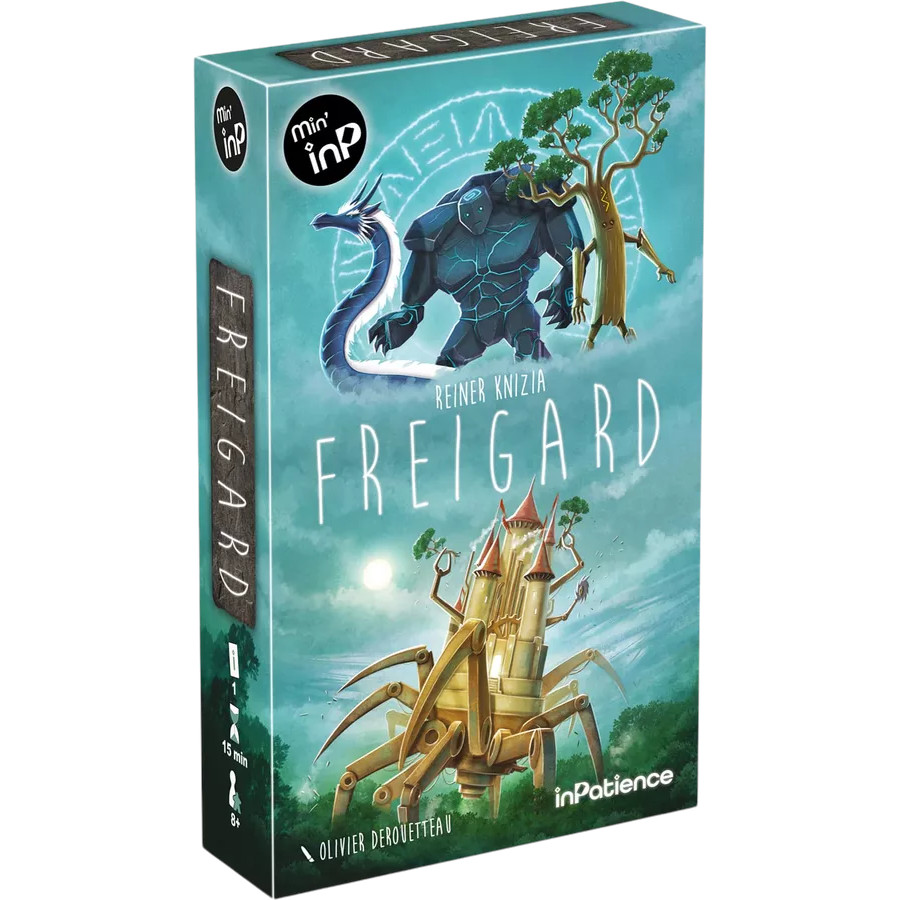

De verschrikkelijke Wandelende Kastelen staan op het punt het vredige land Freigard binnen te vallen. Verzamel de moedigste verdedigers van deze betoverde woonplaats en versla de meedogenloze mechanische monsters!
Freigard – Een eerste indruk
Freigard is een solo-only spelletje in een klein doosje. En juist dat was voor mij een belangrijke reden om het aan te schaffen. Ik heb inmiddels flink wat ‘grote’ spellen in mijn kast staan, maar voor kleine solospelletjes is eigenlijk altijd wel plek. Bovendien zijn ze ideaal om mee te nemen. Even een potje spelen terwijl ik ergens moet wachten, bijvoorbeeld tijdens de zwemlessen.
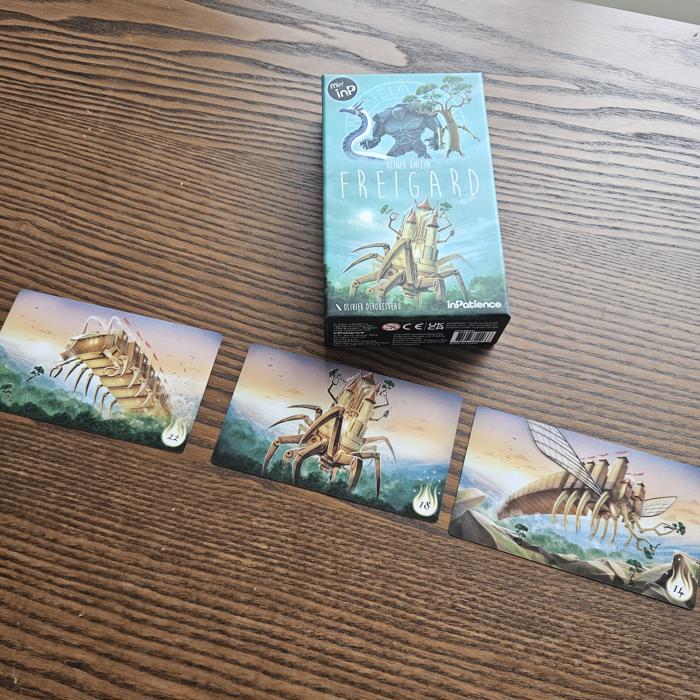
Het artwork van Freigard is op z’n zachtst gezegd een beetje bijzonder. De Golems, de Wandelende Kastelen en de Draken zien er allemaal gevaarlijk uit, zonder daadwerkelijk eng of creepy te worden. En dat vind ik persoonlijk prettig. Ik ben namelijk niet zo’n fan van spellen met heel griezelig artwork. Tegelijkertijd is Freigard zeker ook niet té liefelijk. De makers hebben naar mijn idee een mooie balans gevonden: fantasierijk en dreigend, zonder dat het onaangenaam wordt om naar te kijken.
Het regelboekje is over het algemeen redelijk duidelijk. Er is één vrij essentiële stap in het spel die ik in eerste instantie niet helemaal begreep. Gelukkig vond ik online een playthrough en toen viel alles ineens op z’n plek. Het spel zelf zit namelijk behoorlijk eenvoudig in elkaar. Het regelboekje is dus niet per se onduidelijk; ik snapte het gewoon niet meteen.
Hoe wordt het gespeeld?
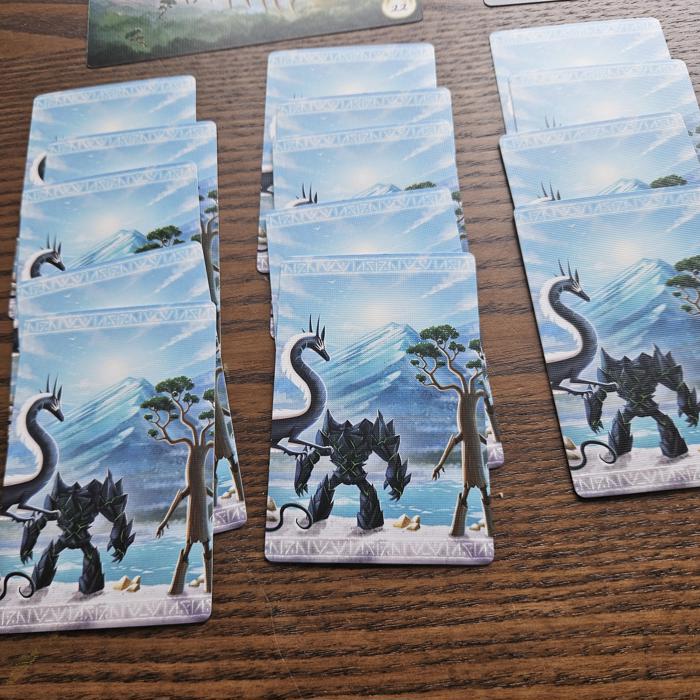
Freigard bestaat volledig uit kaarten en heeft daardoor nauwelijks opzet nodig.
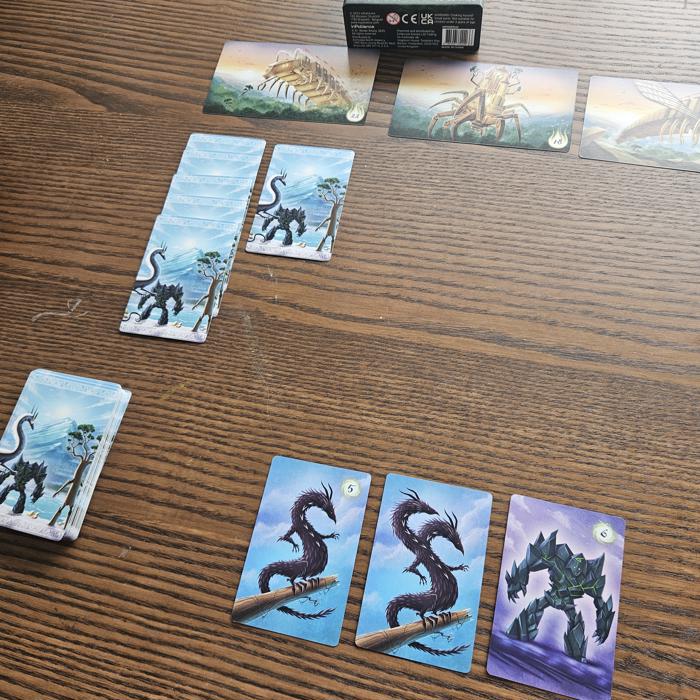
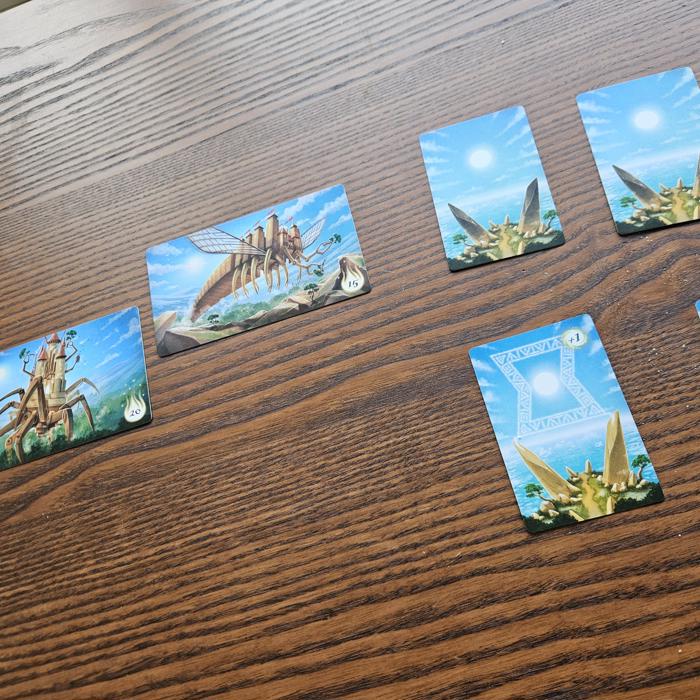
Je kiest één van de vier niveaus en legt de drie Wandelende Kastelen die bij dat niveau horen op tafel. Daarnaast leg je de vier hulpkaarten klaar. De overige kaarten schud je tot één stapel en je bent klaar om te spelen.
Er zijn drie soorten kaarten: Golems, Enten en Draken. Daarnaast is er één speciale kaart, de Grijper, die door de stapel wordt geschud.
Je begint met drie kaarten op hand. Tijdens je beurt heb je vervolgens steeds twee mogelijkheden: je kunt ervoor kiezen om te scoren, óf je pakt een extra kaart van de stapel. Wanneer je een nieuwe kaart pakt, moet je vervolgens ook weer een kaart afleggen. Je hebt dus altijd maximaal drie kaarten op hand.
Scoren doe je wanneer je drie kaarten met een bepaalde overeenkomst op handen hebt. Verschillende combinaties leveren verschillende aantallen punten op.
Bij drie Enten scoor je bijvoorbeeld het aantal Enten dat op de drie kaarten staat. Zijn alle Enten van hetzelfde soort, dan wordt deze score verdubbeld.
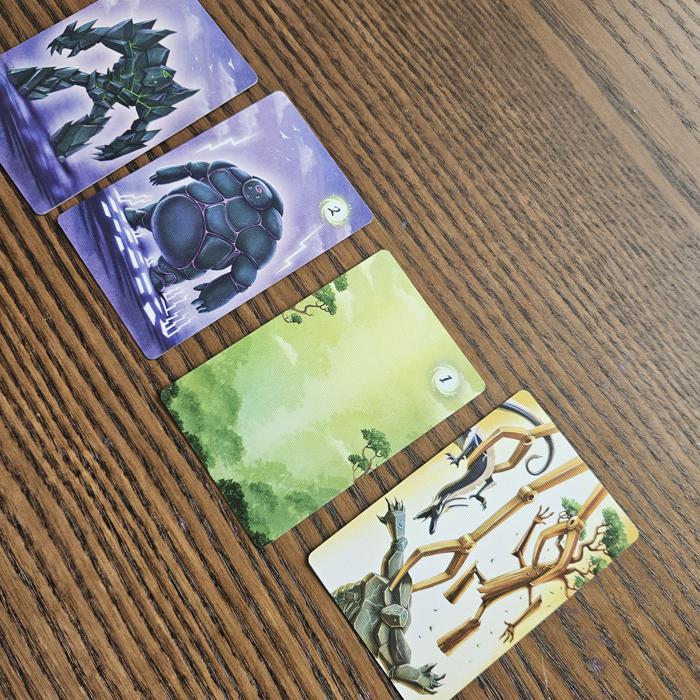
Bij drie Golems krijg je standaard 1 punt. Heb je echter drie Golems van hetzelfde type, dan krijg je 3 punten.
Je kunt ook scoren met een combinatie van verschillende kaarten, als ze alle drie een ‘sphere’ tonen. In dat geval krijg je het aantal punten dat op de sphere met de laagste waarde staat.
Het scoren werkt net even anders dan je misschien zou verwachten. Wanneer je bijvoorbeeld 1 punt scoort, leg je één van je handkaarten gedekt in je scoregebied. Bij 3 punten leg je alle drie je kaarten in je scoregebied. Scoor je meer dan 3 punten, dan gebruik je hiervoor ook kaarten uit je aflegstapel.
De kaarten die je niet gebruikt om te scoren, gaan naar je aflegstapel. Na het scoren begin je altijd met een nieuwe hand van maximaal drie kaarten.
Het is overigens handig om de kaarten in je scoregebied in stapeltjes van vijf te leggen. Zo kun je aan het einde van de ronde gemakkelijk je totaal aantal punten tellen.
De speciale kaarten
Naast de drie normale kaartsoorten zijn er een aantal speciale kaarten;
De Grijper
Wanneer je de Grijper van de stapel pakt, moet je direct al je handkaarten afleggen en vervolgens een nieuwe hand trekken.
De hulpkaarten
Er zijn vier verschillende hulpkaarten. Elke hulpkaart kun je tijdens het spel één keer gebruiken.
Zandloper: Kies een kaart uit je aflegstapel en voeg deze toe aan je hand.
Oog: Noem een soort kaart en een eigenschap. Doorzoek vervolgens de stapel totdat je een geschikte kaart vindt.
Vaartuig: Leg een kaart uit je hand op het Vaartuig om deze later te kunnen gebruiken.
Schild: Geeft je één extra ‘leven’. Wanneer je aan het einde van de ronde niet genoeg punten hebt gehaald, kun je het Schild eenmalig inzetten om toch verder te mogen spelen.
Wanneer de stapel leeg is, of wanneer je geen volledige hand van drie kaarten meer kunt vormen, eindigt de ronde. Vervolgens kijk je hoeveel punten je hebt verzameld.
Heb je genoeg punten om één van de Wandelende Kastelen te verslaan, dan leg je dat kasteel af en ga je door naar de volgende ronde.
Heb je niet genoeg punten, dan kun je het Schild inzetten om alsnog verder te spelen. Heb je het Schild al gebruikt, dan is het helaas ‘game over’.
Wat vind ik van Freigard?
Laat ik beginnen met de praktische kant van het spel. Freigard is echt ideaal om mee te nemen en op een kleine tafel te spelen terwijl je ergens wacht. Je kunt het wat uitgebreider neerleggen om het jezelf gemakkelijker te maken, maar als de ruimte beperkt is, kan het ook op een heel klein oppervlak. Je zou bijvoorbeeld al je gescoorde kaarten op één stapel kunnen leggen.
Over het artwork had ik het eerder al. Het ziet er gevaarlijk uit, zonder creepy of eng te worden. Daarmee spreekt Freigard volgens mij een relatief grote groep spelers aan. Ik denk dan ook dat ik het spel binnenkort eens samen met mijn 8-jarige zoon ga spelen. De regels zijn eenvoudig genoeg dat hij het daarna mogelijk ook zelf kan spelen.
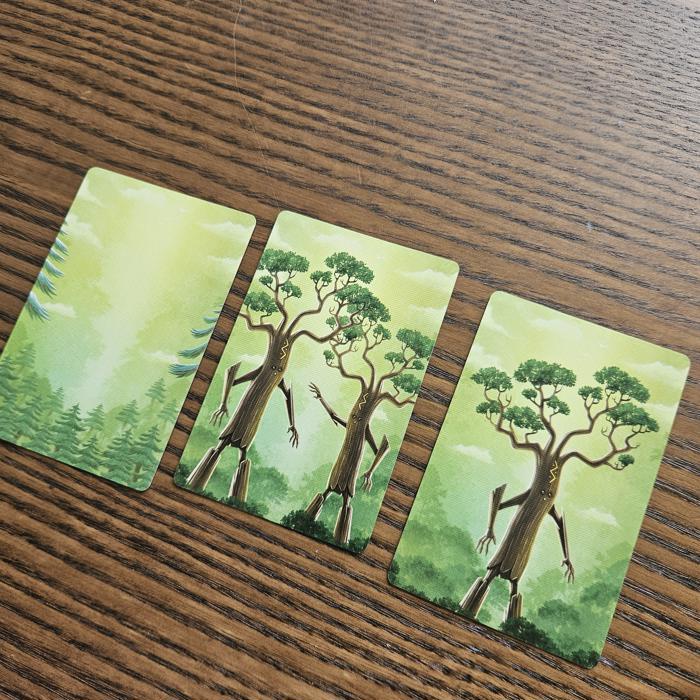
Ook de tekstloze kaarten bevallen me goed. Om een spel zonder tekst goed te laten werken, moeten de symbolen en illustraties natuurlijk duidelijk zijn. En dat is bij Freigard over het algemeen goed gelukt. Alleen bij sommige Ent-kaarten moest ik soms even goed kijken. De kaarten waarop geen bomen staan, maar alleen blaadjes, vond ik wat lastiger om snel te herkennen.
Het scoren is op zichzelf logisch en duidelijk. Toch is het voor mij net iets te veel om alle verschillende waardes uit mijn hoofd te onthouden. Waren éénkoppige of tweekoppige Draken nou meer waard? En was dat dan 2 of 3 punten?
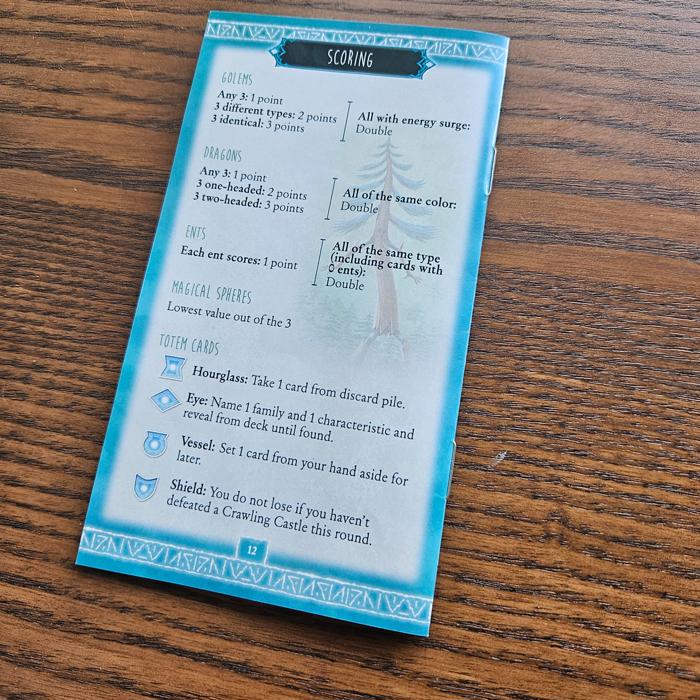
Gelukkig staat er een handige samenvatting op de achterkant van het regelboekje. Die leg ik tijdens het spelen gewoon naast me neer, zodat ik snel kan controleren hoeveel punten een bepaalde combinatie oplevert. Ook de werking van de verschillende hulpkaarten staat hier nog eens overzichtelijk op. Een kleine moeite, maar voor mij wel erg prettig.
Hoewel ik Freigard een leuk spel vind en eigenlijk maar weinig echte kritiekpunten kan bedenken, voelt het voor mij niet als een spel dat voor eeuwig in mijn kast zal blijven staan.
Ik heb inmiddels de eerste twee niveaus gehaald en ga zeker nog proberen om ook niveau 3 en 4 te verslaan. Daarna lijkt het me leuk om het spel nog eens samen met mijn zoon te spelen. Maar eerlijk gezegd verwacht ik niet dat Freigard daarna nog heel vaak op tafel zal komen.
En misschien is dat ook wel precies wat je van een klein solo-kaartspelletje als dit mag verwachten. Het is snel op tafel gelegd, makkelijk mee te nemen, speelt vlot en doet precies wat het moet doen. Alleen weet het mij niet genoeg te verrassen of uit te dagen om een blijvertje te worden.
Daarom krijgt Freigard van mij een 7/10.

Freigard
Players: 1
Time: 15 minutes
Age: 8+
Author: Reiner Knizia
Publisher: inPatience
Year: 2026
The terrifying Walking Castles are about to invade the peaceful land of Freigard. Gather the bravest defenders of this enchanted land and defeat the merciless mechanical monsters!
Freigard – A First Impression
Freigard is a solo-only game in a small box. And that was one of the main reasons I decided to buy it. I already have quite a few ‘big’ games in my collection, but there is always room for small solo games. They are also ideal to take with you. Playing a quick game while waiting somewhere, for example during swimming lessons, is no problem at all.
The artwork in Freigard is, to put it mildly, a little unusual. The Golems, Walking Castles and Dragons all look dangerous without actually being scary or creepy. And personally, I like that. I’m not really a fan of games with very creepy artwork. At the same time, Freigard certainly isn’t too cute either. In my opinion, the designers have found a nice balance: imaginative and threatening, without making it unpleasant to look at.
The rulebook is generally quite clear. There is one fairly essential step in the game that I didn’t completely understand at first. Fortunately, I found a playthrough online, and suddenly everything fell into place. The game itself is actually quite simple. So the rulebook isn’t necessarily unclear; I just didn’t understand it immediately.
How Do You Play?
Freigard consists entirely of cards, so there is hardly any setup involved.
You choose one of the four levels and place the three Walking Castles belonging to that level on the table. You also place the four Helper cards within reach. Shuffle the remaining cards into one deck, and you’re ready to play.
There are three types of cards: Golems, Ents and Dragons. There is also one special card, the Grabber, which is shuffled into the deck.
You start with three cards in your hand. On your turn, you have two options: you can either score, or draw an additional card from the deck. When you draw a new card, you must then discard one of your cards. So you will always have a maximum of three cards in your hand.
You score when you have three cards with a certain characteristic in common. Different combinations are worth different amounts of points.
For example, with three Ents, you score the total number of Ents shown on the three cards. If all the Ents are the same type, this score is doubled.
Three Golems are normally worth 1 point. However, if you have three Golems of the same type, you score 3 points.
You can also score with a combination of different cards, as long as all three show a ‘sphere’. In that case, you score the number of points shown on the sphere with the lowest value.
Scoring works a little differently than you might expect. When you score 1 point, you place one of the cards from your hand face down in your scoring area. When you score 3 points, you place all three cards in your scoring area. If you score more than 3 points, you also use cards from your discard pile.
Any cards you don’t use for scoring are placed in your discard pile. After scoring, you always start with a new hand of up to three cards.
It is also useful to place the cards in your scoring area in piles of five. This makes it much easier to count your total score at the end of the round.
The Special Cards
Besides the three normal types of cards, there are a number of special cards.
The Grabber
When you draw the Grabber from the deck, you must immediately discard your entire hand and then draw a new hand.
The Helper Cards
There are four different Helper cards. Each Helper card can be used once during the game.
Hourglass: Choose a card from your discard pile and add it to your hand.
Eye: Name a card type and a characteristic. Then search through the deck until you find a suitable card.
Vessel: Place a card from your hand on the Vessel to use it later.
Shield: Gives you one extra ‘life’. If you haven’t scored enough points at the end of the round, you can use the Shield once to continue playing.
When the deck runs out, or when you can no longer draw a full hand of three cards, the round ends. You then check how many points you have scored.
If you have enough points to defeat one of the Walking Castles, you remove that Castle and move on to the next round.
If you don’t have enough points, you can use the Shield to continue playing. If you have already used the Shield, it’s unfortunately ‘game over’.
What Do I Think of Freigard?
Let me start with the practical side of the game. Freigard is really ideal to take with you and play on a small table while you’re waiting somewhere. You can lay everything out more extensively to make things easier for yourself, but if space is limited, it can also be played on a very small surface. For example, you could simply keep all your scored cards in a single pile.
I already mentioned the artwork earlier. It looks dangerous without being creepy or scary. Because of that, I think Freigard will appeal to a relatively wide range of players. I think I’ll be playing it with my 8-year-old son soon. The rules are simple enough that he might even be able to play it by himself afterwards.
I also really like the fact that the cards are completely language-independent. For a game without text to work well, the symbols and illustrations obviously need to be clear. And overall, Freigard does this quite well. There were just a few Ent cards that required me to take a closer look. I found the cards that don’t show any trees, but only leaves, a little harder to recognize at a glance.
The scoring itself is logical and easy to understand. Still, for me, there are just a few too many different values to remember. Were one-headed or two-headed Dragons worth more? And was that 2 or 3 points?
Fortunately, there is a handy summary on the back of the rulebook. I simply keep it next to me while playing, so I can quickly check how many points a particular combination is worth. It also includes a clear overview of how the different Helper cards work. It’s a small thing, but I really appreciate having it there.
Although I enjoy Freigard and can actually think of very few real criticisms, it doesn’t feel like a game that will stay in my collection forever.
I’ve already completed the first two levels, and I will definitely try to beat levels 3 and 4 as well. After that, I’d like to play the game with my son again. But honestly, I don’t expect Freigard to hit the table very often after that.
And perhaps that is exactly what you should expect from a small solo card game like this. It’s quick to set up, easy to take with you, plays smoothly and does exactly what it needs to do. It just doesn’t surprise or challenge me enough to become a permanent part of my collection.
Therefore, Freigard gets a 7/10 from me.