Aantal spelers: 2-4
Speelduur: 15 minuten
Leeftijd: 8+
Auteur: Yoann Levet
Uitgever: Blue Orange
Jaar: 2026
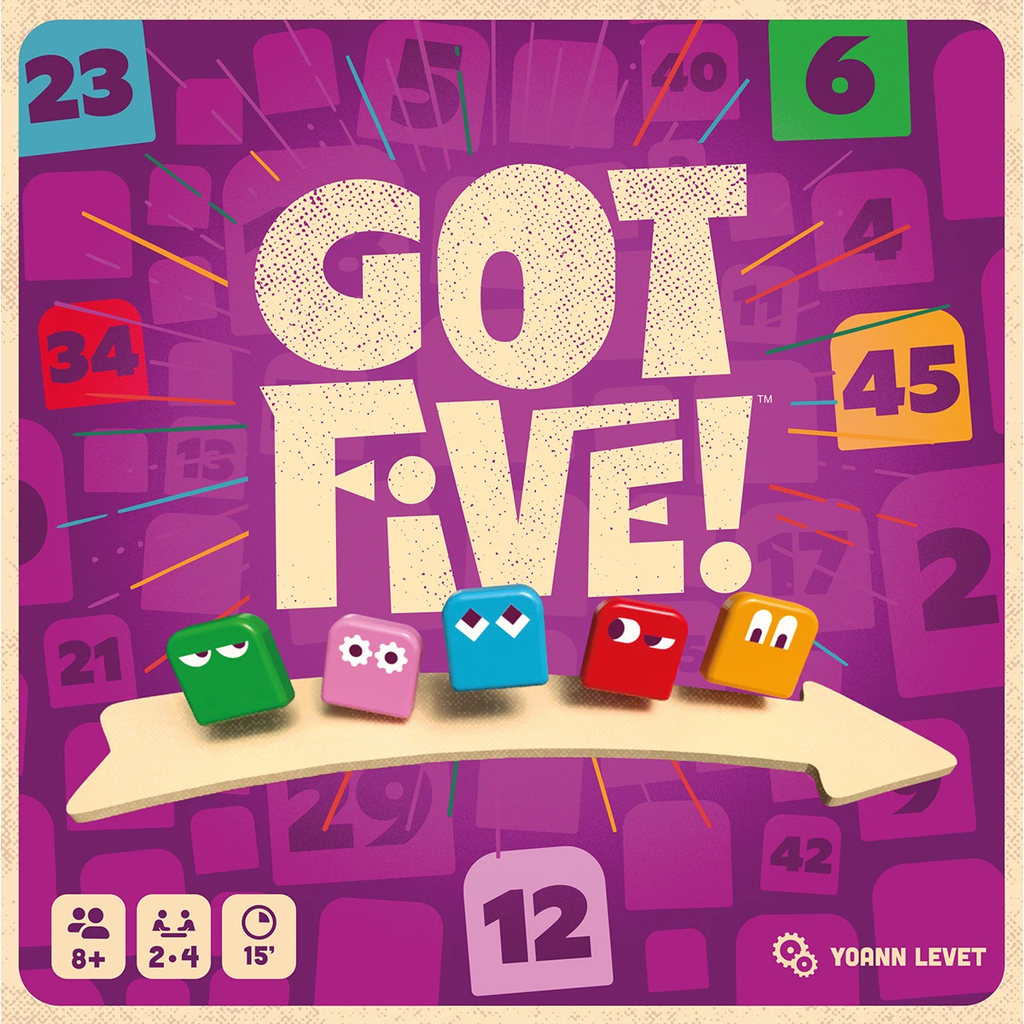

Kun jij logisch nadenken en goed deduceren? Dan heeft Got Five! misschien wel een leuke uitdaging voor je in petto. In dit compacte deductiespel probeer je de vijf verborgen nummers voor je neus te ontdekken. Je zult dus goed moeten opletten, slimme vragen moeten stellen en de informatie van andere spelers moeten combineren om stap voor stap de mogelijkheden weg te strepen. Iedere onthulde tegel geeft weer een stukje van de puzzel prijs en brengt je dichter bij de oplossing. Maar wie weet uiteindelijk als eerste welke vijf nummers er voor zich verborgen zijn?
Got Five! – Een eerste kennismaking
Wie mij inmiddels een beetje kent, weet dat ik meestal niet de eerste ben die in een ‘hype’ duikt. En Got Five! leek mij echt zo’n hype. Waar ik ook keek, ik zag hem voorbij komen. Voor mij reden genoeg om hem (nog) niet aan te schaffen. Zo’n populair spel? Dat hebben vast genoeg van mijn spellenvrienden in hun collectie. 😉
En inderdaad: Marina (@her_turn) bracht het spel mee. We speelden een potje en daarna nog één. Ja… deze moest op mijn verlanglijstje. Ik dacht namelijk meteen dat dit thuis, met mijn (net) 8-jarige zoon, ook weleens heel goed zou kunnen gaan werken. Ik snapte de hype ineens wel.
Helaas was Got Five! op het moment dat ik mijn bestelling bij mijn bevriende spellenhandelaar plaatste, overal uitverkocht. We moesten dus nog even geduld hebben en wachten op de volgende batch.
Hoewel het spel mij tijdens het eerste potje al was uitgelegd, nam ik voor de volledigheid de spelregels nog even door. Die zijn ontzettend duidelijk en laten gelukkig weinig ruimte voor vragen. Na een korte bestudering van de regels kun je dus eigenlijk meteen aan de slag. Altijd fijn!
Hoe wordt het gespeeld?
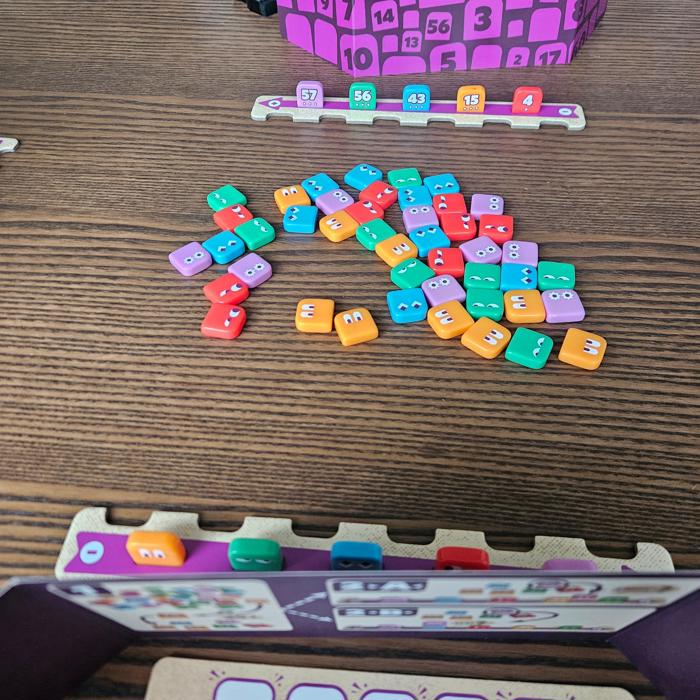
Got Five! is een echt deductiespel. Het doel is om erachter te komen welke vijf getallen er op de vijf steentjes voor je staan.
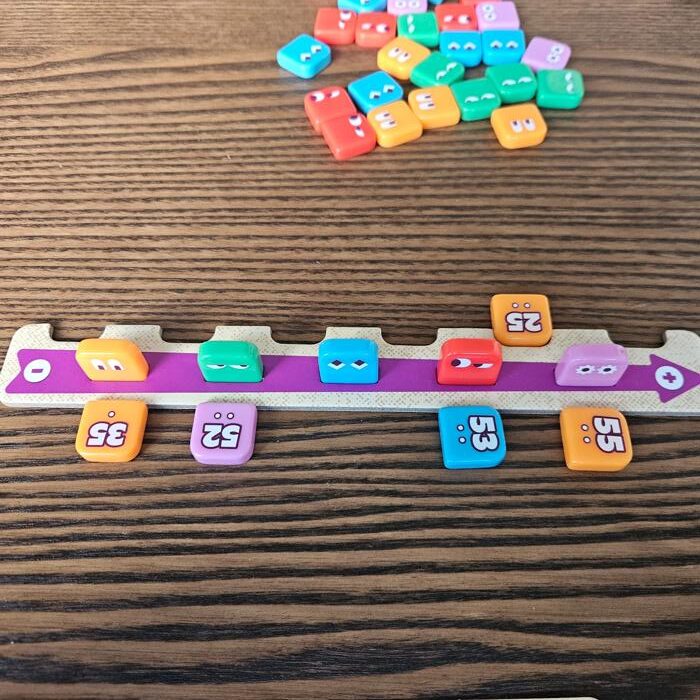
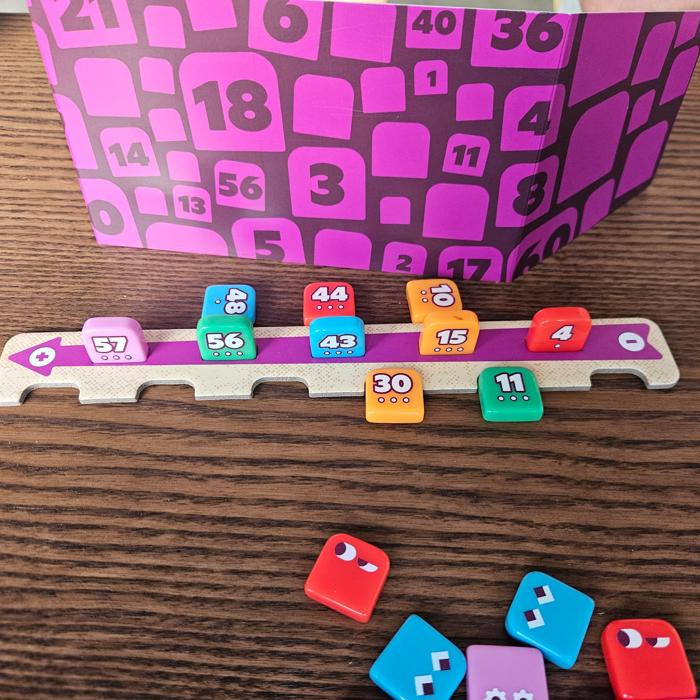
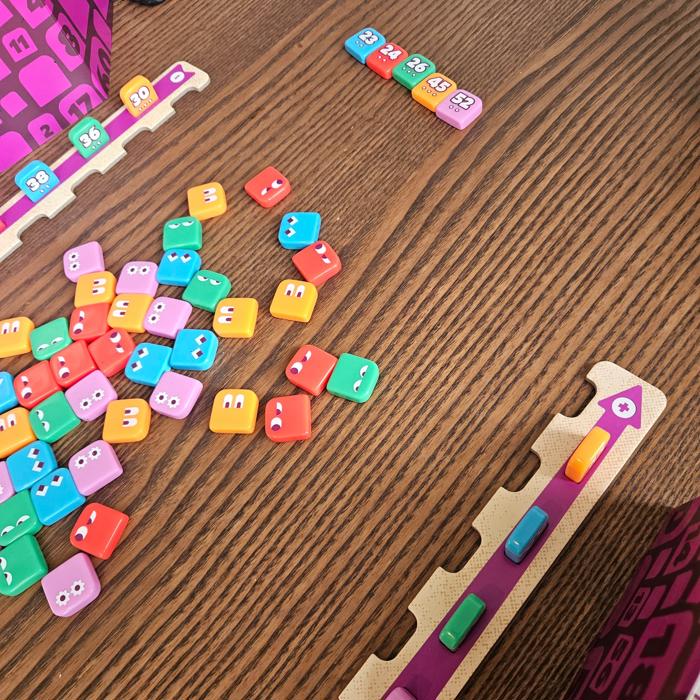
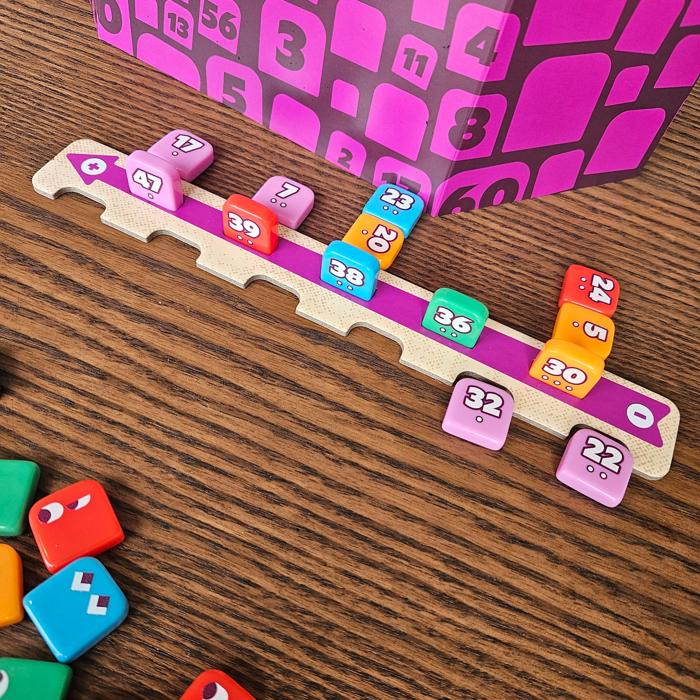
Aan het begin van het spel zetten alle spelers vijf steentjes in verschillende kleuren en in numerieke volgorde op het standaardje van een andere speler. Je kunt bij de start van het spel dus wel alle getallen van de anderen zien, maar niet die van jezelf.
Naast een getal – elk getal komt maar één keer voor in het spel – heeft iedere tegel ook één, twee of drie stippen én een kleur.
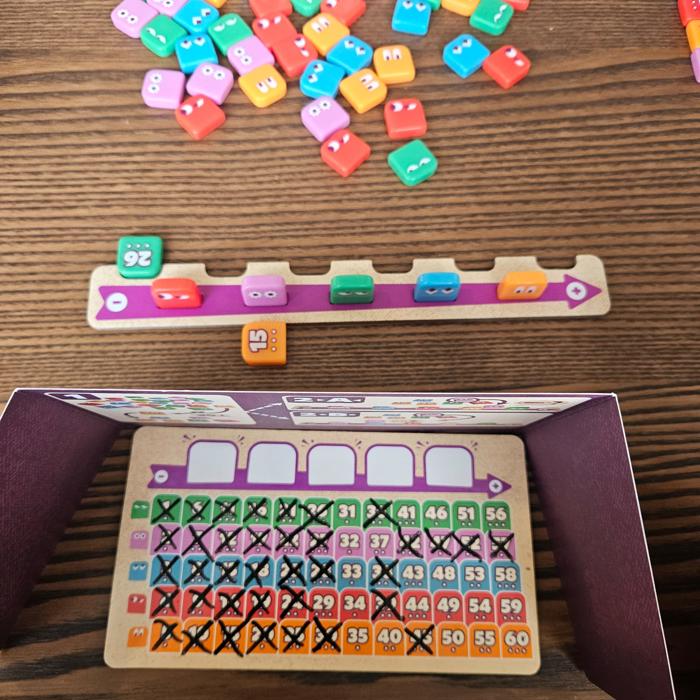
Achter je standaard leg je je notitieblad, met daartussen je scherm, zodat de andere spelers jouw notities niet kunnen zien.
Het is vervolgens aan jou om te ontdekken welke getallen er op jouw standaard staan. Omdat elk getal maar één keer voorkomt, kun je alle getallen die je tijdens het spel voorbij ziet komen sowieso doorstrepen.
Daarnaast mag je iedere beurt een hint vragen aan een andere speler. Er zijn twee soorten hints waaruit je kunt kiezen:
– Je kiest één van de beschikbare tegels en vraagt een andere speler om deze op de juiste plek in de rij te leggen. Stel dat iemand de getallen 1 – 4 – 36 – 48 – 49 op zijn standaard heeft staan. Een tegel met 16 zou dan tussen tegel 2 (4) en tegel 3 (36) gelegd moeten worden.
– Je kiest één van de beschikbare tegels, houdt deze boven één van de tegels op jouw standaard en vraagt: ‘Hebben deze twee tegels evenveel stippen?’
Dit zijn eigenlijk alle regels van het spel. De kunst zit hem vooral in het goed combineren van de informatie, het maken van aantekeningen en natuurlijk het stellen van de juiste vragen.
Heb je als eerste je volledige getallenreeks juist geraden? Dan heb je gewonnen!
Wat vinden wij van Got Five!
Wat mij misschien nog wel het meest aanspreekt aan Got Five!, is hoe toegankelijk het spel is. Het artwork is superleuk en vrolijk, waardoor het spel meteen uitnodigt om gespeeld te worden. Tegelijkertijd voelt het absoluut niet kinderachtig aan.
Mijn (net) 8-jarige zoon is bijvoorbeeld verrassend goed in Got Five! Hij heeft inmiddels meerdere potjes gewonnen en is er helemaal weg van. Sterker nog: hij pakt het spel regelmatig zelf uit de kast. En eerlijk is eerlijk, ik vind het stiekem ook wel erg leuk dat hij er zo goed in is. Ik ben daardoor niet automatisch de winnaar omdat ik toevallig de volwassene aan tafel ben. 😉
Dat leeftijd eigenlijk weinig zegt over hoe goed je bent in Got Five!, vind ik een groot pluspunt. Sommige mensen hebben nu eenmaal meer aanleg voor deductie dan anderen. Mijn zoon ziet bijvoorbeeld razendsnel verbanden: als groen 7 is, kan paars nooit 4 zijn. Andere spelers hebben wat meer tijd nodig om zulke verbanden te zien. Daardoor voelt het spel niet alsof je tegen elkaar speelt op basis van leeftijd of ervaring, maar vooral op basis van hoe snel je de puzzel weet te doorgronden.
En hoewel deductie absoluut de belangrijkste rol speelt, is er ook een beetje geluk aanwezig. Welke getallen uiteindelijk op jouw standaard staan, welke vraag je stelt en of het antwoord daarop voor jou nuttige informatie oplevert, heb je niet volledig zelf in de hand. Dat vind ik eigenlijk alleen maar prettig. Het zorgt ervoor dat de beste deduceerder niet automatisch ieder potje wint en geeft ook spelers die wat minder sterk zijn in deductie een reële kans om te winnen.
Sterker nog: winnen voelt eigenlijk helemaal niet als het belangrijkste doel. In alle potjes die ik tot nu toe heb gespeeld, waren spelers vooral ontzettend benieuwd naar de vijf getallen die voor hen verborgen stonden. Ook als iemand niet als eerste zijn getallen wist te achterhalen, wilde diegene alsnog weten hoe het zat. Dan werd er nog even doorgespeeld of werd er uiteindelijk iets gegokt. De puzzel zelf is de beloning.
En dat maakt de sfeer aan tafel erg leuk. Tijdens het spelen wordt er voortdurend hardop meegedacht: ‘Ja jeetje, daar heb ik dus helemaal niets aan!’ of juist: ‘Ik weet nu welk getal dit is!’ Het is niet zo dat je daarmee meteen de oplossing van een andere speler weggeeft, maar het zorgt wel voor een hoop gezelligheid aan tafel. Got Five! heeft daardoor bijna iets van een partygame, terwijl je ondertussen wel degelijk met een leuke deductiepuzzel bezig bent.
Dat vind ik misschien wel de grootste kracht van Got Five!: het combineert twee dingen die je niet altijd samen ziet. Je krijgt een puzzel waar je serieus over kunt nadenken en waarin je steeds meer informatie probeert te combineren, maar de sfeer blijft licht, vrolijk en vooral gezellig. Ook spelers die normaal gesproken niet zo goed zijn in deductiespellen of ze misschien helemaal niet zo leuk vinden, kunnen hier prima plezier aan beleven.
En zelf? Ik vind Got Five! gewoon ontzettend leuk. Het is vlot, toegankelijk, interactief en het zorgt er vooral voor dat iedereen aan tafel met dezelfde vraag bezig is: ‘Welke vijf getallen staan er nou voor míj?’
Daarom krijgt Got Five! van mij een 8/10.

Got Five!
Players: 2-4
Time: 15 minutes
Age: 8+
Author: Yoann Levet
Publisher: Blue Orange
Year: 2026
Can you think logically and are you good at deduction? Then Got Five! might have a fun challenge in store for you. In this compact deduction game, you try to figure out the five hidden numbers in front of you. You’ll need to pay close attention, ask smart questions, and combine the information from the other players to gradually eliminate the possibilities. Every revealed tile gives you another piece of the puzzle and brings you one step closer to the solution. But who will be the first to figure out which five numbers are hidden in front of them?
Got Five! – A First Impression
Those who know me a little by now will know that I’m usually not the first to jump on a ‘hype’. And Got Five! really seemed like one of those games. Everywhere I looked, I kept seeing it pop up. For me, that was reason enough not to buy it (yet). A game this popular? Surely enough of my gaming friends already had it in their collections. 😉
And sure enough, Marina (@her_turn) brought the game along. We played one game, and then another. Yep… this one had to go on my wishlist. I immediately thought it could be a great fit at home, especially with my (just) 8-year-old son. I suddenly understood the hype.
Unfortunately, by the time I placed my order with my friendly local game store, Got Five! was sold out everywhere. So we had to be patient and wait for the next batch.
Although the game had already been explained to me during our first game, I read through the rules myself for completeness. They are incredibly clear and, thankfully, leave very little room for questions. After a quick read-through, you can basically get started right away. Always a plus!
How is it played?
Got Five! is a true deduction game. The goal is to figure out which five numbers are on the five tiles in front of you.
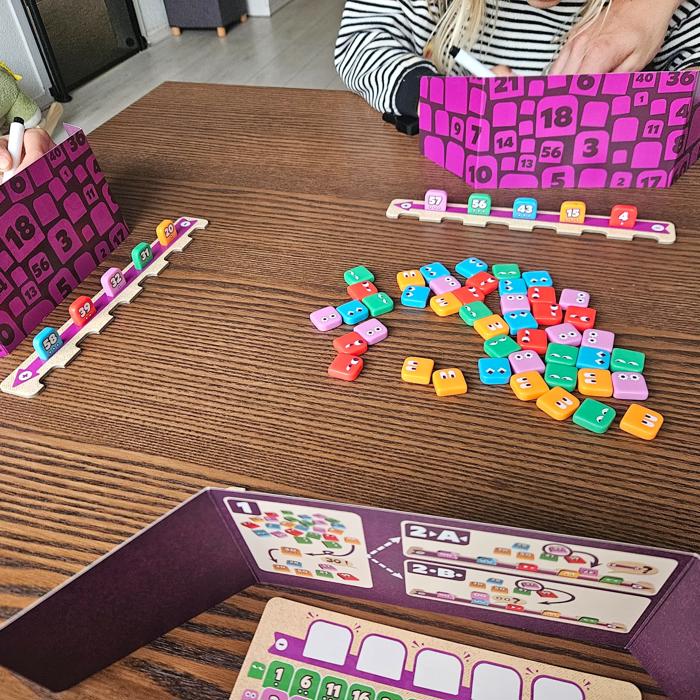
At the start of the game, all players place five tiles in different colors and in numerical order on another player’s stand. So, at the beginning of the game, you can see all the numbers belonging to the other players, but not your own.
Besides a number – each number appears only once in the game – every tile also has one, two, or three dots, as well as a color.
Behind your stand, you place your notepad, with your screen in between, so the other players can’t see your notes.
Your goal is to figure out which numbers are on your stand. Since every number only appears once, you can immediately cross off any numbers you see during the game on someone else’s stand.
In addition, on each turn you may ask another player for a hint. There are two types of hints you can choose from:
You choose one of the available tiles and ask another player to place it in the correct position in the row. For example, suppose someone has the numbers 1 – 4 – 36 – 48 – 49 on their stand. A tile with 16 would then have to be placed between tile 2 (4) and tile 3 (36).
You choose one of the available tiles, hold it above one of the tiles on your stand, and ask: ‘Do these two tiles have the same number of dots?’
Those are basically all the rules of the game. The real challenge lies in combining the information, taking notes, and, of course, asking the right questions.
If you’re the first to correctly figure out your complete sequence of numbers, you win!
What do we think of Got Five!?
What I perhaps like most about Got Five! is how accessible the game is. The artwork is super fun and cheerful, immediately making you want to play the game. At the same time, it definitely doesn’t feel childish.
My (just) 8-year-old son is surprisingly good at Got Five!, for example. He has already won several games and absolutely loves it. In fact, he regularly gets the game out of the cupboard himself. And honestly, I secretly love the fact that he’s so good at it. It means I’m not automatically the winner just because I’m the adult at the table. 😉
I think it’s a big plus that age actually says very little about how good you are at Got Five! Some people simply have a better instinct for deduction than others. My son, for example, spots connections incredibly quickly: if green is 7, then purple can’t be 4. Other players need a little more time to see those kinds of connections. That means the game doesn’t really feel like you’re competing based on age or experience, but rather on how quickly you can figure out the puzzle.
And although deduction definitely plays the biggest role, there is also a bit of luck involved. Which numbers end up on your stand, which question you ask, and whether the answer gives you useful information are not completely within your control. And honestly, I think that’s a good thing. It means that the best at deduction doesn’t automatically win every game, and gives players who are a little less skilled at deduction a real chance of winning.
In fact, winning doesn’t really feel like the most important goal. In all the games I’ve played so far, people were mainly incredibly curious to find out which five numbers were hidden in front of them. Even if someone wasn’t the first to figure out their numbers, they still wanted to know the answer. We’d simply keep playing for a little while longer, or eventually make a guess. The puzzle itself is the reward.
And that’s what makes the atmosphere at the table so much fun. Throughout the game, people are constantly thinking out loud: ‘Oh man, that doesn’t help me at all!’ or, ‘I know what number this is now!’ It’s not as though you immediately give away another player’s solution by saying these things, but it does create a really fun and social atmosphere at the table. In that sense, Got Five! almost has a bit of a party-game feel to it, while you’re still very much working on a fun deduction puzzle.
That might be Got Five!’s biggest strength: it combines two things you don’t always see together. You get a puzzle that you can seriously think about and where you gradually try to piece together more and more information, while the atmosphere remains light, cheerful, and above all, fun. Even players who aren’t usually very good at deduction games, or perhaps don’t particularly enjoy them, can have a great time with Got Five!
And me? I simply really enjoy Got Five! It’s quick, accessible, interactive, and most importantly, it gets everyone at the table thinking about the same question: ‘Which five numbers are hidden in front of me?’
That’s why Got Five! gets an 8/10 from me.