

Aantal spelers: 2-4
Speelduur: 30-60 minuten
Leeftijd: Vanaf 12 jaar
Auteur: Simone Luciani, Roberto Pellei
Uitgever: 999 Games
Jaar: 2026
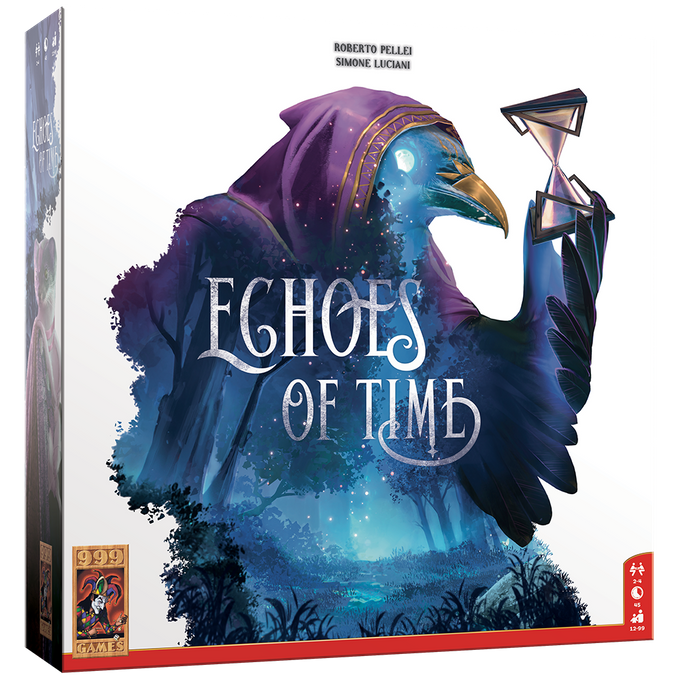

In een land heel erg ver hiervandaan beheerst een krachtig energie uit verborgen bronnen de vier facties van Water, Hemel, Bos en Aarde. Strijd om deze oeroude energie en zet zelfs de tijd naar je hand.
Spelverloop
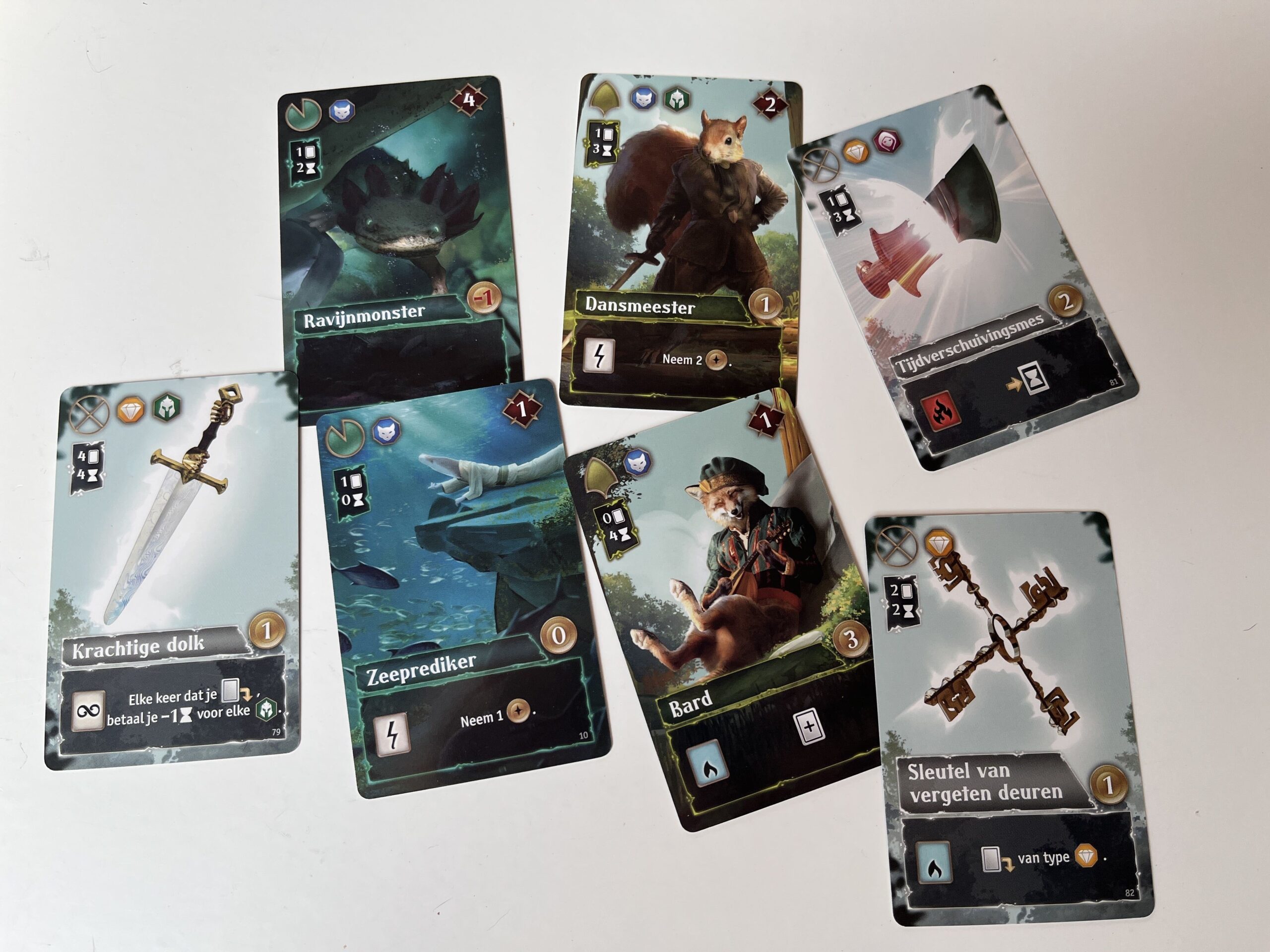
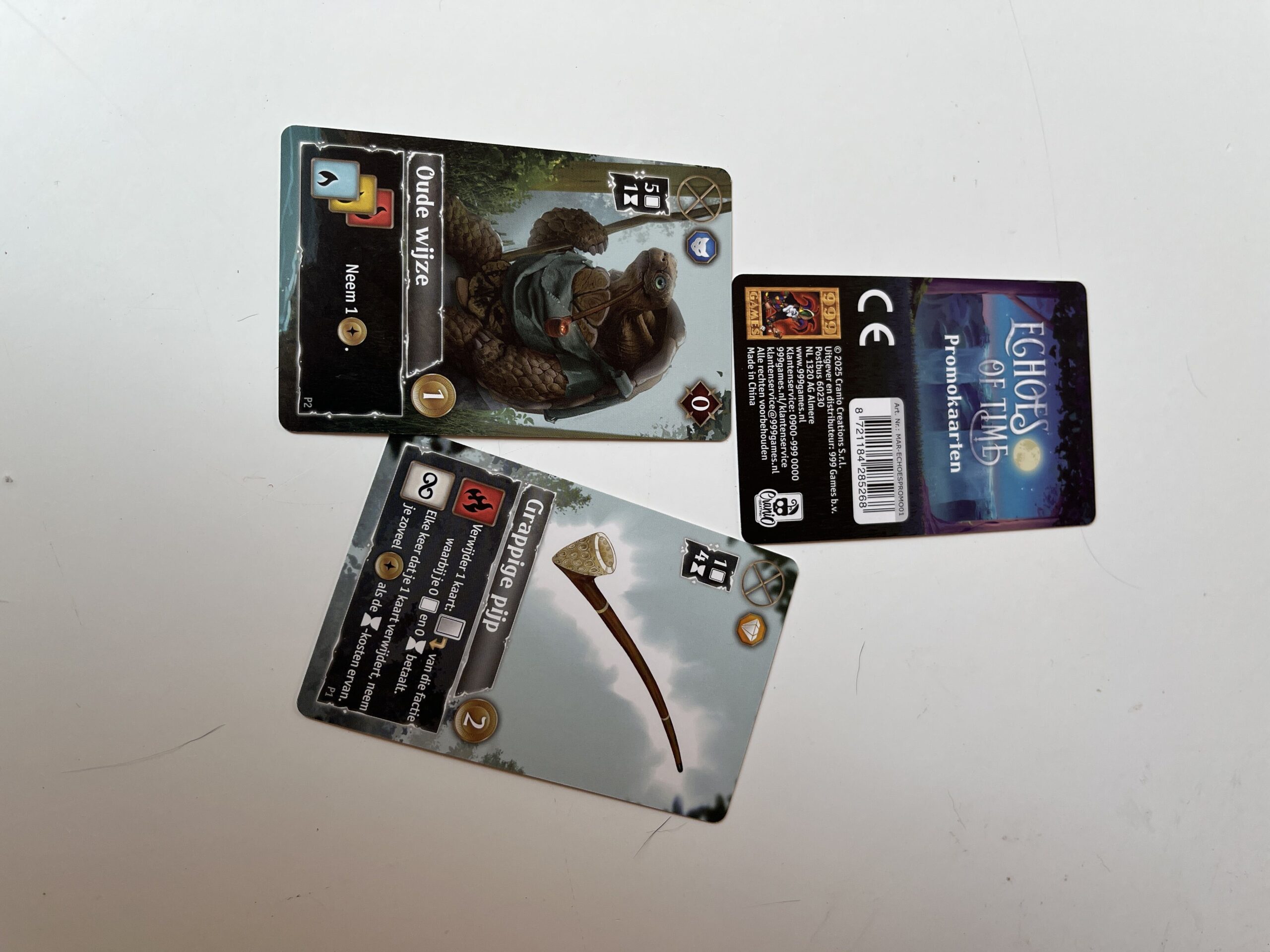
In Echoes of Time speel je kaarten op je tableau om ze op die manier in je gezelschap te krijgen. Deze kaarten helpen je overwinningspunten verzamelen en geven je tijdens het spel allerlei effecten om je verder op weg te helpen. Hoe gaat dat in zijn werk?
Wel, Echoes of Time verloopt in rondes die elk 3 fases heeft (Tijdsfase, actiefase en einde van de ronde).
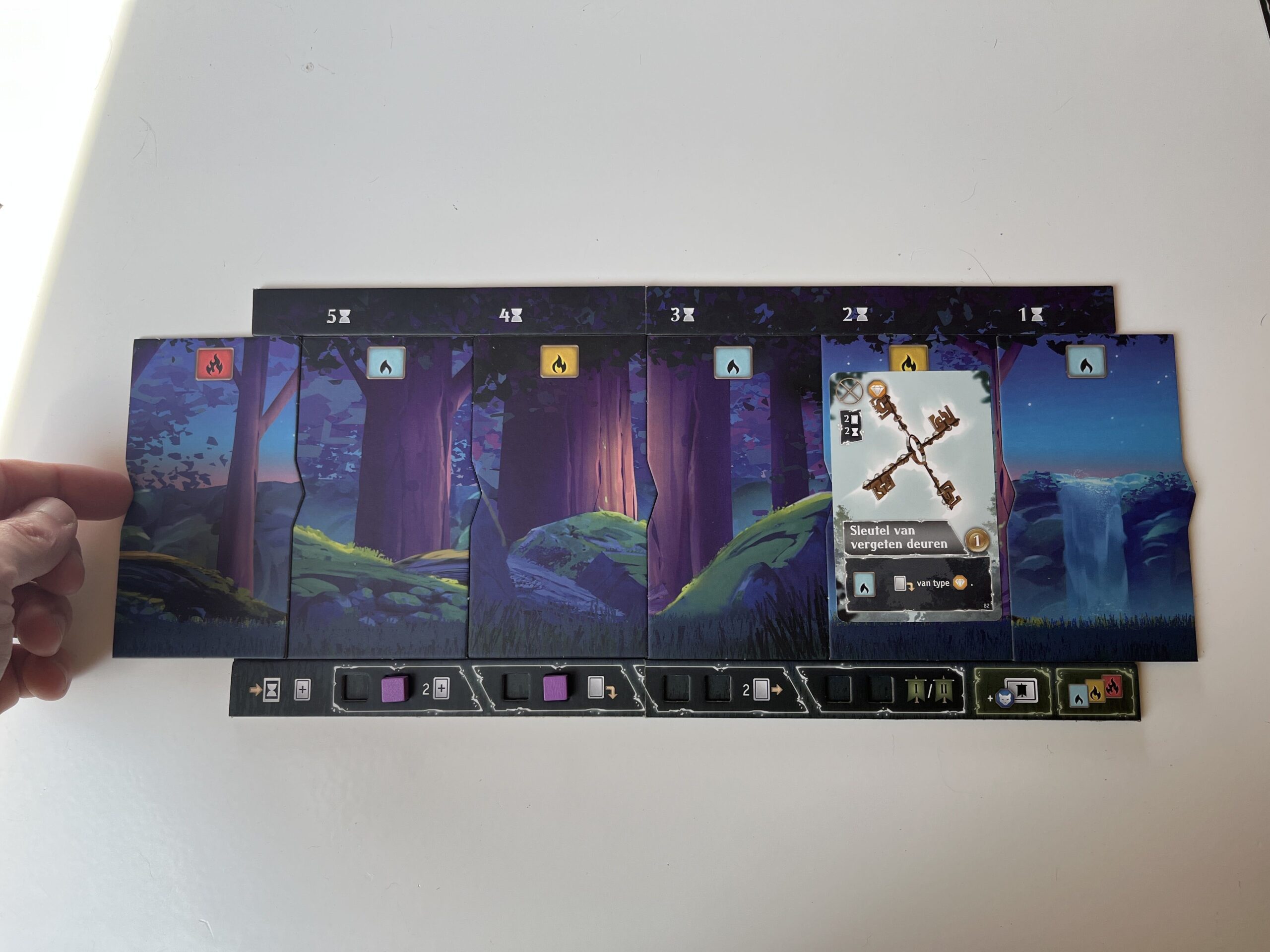
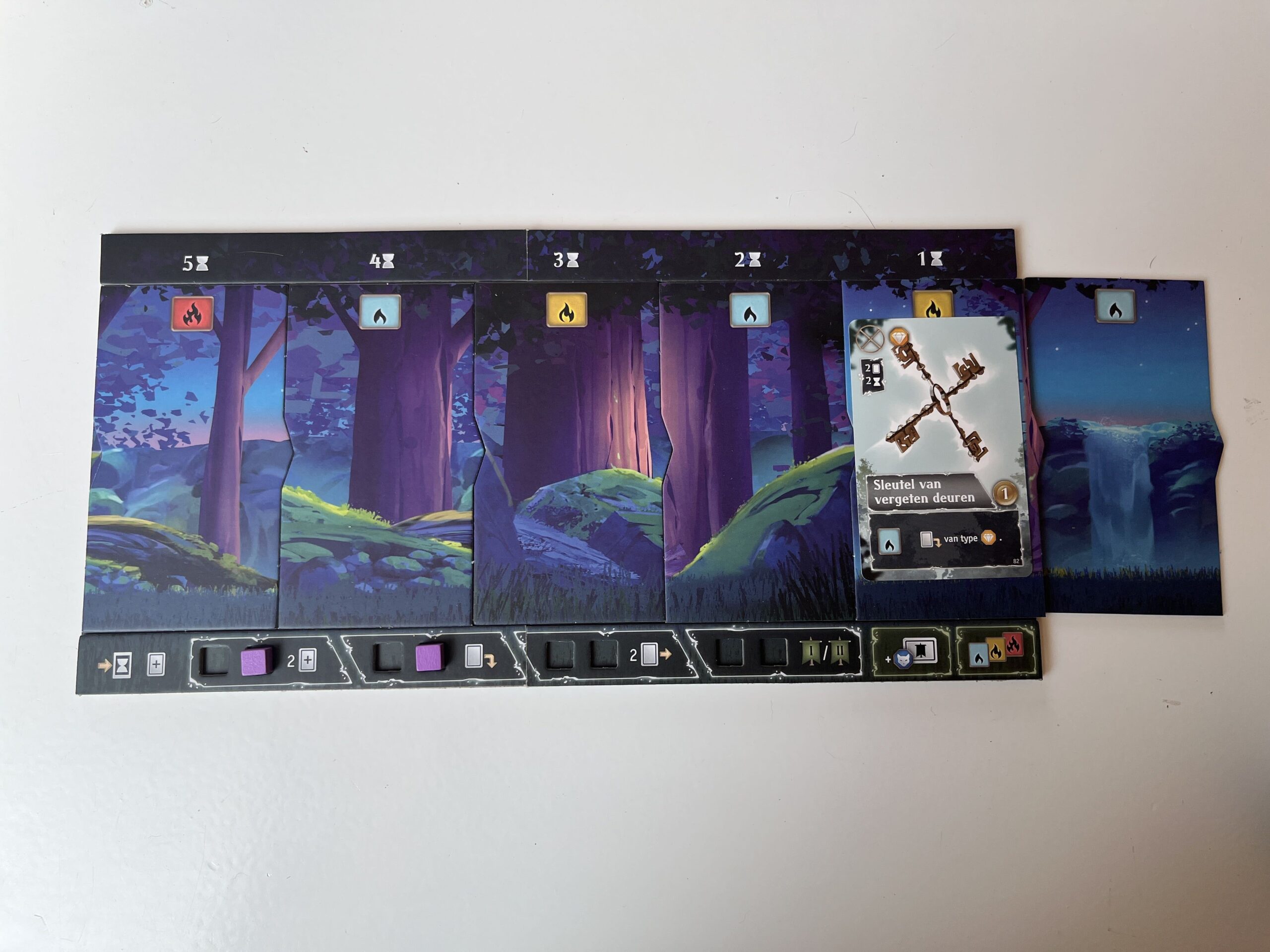
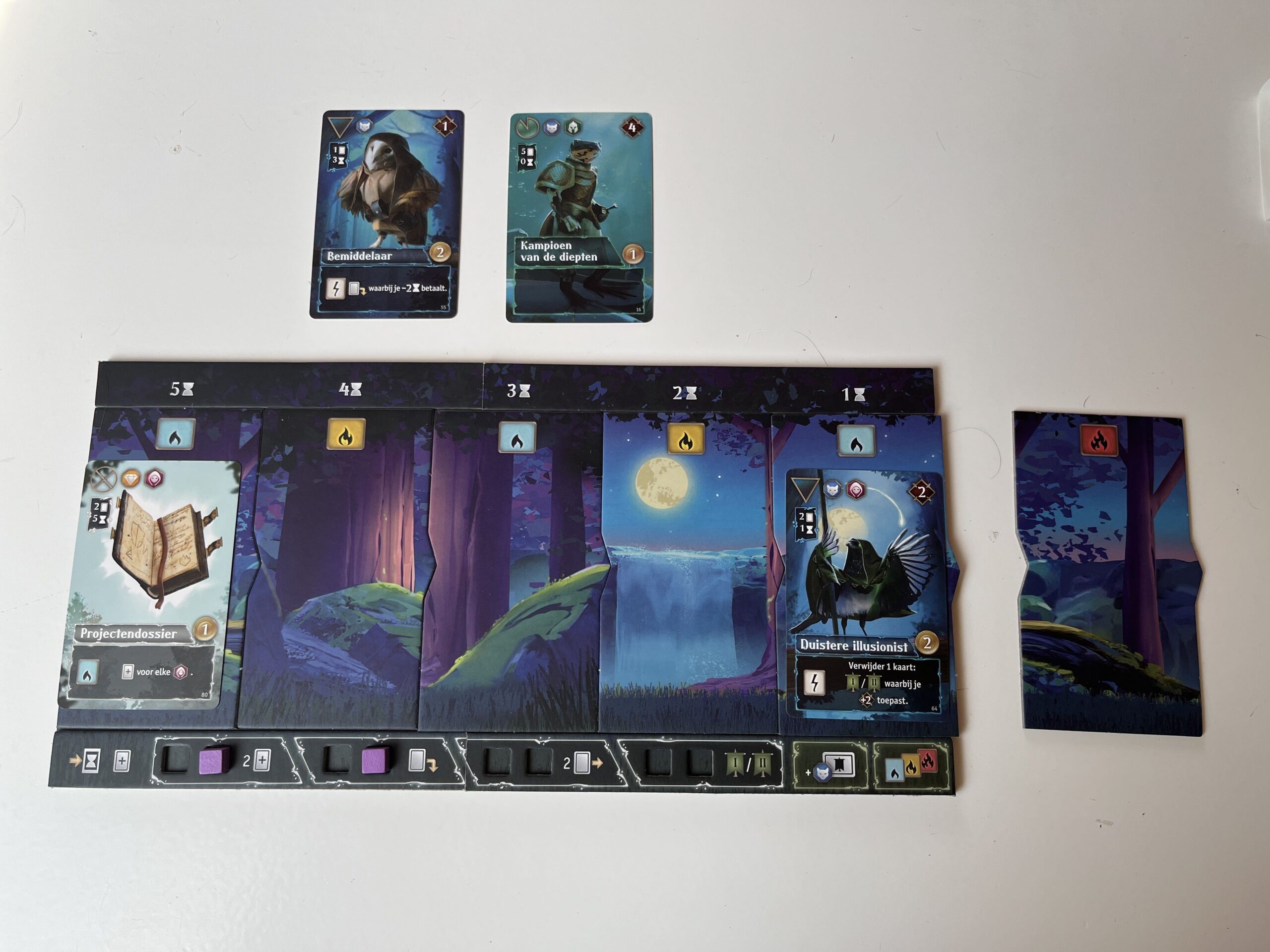
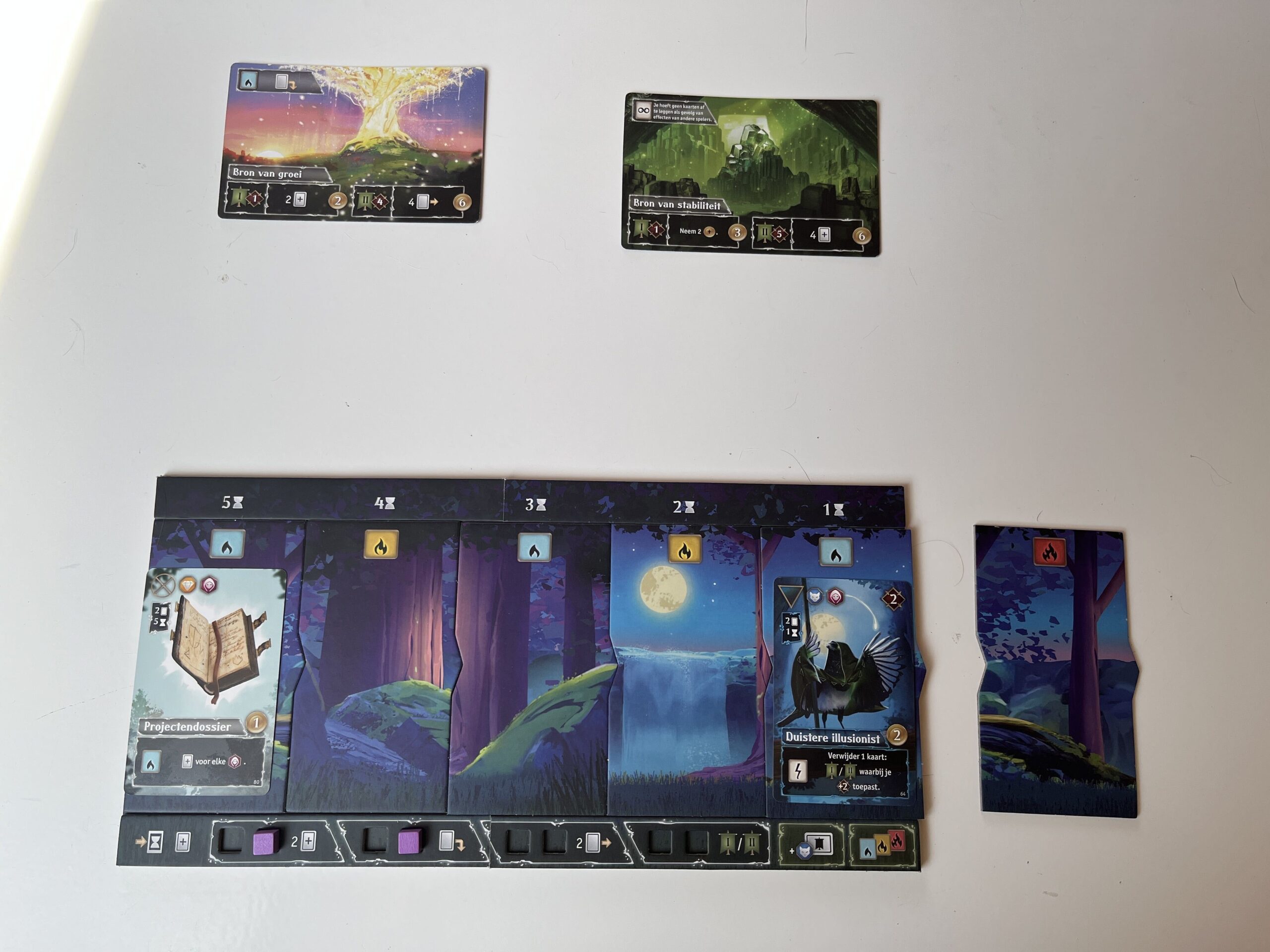
De eerste fase heet de tijdsfase, deze fase wordt simultaan uitgevoerd door alle spelers. In deze fase gaan alle spelers de tijdstegel die naast zijn tableau ligt, aan de linkerkant van het tableau inschuiven waardoor er een nieuwe tijdstegel vrij komt (aan de rechterkant). Als er kaarten op die vrijgekomen tijdstegel lagen, worden ze nu opgeroepen in je gezelschap en kan je vanaf dat moment de eigenschappen van die kaart(en) gebruiken. Sommige kaarten hebben een bliksem symbool, dat wijst op een direct effect dat wordt geactiveerd als die kaart wordt opgeroepen. Nadien trekt iedere speler een nieuwe kaart en begint de volgende fase.
De tweede fase is de actiefase en hier volg je de wijzers van de klok zodat elke speler om de beurt zijn acties kan uitvoeren. Tijdens deze fase gebruik je 1 van je 2 actiestenen om een hoofdactie uit te voeren. Deze 4 hoofdacties zijn: 2 kaarten trekken, 1 kaart spelen, 2 kaarten doorschuiven óf 1 bronkaart veroveren of versterken. Je kan dus 1 van deze acties kiezen om hier je voordeel mee te doen.
De eerste mogelijke actie is “2 kaarten trekken” en dit is de meest voordehand liggende actie, want wat je gaat doen is letterlijk wat de actienaam zegt: 2 kaarten trekken en op handen nemen.
De 2e mogelijke actie is een kaart spelen, maar hiervoor heb je nog wat extra informatie nodig. Elke kaart heeft een bepaalde kostprijs om die te mogen spelen. De kostprijs kan bestaan uit het afleggen van andere handkaarten, het leggen van de kaart op een tijdstegel die overeenkomt met het zandlopersymbool of een combinatie van beide. Je kan maximaal 2 kaarten op dezelfde tijdstegel leggen, houd hier dus goed rekening mee om je strategie te bepalen.
De 3e mogelijke actie is het doorschuiven kan kaarten. Je kan 2 kaarten 1 plekje op het tijdstableau naar rechts schuiven of 1 kaart 2 plekjes opschuiven. Dit zorgt ervoor dat je de kaarten sneller in je gezelschap zal krijgen en op die manier dus sneller van hun eigenschappen gebruik kan maken.
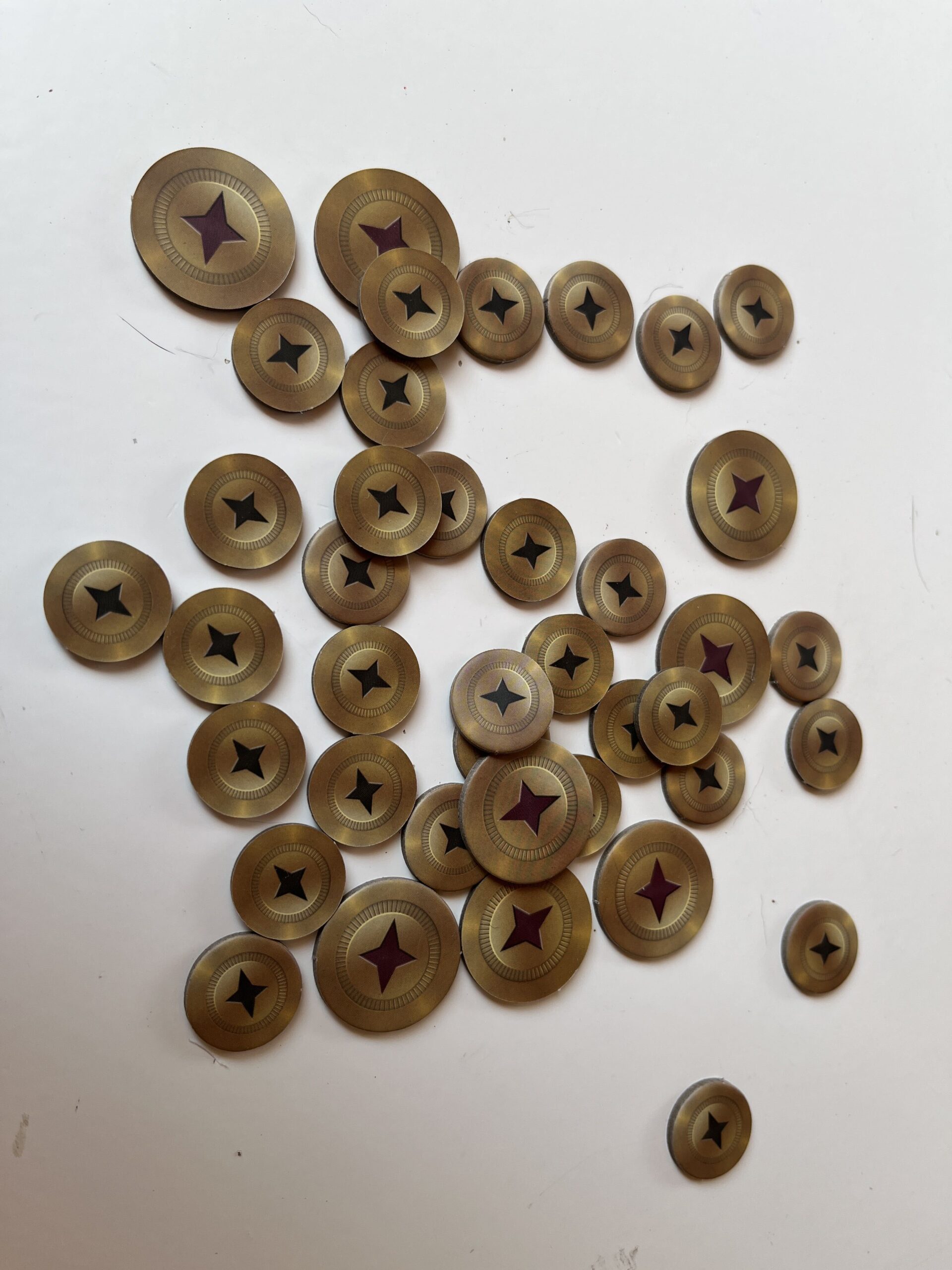
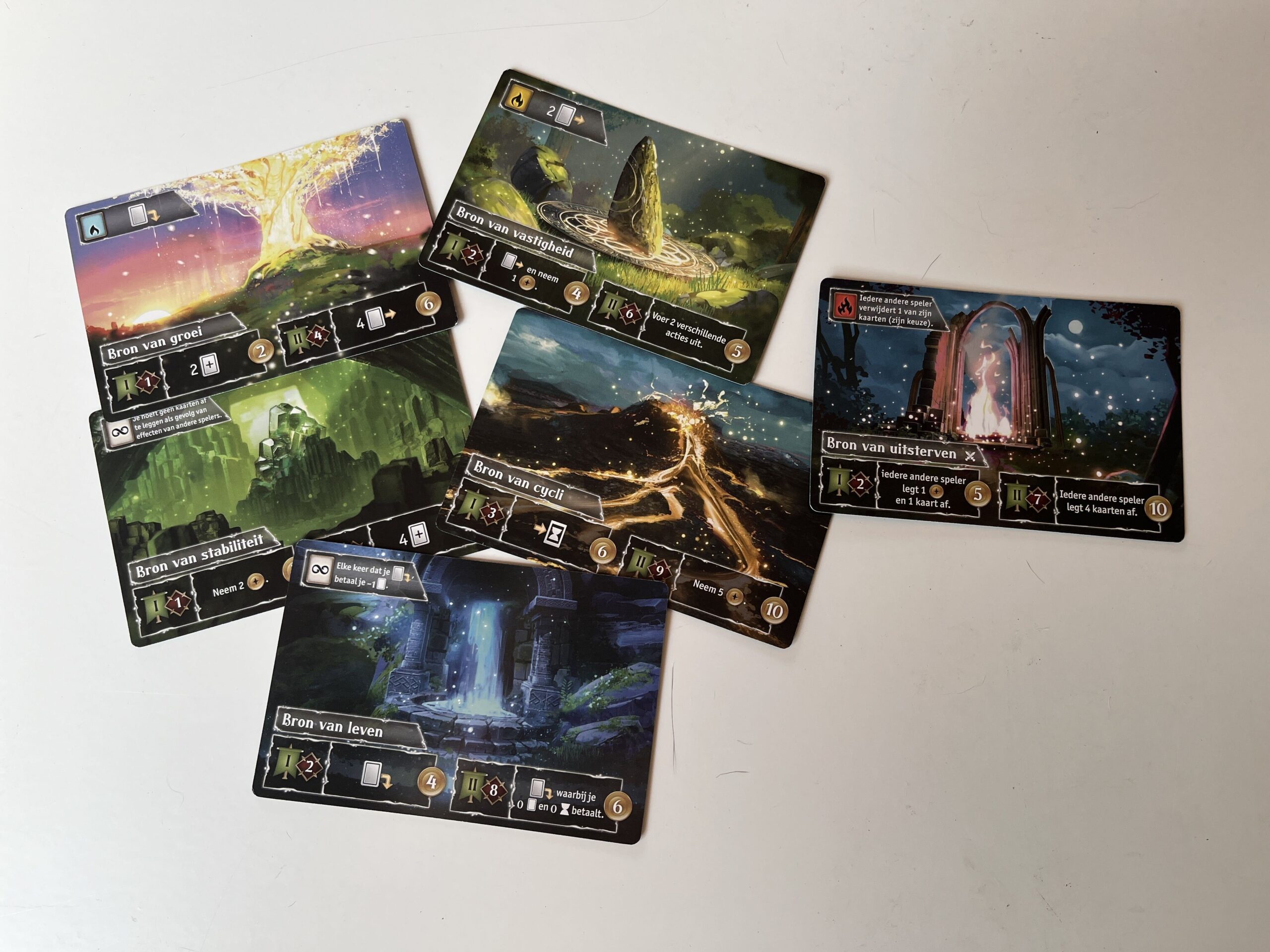
De laatste mogelijke actie is 1 bronkaart veroveren of versterken. Hiervoor heb je wezens nodig die overeenkomen met de kracht die nodig is om de bron te veroveren of versterken. Hierna kan je het direct effect meteen activeren. De wezens die je hiervoor gebruikt, schuif je onder de bron om aan te geven dat je ze gebruikt hebt. De effecten van deze gebruikte kaarten zijn niet meer beschikbaar, maar de symbolen en de overwinningspunten blijven actief.
De laatste fase is het einde van de ronde. Deze fase start zodra elke speler zijn beide actiestenen heeft gespeeld. Als een speler meer dan 10 kaarten op handen heeft, moet deze speler kaarten afleggen tot er nog maar maximaal 10 kaarten over zijn. Daarna krijgt iedereen zijn actiestenen terug en verwijder je de activatiefiches van de kaarten die je hebt geactiveerd. Het startspelerfiche wordt opgeschoven naar de speler links van de vorige startspeler en dan begint een nieuwe ronde.
Wanneer eindigt het spel dan? Hoor ik je al vragen.
Dit gebeurt aan het einde van de ronde waarin 1 van de volgende voorwaarden is voldaan:
- De algemene voorraad aan overwinningspunten is leeg.
- Een speler heeft 12 (of meer) kaarten in zijn gezelschap. (Een veroverde bron telt standaard als 2 kaarten, niet meer)
- Alle bronnen in het spel zijn versterkt.
Hierna maak je de ronde af, waarna je de punten gaat tellen. Je kan overwinningspunten krijgen tijdens het spel, van bronnen in jouw speelveld en van kaarten in je gezelschap.
Spelmechanisme
In Echoes of Time heb je enkele bepalende mechanismes, waarvan ik persoonlijk het doorschuiven van de kaarten op je tijdstableau de meest belangrijke en misschien ook wel vernieuwende vind. Door dit systeem moet je heel tactisch nadenken over welke kaart je wanneer speelt om ze zo optimaal mogelijk te gebruiken.
Natuurlijk heb je ook bonussen aan het einde van het spel die mee je strategie bepalen, want die zijn niet onbelangrijk voor je punten.
Verder zit er een aspect in van hand management omdat je dus met die 10 kaarten limiet moet werken. Probeer niet te veel kaarten te hebben, maar te weinig is evenmin handig.
Mijn bescheiden mening
Ik was op Spiel 2025 meteen geïnteresseerd om het spel daar op te pikken. Het is dan ook voornamelijk de artwork en het tijdstableau mechanisme dat me hierin aanspraken. Jammer genoeg was het daar uitverkocht op de dag dat ik er aankwam. Een tijdje later zag ik de aankondiging van 999 Games en dan kon ik wel even wachten tot het in het Nederlands verscheen. Echoes of Time is een fijn spel met een leuk mechanisme en toch ook wel wat interactie door het veroveren van elkaars bronnen of de zwaardjes symbolen die ervoor zorgen dat andere spelers bepaalde dingen moet doen, zoals kaarten of punten afleggen. Deze interactie vind ik wel noodzakelijk om er een uitdagend spel van te maken. Er is een variant zonder de interactie, maar die zal hier niet gauw op tafel komen. Zonder die interactie vind ik het te veel een solitair spel, zonder een echt solospel te zijn.
Wat maakt het spel zo sterk?
- Zoals vermeld vind ik het schuiven met de kaarten op het tijdstableau een leuke meerwaarde.
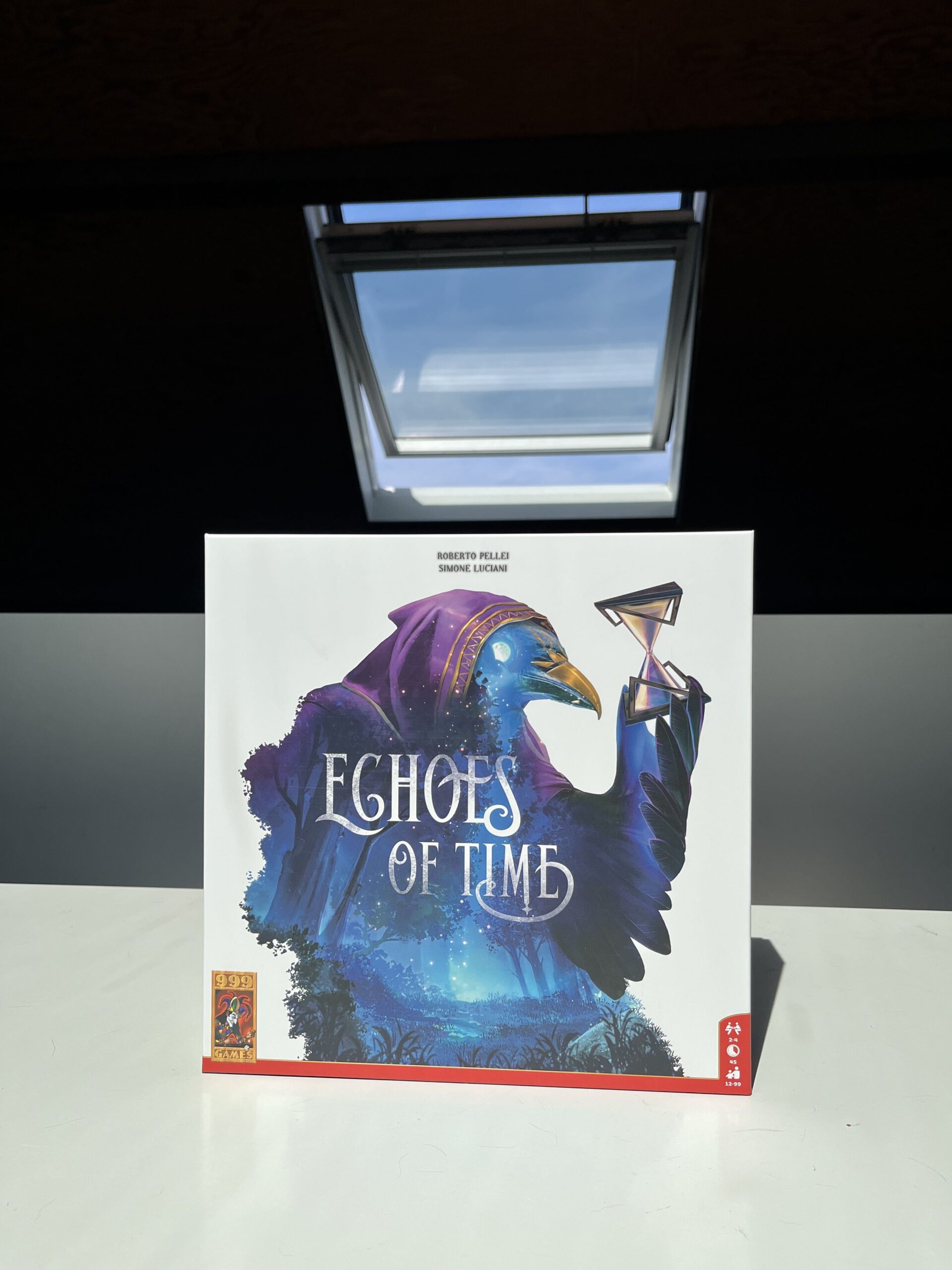
- De artwork van Giovanni Calore spreekt me meteen aan.
- Het fantasy-element is voor mij ook altijd een plus, al speelt het verhaal en de setting niet zo’n grote rol bij dit spel.
- De interactie maakt voor mij persoonlijk ook dat het spel overeind blijft, want zonder die interactie wordt hij al snel eentonig.
Is het alleen maar positief?
Behalve het system van het doorschuiven doet het spel niet erg veel nieuw, maar het staat wel overeind (mits je de interactie er in laat). De componenten zijn mooi, al zou ik de tijdstegels misschien niet uit karton hebben vervaardigd omdat ze op die manier (door het schuiven) sneller verslijten.
Conclusie
Echoes of Time is een mooi spel voor een familie plus publiek lijkt me. Het is geen zwaar spel met moeilijk of uitdagende regels, maar de keuzes die je moet maken kunnen zeker wat hersenwerk vragen om een mooi gezelschap op te richten. De fijne artwork zorgt voor een prachtige presentatie als het op tafel ligt en het speelt nog lekker weg ook.
Voor mij is dit spel een fijn spel dat net zwaar genoeg is om er wat strategie in te steken en net luchtig genoeg is om hem vlot op tafel te krijgen. Het is zeker geen spel voor absolute beginners, maar mits een beetje ervaring kan je het zeker proberen. Voor mij krijgt het spel een 7/10 en zou het niet misstaan in de kast van zowel de doorwinterde speler als van de families.

Echoes of Time
Players: 2-4
Time: 30-60 minutes
Age: 12+
Author: Simone Luciani, Roberto Pellei
Publisher: Cranio Creations
Year: 2025
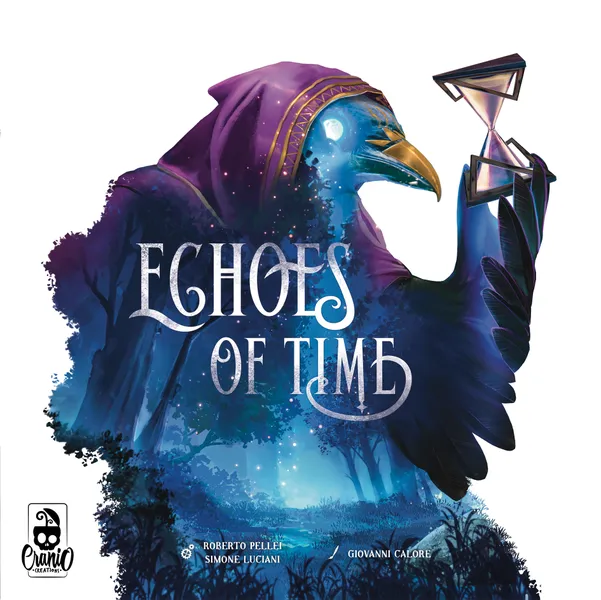
In a land very, very far away, a powerful energy from hidden sources governs the four factions of Water, Sky, Forest, and Earth. Battle for this ancient energy and bend even time to your will.
Gameplay
In Echoes of Time, you play cards onto your tableau to get them into your party. These cards help you collect victory points and grant you various effects during the game to help you progress. How does this work?
Well, Echoes of Time proceeds in rounds, each consisting of 3 phases (Time phase, action phase, and end of round).
The first phase is called the Time phase; this phase is performed simultaneously by all players. In this phase, all players slide the time tile next to their tableau to the left side of the tableau, thereby freeing up a new time tile (on the right side). If there were cards on that freed time tile, they are now called into your party, and from that moment on, you can use the properties of that card(s). Some cards have a lightning symbol, which indicates an immediate effect that is activated when that card is called. Afterwards, every player draws a new card, and the next phase begins. The second phase is the action phase, and here you follow the hands of the clock so that each player can perform their actions in turn. During this phase, you use 1 of your 2 action tokens to perform a main action. These 4 main actions are: drawing 2 cards, playing 1 card, passing 2 cards, or capturing or reinforcing 1 resource card. You can therefore choose 1 of these actions to use to your advantage.
The first possible action is “drawing 2 cards,” and this is the most obvious action, because what you are going to do is literally what the action name says: draw 2 cards and take them into your hand.
The 2nd possible action is playing a card, but for this you need some extra information. Each card has a certain cost to be allowed to play it. The cost can consist of discarding other hand cards, placing the card on a time tile corresponding to the hourglass symbol, or a combination of both. You can place a maximum of 2 cards on the same time tile, so keep this in mind when determining your strategy.
The 3rd possible action is sliding cards. You can slide 2 cards 1 space to the right on the time tableau or slide 1 card 2 spaces up. This ensures that you get the cards into your party faster and can therefore use their properties sooner.
The last possible action is capturing or strengthening 1 resource card. For this, you need creatures that correspond to the power required to capture or strengthen the resource. After this, you can immediately activate the direct effect. You slide the creatures you use for this under the resource to indicate that you have used them. The effects of these used cards are no longer available, but the symbols and victory points remain active.
The final phase is the end of the round. This phase starts as soon as every player has played both of their action tokens. If a player has more than 10 cards in their hand, that player must discard cards until there are no more than 10 cards left. After that, everyone gets their action tokens back and you remove the activation tokens from the cards you have activated. The starting player token is moved to the player to the left of the previous starting player, and then a new round begins.
When does the game end, then? I can hear you asking already. This happens at the end of the round in which 1 of the following conditions is met:
- The general supply of victory points is empty.
- A player has 12 (or more) cards in their party. (A captured resource counts as 2 cards by default, no more)
- All resources in the game are reinforced.
After this, you finish the round, after which you count the points. You can gain victory points during the game, from resources in your playing field and from cards in your party.
Game Mechanics
In Echoes of Time, there are several defining mechanisms, of which I personally find the shifting of cards on your time tableau to be the most important and perhaps also the most innovative. This system forces you to think very tactically about which card to play and when, in order to use them as optimally as possible.
Of course, there are also bonuses at the end of the game that help determine your strategy, as they are significant for your points.
Furthermore, there is an aspect of hand management involved, as you have to work with that 10-card limit. Try not to have too many cards, but having too few isn’t wise either.
My Humble Opinion
I was immediately interested in picking up the game at Spiel 2025. It was primarily the artwork and the time tableau mechanism that appealed to me. Unfortunately, it was sold out on the day I arrived. A while later, I saw the announcement from 999 Games, and I was willing to wait a bit until it was released in Dutch. Echoes of Time is a fine game with a fun mechanism and quite a bit of interaction through capturing each other’s resources or the sword symbols that force other players to do certain things, such as discarding cards or points. I find this interaction necessary to make it a challenging game. There is a variant without the interaction, but that won’t be coming to the table here anytime soon. Without that interaction, I find it too much of a solitaire game, without being a true solo game.
What makes the game so strong?
- As mentioned, I find sliding the cards on the time tableau a nice added value.
- The artwork by Giovanni Calore appeals to me immediately.
- The fantasy element is also always a plus for me, although the story and setting do not play such a major role in this game.
- For me personally, the interaction is also what keeps the game going, because without that interaction it quickly becomes monotonous.
Is it all just positive?
Apart from the sliding system, the game doesn’t do much that is new, but it holds up (provided you keep the interaction). The components are nice, although I might not have made the time tiles out of cardboard because they wear out faster that way (due to the sliding).
Conclusion
Echoes of Time seems like a lovely game for a family-plus crowd to me. It isn’t a heavy game with difficult or challenging rules, but the choices you have to make can certainly require some brainwork to assemble a nice group. The fine artwork makes for a beautiful presentation when it’s on the table, and it plays really smoothly too. For me, this is a nice game that is just heavy enough to incorporate some strategy and just light enough to get it on the table quickly. It is certainly not a game for absolute beginners, but with a bit of experience, you can definitely give it a try. I give the game a 7/10, and it wouldn’t look out of place in the collection of either the seasoned player or a family.